Real Bumper Work
Watch a Bumper Come Back.
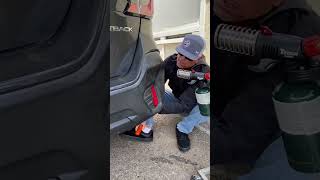
Scuffs, scrapes, and curb rash, refinished to your factory paint code at your home or office. Tap any clip to watch the full repair.
Your original bumper. Your factory color. Repaired at your location, across San Diego County and part of South Orange County. Scuffs, scrapes, and curb rash refinished the right way, most in a few hours. Text photos and we tell you exactly what it takes.
Scuffs, scrapes, and curb rash, refinished to your factory paint code at your home or office. Tap any clip to watch the full repair.
A bumper cover is painted plastic, and most scuffs, scrapes, and curb rash damage only the surface. The plastic underneath is sound. That is a repair and refinish job, not a replacement, and it happens at your home or office.
Bumper work is a different craft from paintless dent repair. Metal dents get the PDR treatment because the factory paint can be saved. A bumper scuff has already taken the paint, so the right repair is the opposite discipline: repair the plastic, prep it properly, and refinish it to your vehicle's exact factory color code. Dent Time runs both crafts under one standard. Myke reads the damage and quotes it honestly, and the paint work is done by a dedicated mobile refinish technician. A dented bumper where the paint survived is its own category, and it can often be worked back to shape with no refinish at all, from $250.
A scuffed corner rarely belongs on an insurance claim. The repair usually costs less than the deductible plus the premium increase, and paying out of pocket keeps a cosmetic scrape off your record entirely. See when a claim is actually worth it, and when to skip it.
Factory color, in your driveway. The shop drives to you.
Body shops quote replacement because replacement is easy to sell. The better question is what happens to your car in each path.
An aftermarket or salvage bumper, painted at the shop, mounted with new clips, and a week of your life gone.
The factory part stays on the car. The damage is repaired, prepped, and refinished to your exact color code at your location.
A bumper refinish done right is invisible. That takes proper prep, exact color, and the patience to blend it into the surrounding panel.
The price follows the damage, not the part. A corner scuff is a routine repair. A cracked, gouged face takes structural work before any paint. Your written estimate is free, comes from photos of your actual bumper, and you approve the number before any work starts. The full breakdown of what moves the number lives on how much does bumper repair cost.
Worked back to shape with no refinish at all, so color never enters it. The number follows how far the plastic stretched.
The price follows the color and the damage. A tri-coat finish takes more stages than a flat color, and punctures, tears, or holes add structural work before paint.
Structural plastic repair plus a complete refinish. Still your original bumper, still factory fit.
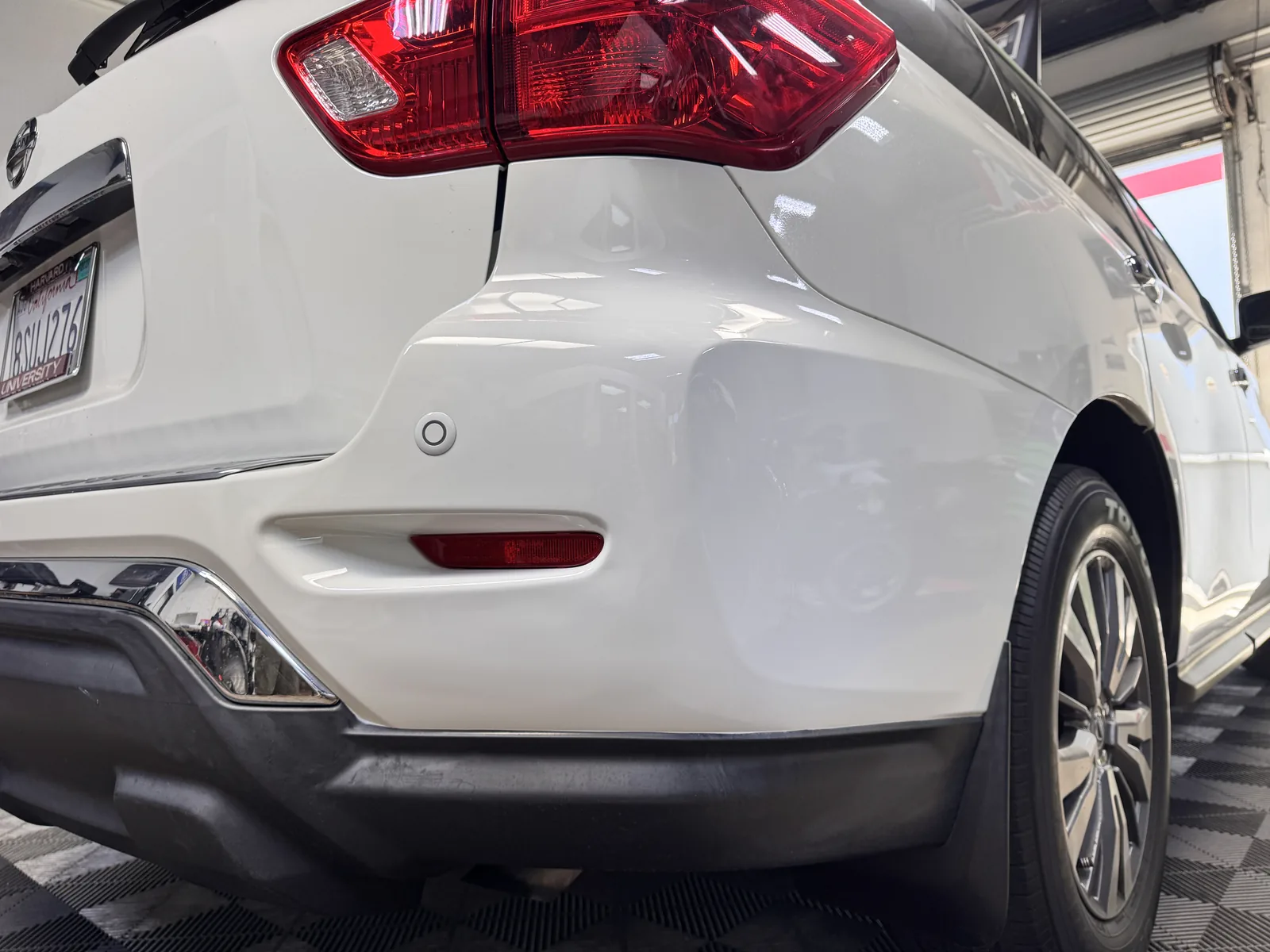
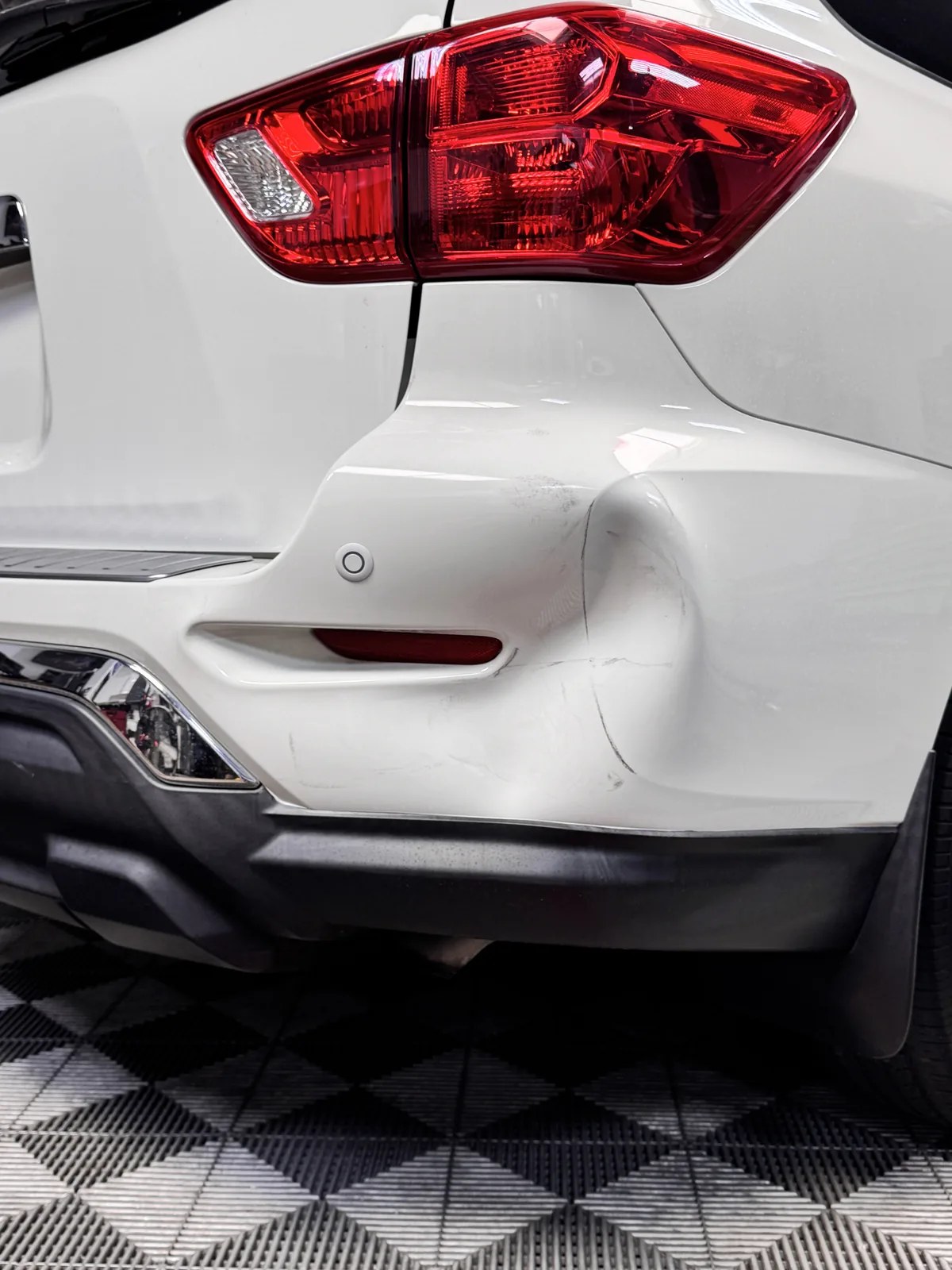
A real one, at the shop. The corner is worked back to shape and the scuff marks are buffed out. Nothing is repainted, so the factory color never enters the question.
The same factors apply to every type of bumper damage. Color comes first: a tri-coat finish takes more stages to match than a flat color. Then the damage itself: depth, and whether there are punctures, tears, or holes that need structural repair before any paint. A quote from photos is exact because the damage is visible on a bumper. What you are quoted is what you pay.
Complete satisfaction or no charge applied. Factory color match. Your original bumper stays on the car. Checked in direct light before you see it.
Three taps, a real range. A written estimate takes two photos, and that part takes minutes.
That range is the honest read from three answers. A written estimate takes two photos, and you approve it before a tool touches the car. Complete satisfaction or no charge applied.
Back on the road wearing its original bumper.
If the damage is a dent in a metal panel and the paint survived, it belongs with paintless dent repair, where the factory paint is preserved and nothing is resprayed. Bumper refinishing and PDR are different disciplines, and Dent Time holds both to the same standard.
Not sure which repair your damage needs? You don't have to be. Text the photos and Myke tells you which craft it calls for, what it costs, and how long it takes. One conversation, the full picture.
Door ding repair from $197, factory paint untouched.
What repairs cost and exactly what moves the number.
The repair comes to you. Home driveway, office parking lot, anywhere with room to work. That is all of San Diego County, and the route now runs north into South Orange County as far as San Clemente. Text a photo from anywhere in the county and we'll tell you the schedule and a real quote.
Now serving part of South Orange County. The bumper route runs as far north as San Clemente, covering San Clemente, Talega, and San Onofre before it crosses Camp Pendleton back into North County. See South Orange County bumper repair.
What people type into Google after "bumper repair near me." Answered straight, priced in writing.
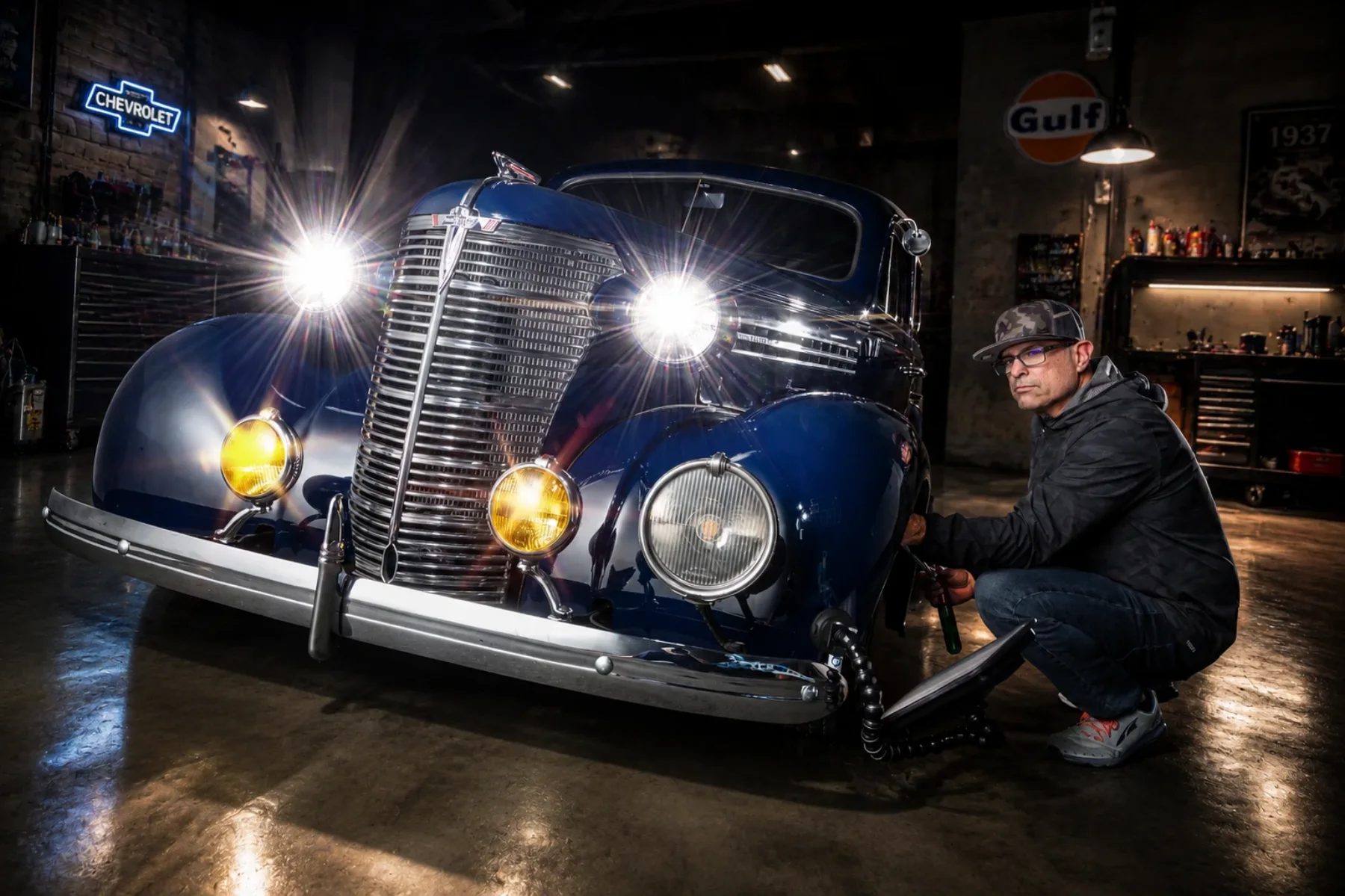
Original parts, kept original. The same standard whether the bumper is chrome or painted plastic.
Yes. The repair keeps your factory bumper, which keeps the factory sensor mounts and housings exactly where the manufacturer put them. Sensors are worked around during refinishing, not painted into. Aftermarket replacement covers are where sensor headaches usually start, which is one more reason repair beats replacement.
You can, and it will look like touch-up paint. A dab hides a stone chip at ten feet, but a scuff is a shaped area of damaged clear and color that a brush blob cannot level. If your scuff is honestly small enough for touch-up, we will say so from the photos instead of selling you a refinish.
Often, yes. A scuff that breaks the clear coat leaves paint edges exposed, and sun and washing slowly lift them wider. There is no panic clock, but a scuff repaired this month is routinely smaller than the same scuff repaired next year. Photos now cost nothing and set the baseline.
They can, and sometimes they should. What you are trading is a few hours for a few days. A body shop books the car in, keeps it, and hands you a rental bill, and a replaced bumper is a line on the vehicle history. Ours is done at your address, usually in an afternoon, with your original bumper still on the car. Most people compare the two invoices and never compare the two weeks.
When the paint held, usually yes. Bumper plastic has memory, and controlled heat with pressure from behind brings the shape back for $250 to $300 with no refinishing involved. Once the paint is scraped through, it becomes a corner refinish at $395 to $600 and up. The photos tell us which one you have.
Usually, yes. Repair keeps your factory bumper, which keeps the factory fit, the factory sensor mounts, and the vehicle history clean. Replacement means days of scheduling around a parts order for a cover that never wore your paint. Most bumper repairs are done in one visit at your address, often the same day.
Mostly, you cannot do it well. A crack needs to be stabilized from the back or it walks right through fresh paint, and DIY kits leave a ridge you will see in sunlight forever. Some cracks we repair in place, some need the cover off to do it right, and the photos tell us which yours is before anyone commits to anything.
Yes, and for torn mounting tabs or damage behind the cover, a body shop is the right call and we will say so. For scuffs, scrapes, cracks, and pushed-in corners on the cover itself, this is the work we do every day, at your address, without the car disappearing for a week.
Your bumper repair should fit your expectations and your day. We explain the suitable finish options, the cost, and whether mobile service makes sense for your damage. Submit the estimate form so we can recommend an approach before you schedule.
Then it is a hybrid repair, and it is still worth doing properly. The metal gets pushed back to shape with paintless technique first, and only then does any paint work start. That order matters more than most people realize, because the further the metal comes back, the less of your panel ever needs to be refinished.
The alternative, and what a lot of shops default to, is to skip straight to filler and repaint the whole panel. That is faster for the shop. It also means more of your original factory finish is gone, a bigger blend, and a bigger number. Pushing first is the difference between refinishing a patch and refinishing a door.
Run a fingernail across it. If it does not catch, the paint held and this is a straight paintless repair. If it catches, the clear coat is broken and the finish needs its own plan. We tell you which one you have from the photos, before anything is booked.
This is the step that saves you money and almost nobody explains. The dent is worked from behind the panel and returned as close to its original plane as the metal allows, exactly as it would be in a paintless repair.
Because the metal is already back where it belongs, what is left to refinish is a fraction of what it would have been. Less filler, less blending, less of your original factory paint disturbed. A body shop that skips step two paints the whole panel instead.
The area is leveled and refinished to your vehicle factory color code and blended into the surrounding panel so it reads as one continuous surface. Checked in direct light before it is called done.
The honest part: a hybrid repair costs more than paintless and less than a full panel repaint, and it is not always the right answer. On some damage the paintless result alone is good enough and we say so. On others the paint was too far gone and it belongs at a body shop, and we say that too. Send two photos and you get told which of the three you are actually looking at.
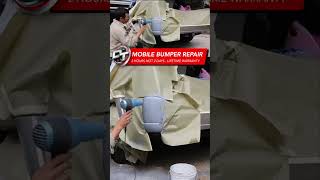
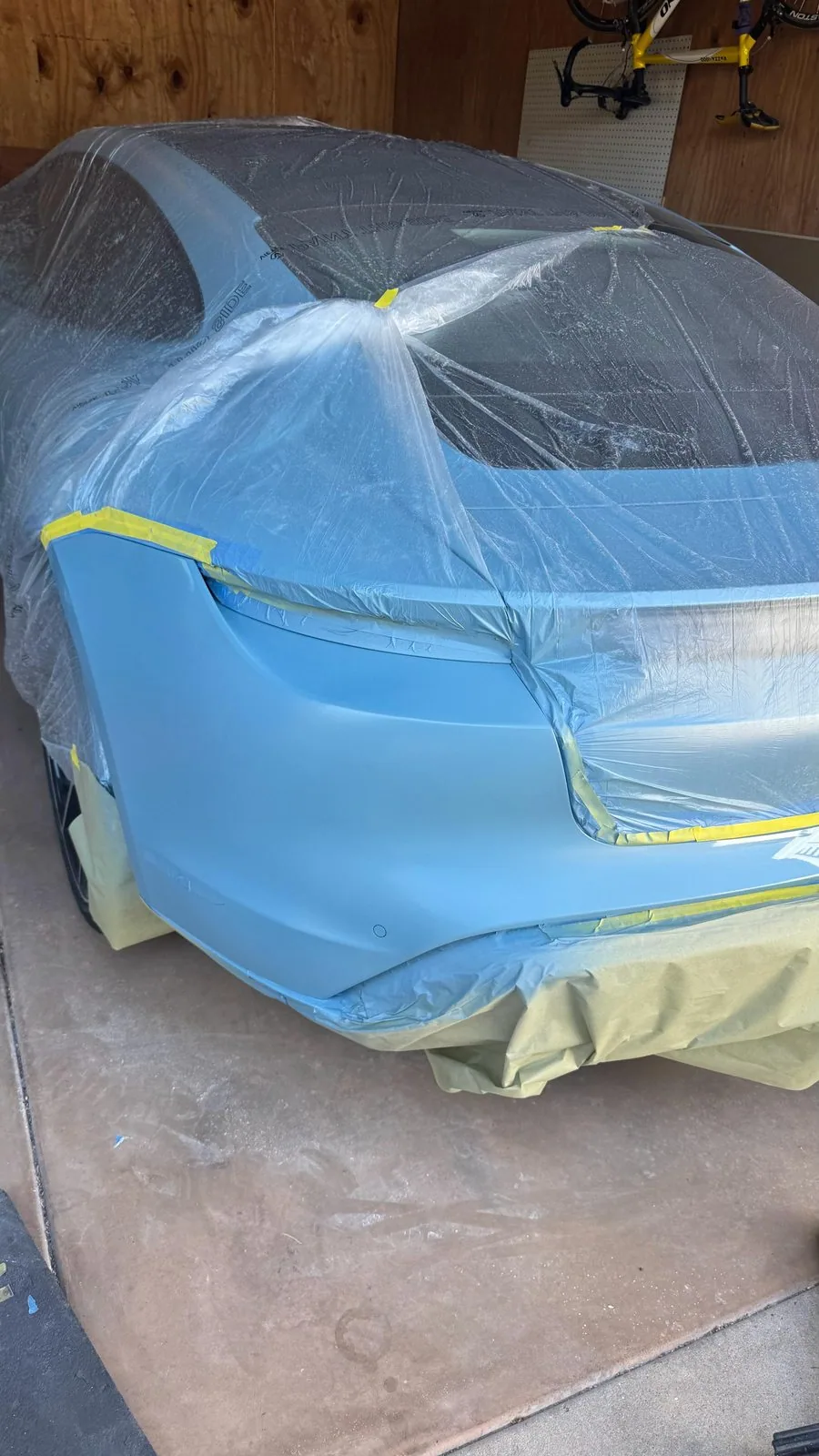
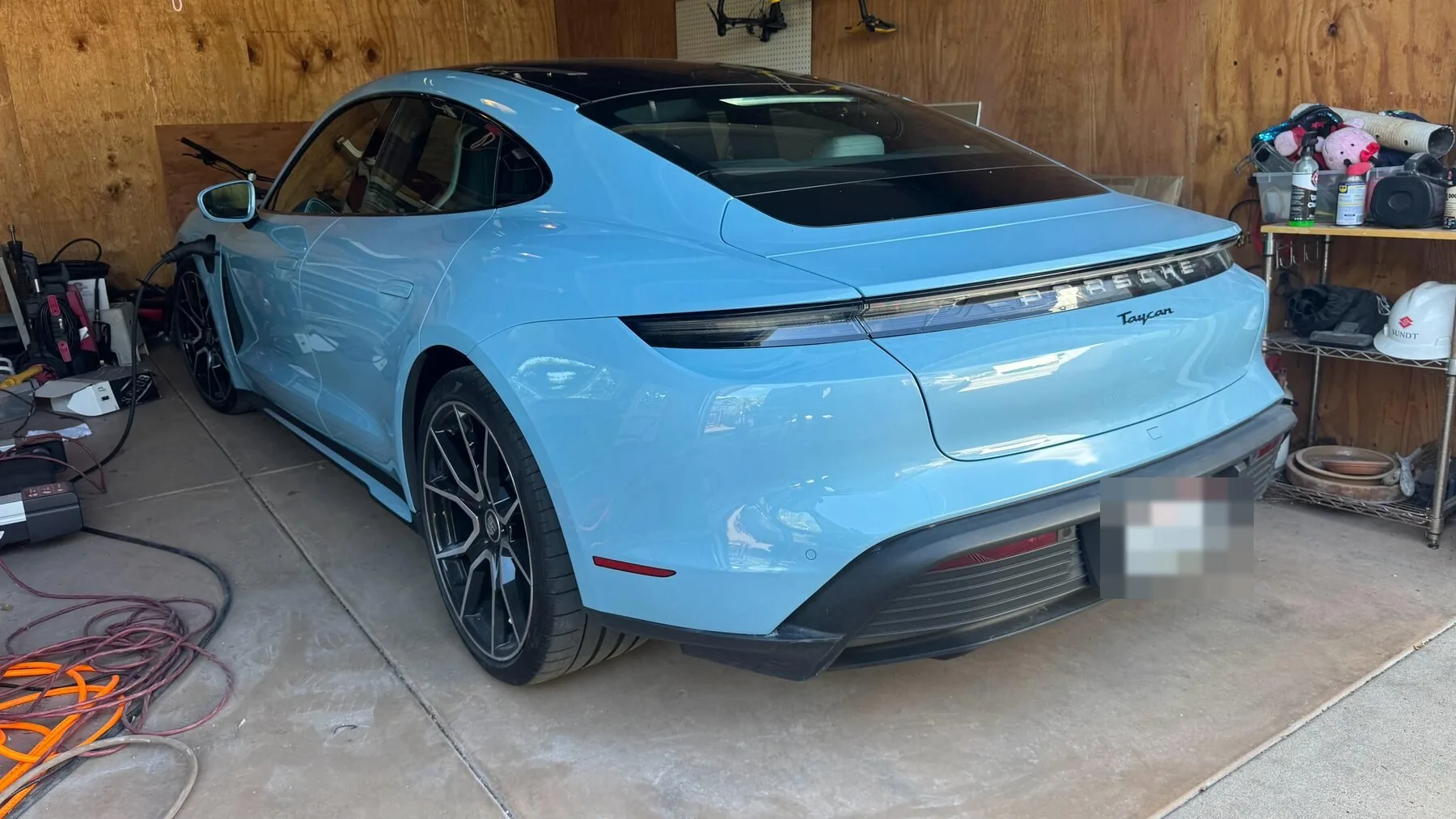
This is what mobile bumper repair actually looks like. A Porsche Taycan, refinished in the owner's own garage in San Diego. The car is masked and sheeted so nothing but the repair area is touched, the bumper is refinished to the factory paint code, and the car never left the property.
Masking like this is most of the difference between a mobile refinish that looks right and one that does not. Overspray does not forgive, and a bumper corner sits inches from glass, trim, and paint that has to stay untouched.
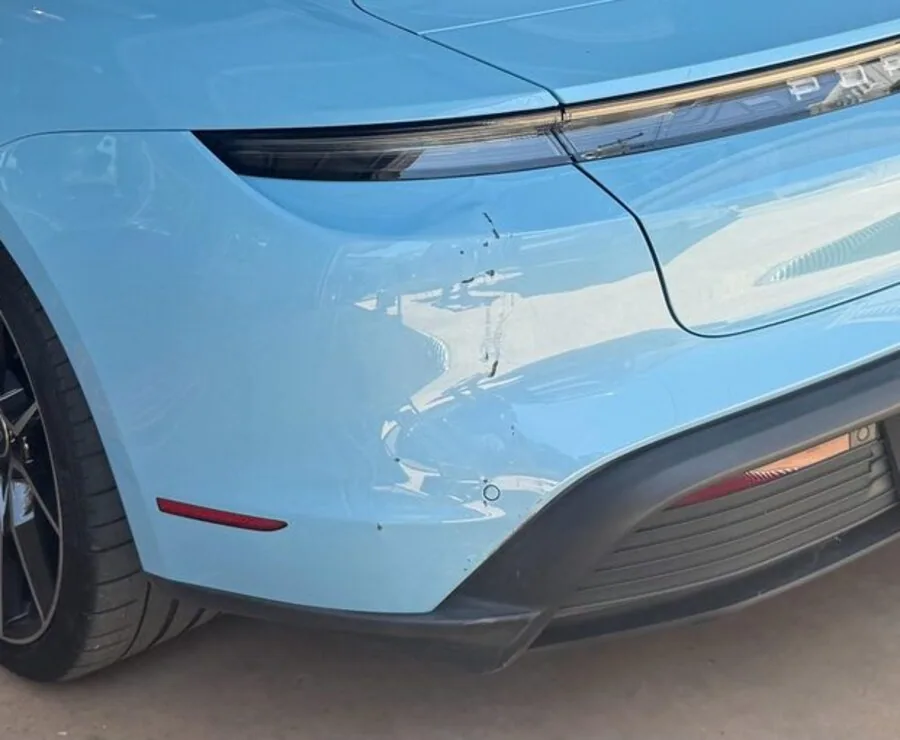
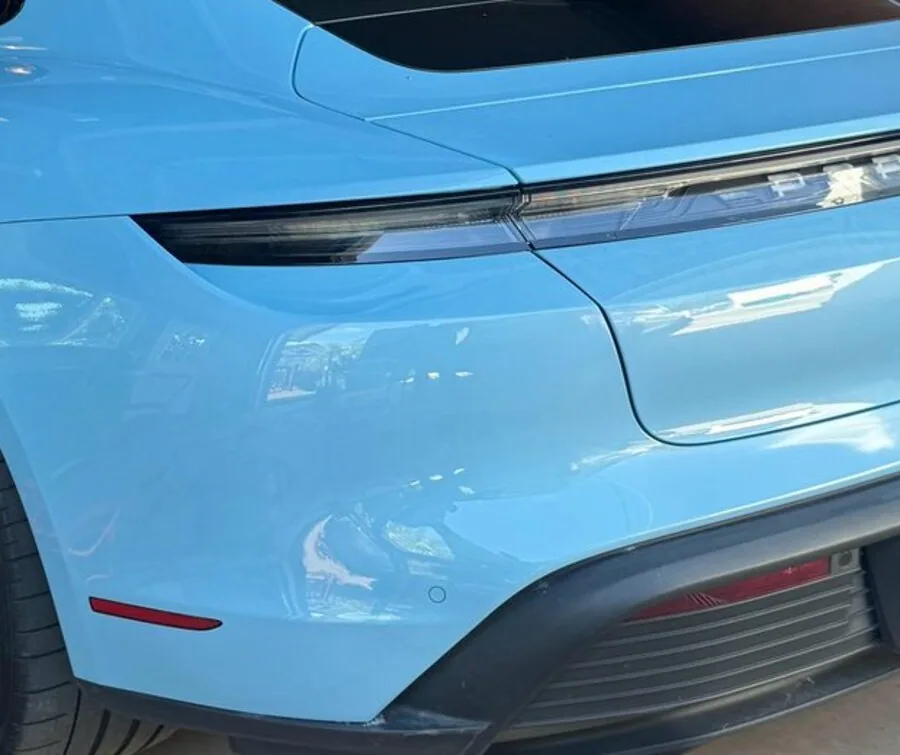
Straight-on and at an angle, in natural light. You get the honest call: repair or replace, a written estimate, and how long it takes. The scuff you have now is the easiest version of this problem.
Leave your name and number and Myke will call you back during business hours, Monday to Friday, 8:30am to 4pm.
Julie texts you back right away from (858) 408-6200.