Motorcycle PDR · Tanks & Fenders · Ship From Any State
Gas Tank Dent Repair.The Paint Never Gets Touched.
Motorcycle gas tank and fender dent removal without repainting. Harley, import, and sport bikes. On a bike carrying custom paint, the finish is usually worth more than the tank, and this is the one repair that does not put it at risk. Mobile across San Diego County, in-shop in Escondido, and tanks shipped in from any state.
A tank is not a car panel. It is double-walled in places, curved in every direction, and often wears custom paint that cannot be matched. That is why it is worked from the outside with the paint untouched. Whether it comes off the bike first depends on the bike, and the honest answer is not the same for a Harley as it is for a sport bike.
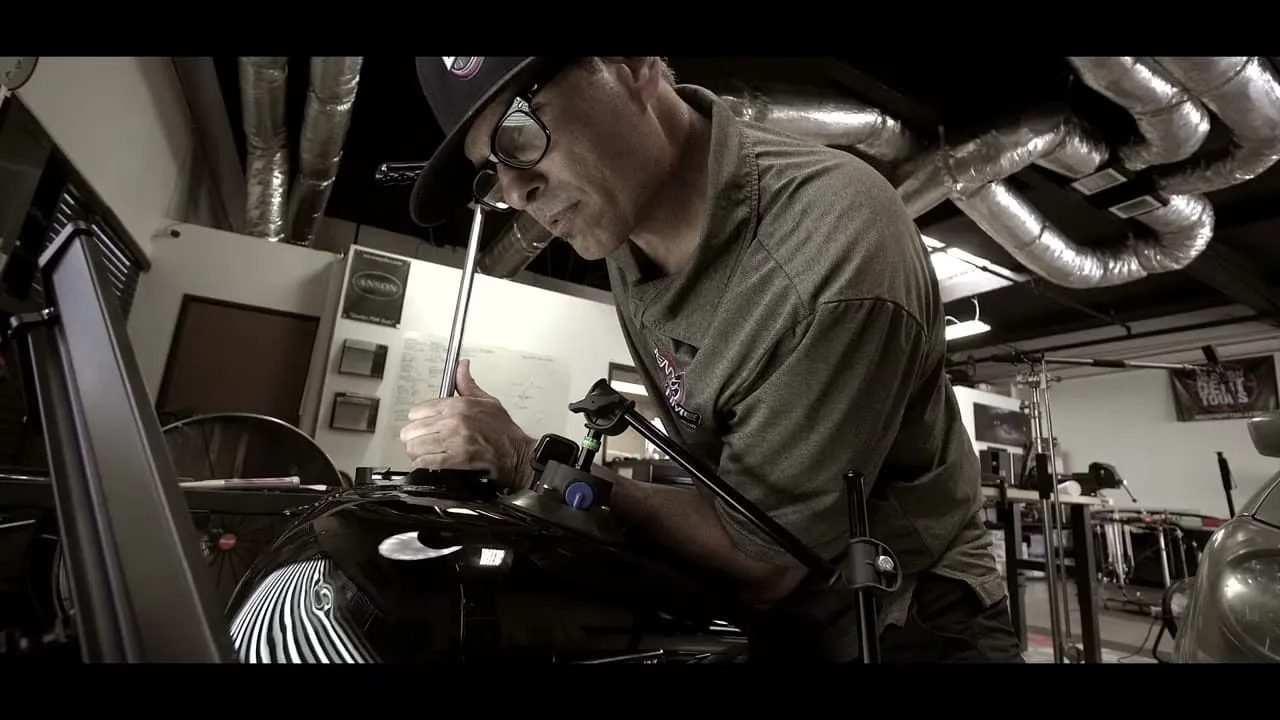
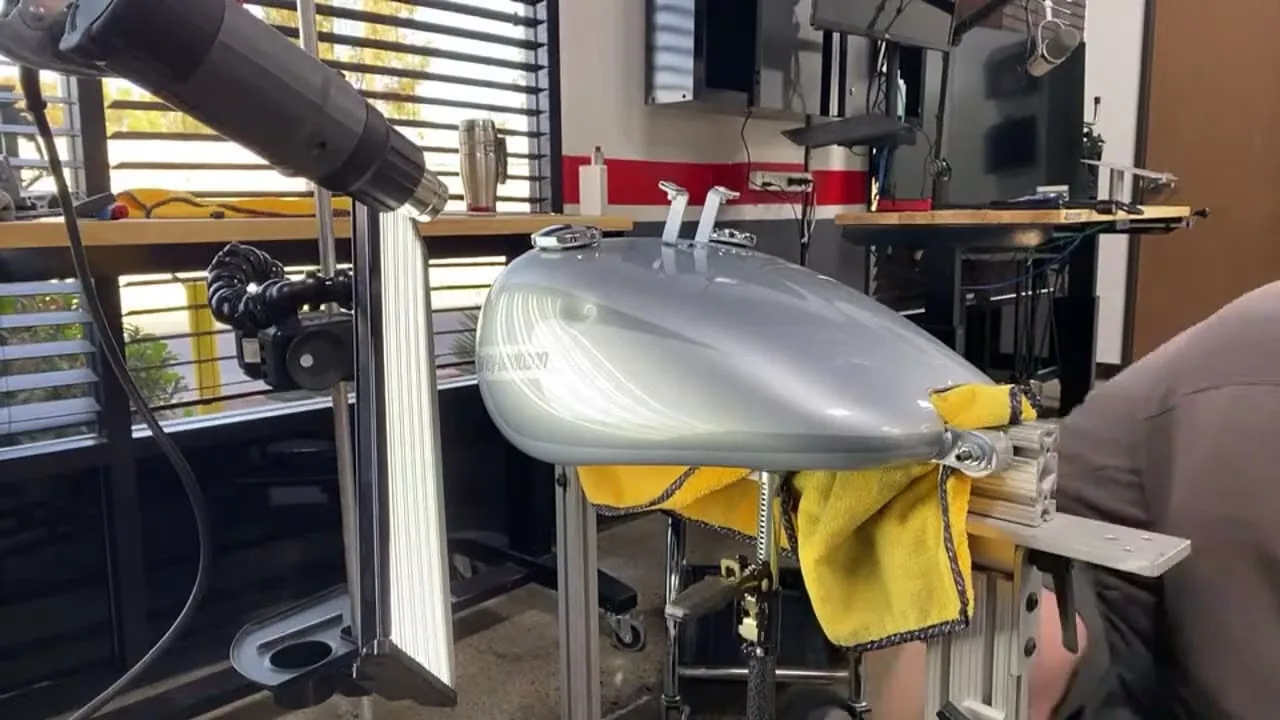
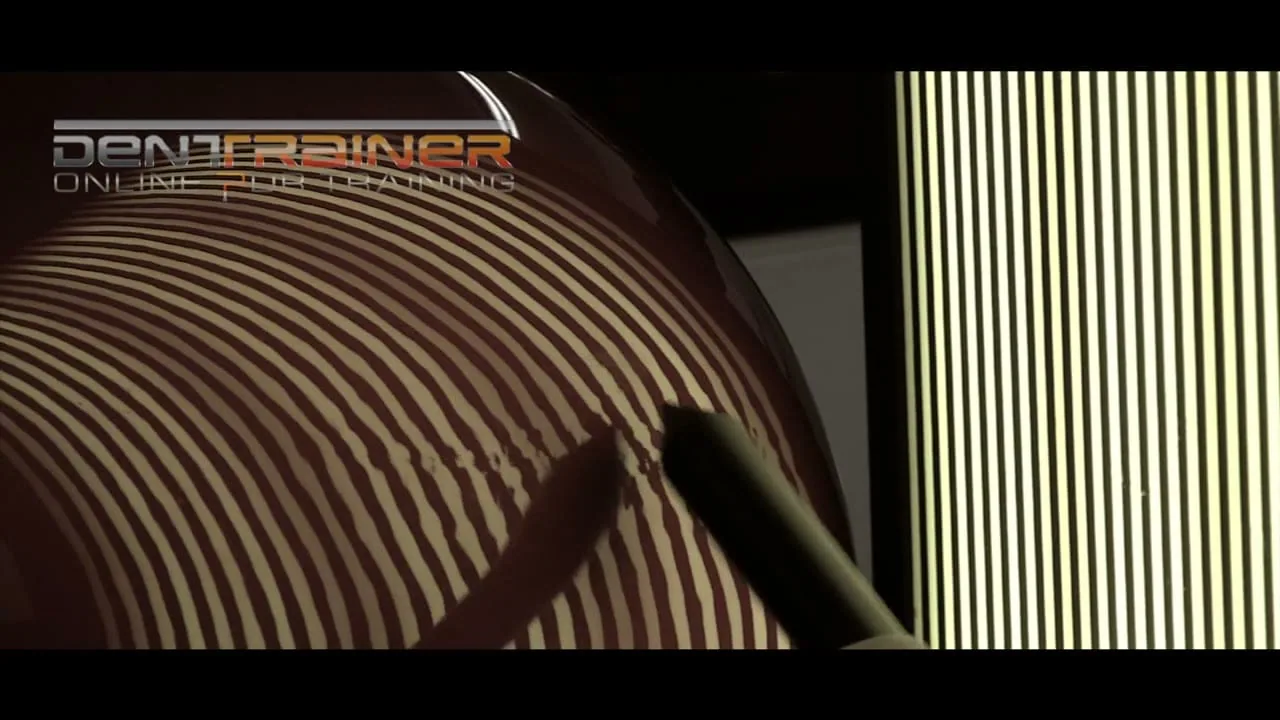
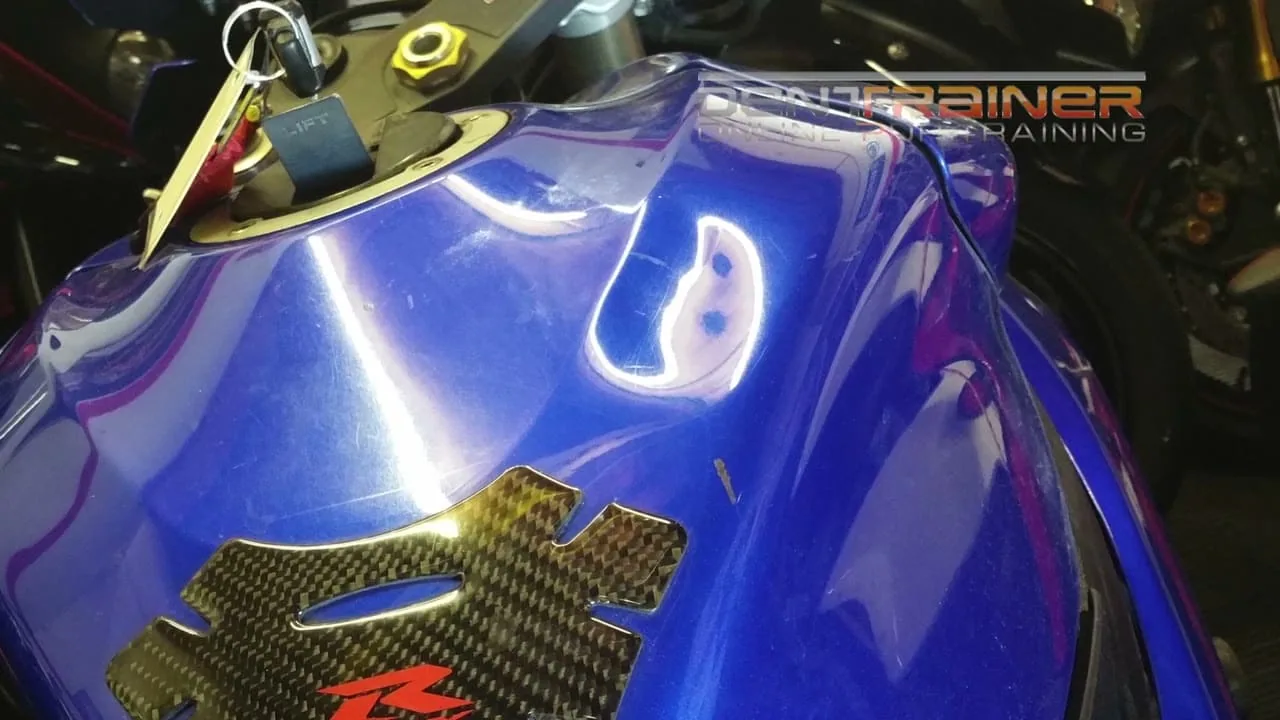
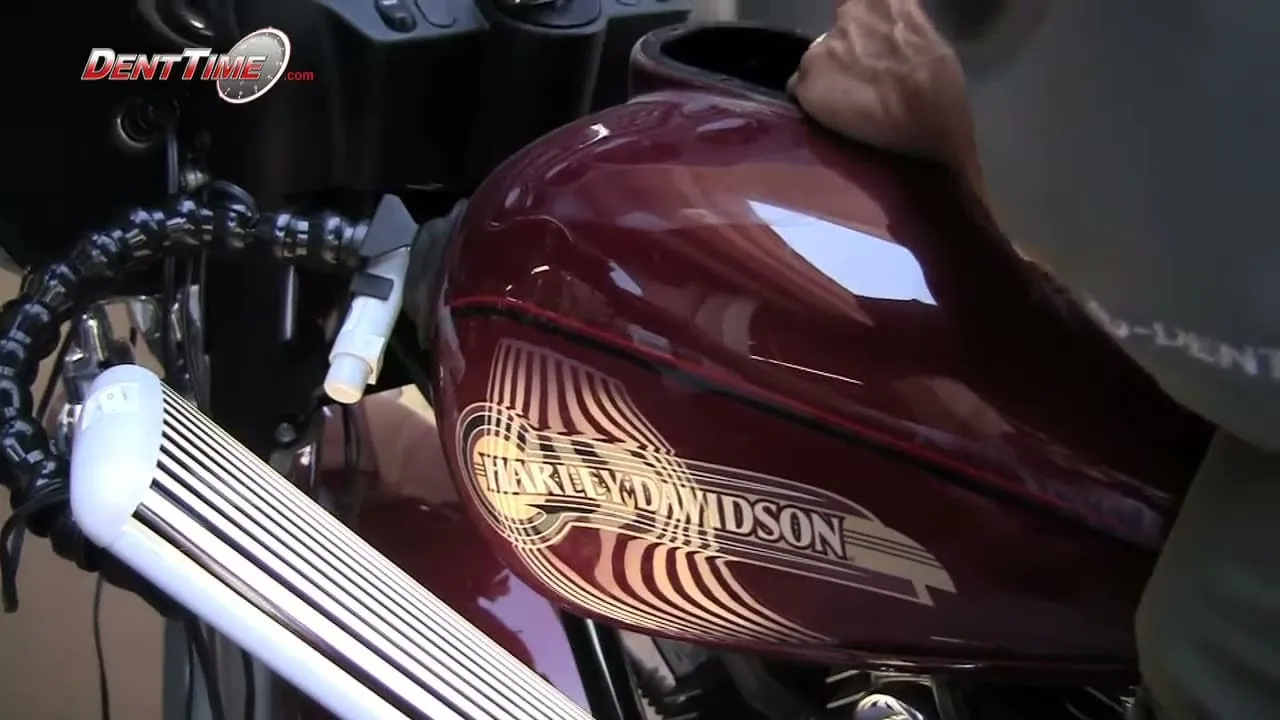
Harley tank. Custom paint stays untouched, the metal is worked from behind the dent.Reaching the back of a Harley tank. The access underneath is tight, which is why a Harley tank comes off first.A sharp crease read under a line board. Sharpness, not size, decides the work.Sport bike tanks. Tighter curves, thinner metal, same standard.Tanks ship in from out of state as often as they arrive on the bike.
Why Most PDR Technicians Turn Tanks Away
A Gas Tank Is Not a Car Door.
Removing dents from motorcycle gas tanks is genuinely tricky, and the two reasons are access and metal. A tank is a closed vessel with very limited ways in, so the leverage a technician can reach is far more restricted than on a car panel. Tank metal is often thicker and formed in compound curves that resist being moved.
That combination is why many PDR technicians will not take tanks at all. The dent is carefully removed with custom designed steel rods that gain access behind the damage, applying gentle pressure until the metal returns to where it started. Depending on the tank, the process takes one to four hours.
What is actually at stake is the finish. Motorcycle owners are passionate about their bikes, and a custom paint job, pinstriping, or a discontinued factory color is often worth more than the tank it sits on. Paintless dent removal works entirely from behind the metal, so nothing touches the outside. Any body shop path means blending or respraying a finish that may be irreplaceable.
Three Ways This Gets Done
Harley, Sport Bike, or Shipped In.
How your tank gets repaired depends on the bike. Harley tanks come off and come to the shop. Import and sport bikes are often repaired at your location anywhere in San Diego County. And if you are out of state, you ship the tank to us, which is frequently the best repair environment of the three.
Harley Davidson
Tank Comes Off
On a Harley we need the tank off the bike. A dent can sometimes be worked with the tank still mounted, but it is far more complex and it regulates the leverage points a technician can reach, which is exactly what decides whether the repair finishes clean.
Where: Escondido shop
Import & Sport Bikes
We Come to You
On most imports and sport bikes the repair can be performed with the tank on the bike, which means it happens at your home, garage, or office anywhere in San Diego County. Photos first, so you know the path and the price before anything is scheduled.
Where: Your location
Any State
Ship the Tank
Out-of-state owners send the tank in. It gets mounted in a vise that holds it firmly and lets it be positioned at unique angles for perfect tool leverage. That control is often better than anything possible with the tank still on a bike.
Where: Nationwide
Shipping Your Tank In
How Out-of-State Tank Repair Actually Works.
People ship tanks to us from across the country. The process is straightforward, and the one thing owners forget is the return label, which is what leaves a finished tank sitting on a shelf waiting.
01
Text photos first
Send a straight-on and a 45-degree raking-light photo before you ship anything. You get a real quote and confirmation the repair is worth the freight.
02
Pack it well, include a prepaid return label
Drain the tank, pad every surface, and box it so nothing shifts in transit. Include a paid return shipping label in the box. Contact us before shipping for details.
03
Two to three days for the repair
Allow two to three days once it arrives, based on the work already scheduled ahead of it. The tank is mounted and worked with full access and controlled leverage.
04
After photos before it ships back
We photograph the finished tank and send the images by text or email before it goes back on the truck, so you see the result before it is in your hands.
Tanks Are Quoted From Photos
Text Two Photos. Real Tank Quote in Minutes.
Tank dents vary more than car panels, so there is no chart that gives an honest number. Send a straight-on shot and a 45-degree raking-light shot to 858-408-6200 and a technician who has been repairing tanks for decades replies with a real price. Free, and you approve before anything happens.
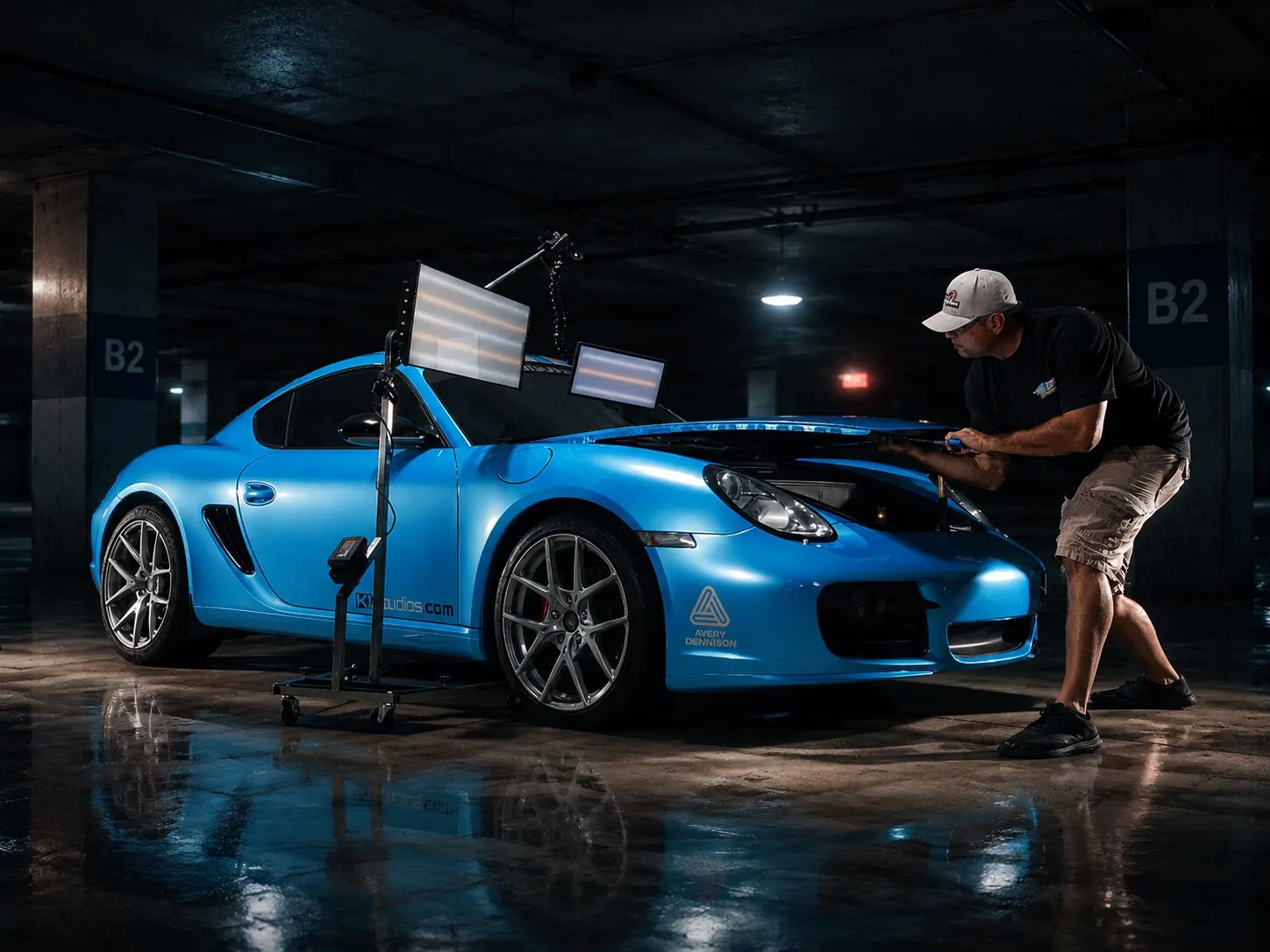
A line board is how a tank gets judged. If the stripes bend, the repair is not finished.
Two Bikes, Two Opposite Problems
A Sport Bike Tank and a Harley Tank Are Nothing Alike.
People assume a tank is a tank. The metal is the difference, and it decides both the hand you work with and whether the tank leaves the bike at all.
Sport bike
Thin metal
Moves easily. Marks easily. Thin sheet gives up its shape without much persuasion, which sounds like the easier job until you realise it takes a mark just as readily. The hand has to be lighter, not firmer.
Access around the tank is usually good enough that the repair happens with the tank still on the bike.
Harley-Davidson
Thicker metal
Resists. Then holds. Thicker sheet needs a firmer hand to start moving and it fights you at the beginning. The trade is that once it is moving it stays where you put it rather than wandering.
Access underneath is tight, so on a Harley we almost always take the tank off first.
Neither one is the easy version. They are different problems, and knowing which one you have before a tool touches it is most of the job.
Why PDR Skill Matters More Than Price
The Dent Was Fixable. The Repair Wasn't.
The most common question San Diego drivers ask after a bad experience is: how was I supposed to know? The answer is always visible, if you know what to look for. Poor PDR leaves metal that was pushed with the wrong tools, clearcoat stressed or cracked from sharp contact, and in some cases holes drilled where none belonged. None of that can be undone by another technician. Every car in this section was dent-repairable before the first shop touched it. This is what to look for before you hand your car to anyone.
Every panel above was dent-repairable before the first technician touched it. The damage in these photos was not caused by the original impact, it was caused by the repair. That distinction matters, because it changes what you are actually deciding. The dent is not the risk. The technician is.
Myke Toledo · Dent Time
Why the Technician Is Everything
Choosing PDR Is Not Like Choosing a Gallon of Milk.
When you buy a gallon of milk, every gallon at every store is the same product. Choosing the one that costs less makes sense. PDR is not that. Two technicians looking at the same dent will make completely different decisions about access, pressure, and where to stop. One of those decisions preserves your factory finish. The other one does not.
Thirty-five years in this trade is not a marketing number. It is the count of dents, panels, and metal types that live in a technician's hands as muscle memory. You cannot buy that experience at a lower price point. You can only find it or not find it.
The tool does not read the metal. The technician does.
35Years Reading Metal
Started at Dent Man in 1991. Dent Time founded 2001. No shortcut to this kind of pattern recognition.
0Paint Used, On Any Repair
Paintless means paintless. If paint enters the conversation, something went wrong before the repair started.
10k+Repairs Completed
Door dings, deep creases, body line damage, hail, aluminum panels. A shop that only does this.
500+Five-Star Reviews
Unprompted. No reputation service. Clients who came in skeptical and left with nothing to say except the truth.
Motorcycle Dent Repair, Answered
The Questions Tank Owners Actually Ask.
Can a dent in a motorcycle gas tank be repaired without repainting?
Yes, in most cases. Motorcycle paintless dent removal reaches behind the dent with custom steel rods and works the metal back to its original shape with gentle, deliberate pressure. Your factory or custom finish is never touched, which matters more on a bike than almost anywhere else, because custom paint is often worth more than the tank itself. Most tank repairs take one to four hours depending on the tank.
Do you have to take the gas tank off the bike?
For a Harley Davidson, yes, we need the tank off the bike. A dent can sometimes be worked with the tank still mounted, but it is much more complex and it limits the leverage points a technician can reach, which is exactly what decides whether the repair comes out clean. On many imports and sport bikes the repair can be done on the bike at your location.
Can you come to me for motorcycle dent repair?
For import and sport bikes, usually yes, anywhere in San Diego County. Harley tanks generally need to come off and come to the shop in Escondido, where the tank can be mounted properly and worked with full access. Text photos first and we tell you which path fits your bike before anything is scheduled.
Can I ship my gas tank to you from another state?
Yes, and people do it regularly. The tank is mounted in a special vise that holds it firmly and lets us position it at unique angles to get perfect tool leverage, which is often a better repair environment than working on the bike. Allow two to three days for the repair based on the work scheduled ahead of it. We send after photos by text or email before the tank ships back.
How should I pack a gas tank for shipping?
Pack it well and include a prepaid return shipping label. That is the part people forget, and without it the tank sits waiting. Drain it, pad every surface, and box it so nothing shifts. Contact us before you ship for details and to make sure the repair is on the schedule when it lands.
How much does motorcycle gas tank dent repair cost?
It is quoted from photos, not from a chart. Tank dents vary more than car panels because access, metal thickness, and the finish all change what the repair takes. Text a straight-on photo and a 45-degree raking-light photo to 858-408-6200 and a real number comes back in minutes, free, and you approve it before anything happens.
Will paintless dent repair damage a custom paint job?
No, that is the entire point of choosing it. The repair happens from behind the metal, so nothing touches the outside of the tank. For a bike carrying custom paint, pinstriping, or a discontinued factory color, PDR is usually the only repair that does not put that finish at risk. Any body shop path means blending or respraying paint that may be irreplaceable.
Do you repair motorcycle fenders too, or only tanks?
Fenders as well. Tanks are the most common motorcycle repair we see, but fenders take the same approach: reach behind the fender, work the metal back, leave the finish alone. Most fenders reach us already off the bike, which is the easiest version of the job. Send photos of whatever the damage is and we tell you honestly whether it is repairable this way.
Why is motorcycle dent repair harder than car dent repair?
Two reasons: access and metal. A gas tank is a closed vessel with very limited ways in, so the leverage a technician can get is far more restricted than on a car door. Tank metal is also often thicker and shaped in compound curves that fight being moved. That combination is why many PDR technicians will not take tanks at all.
Start With Two Photos
Send the Tank. Keep the Paint.
Straight-on and 45 degrees in natural light, out of direct sun. A real technician replies with an honest read and a real number, whether your bike is across town or across the country.