Panel scratches, key scratches, and scuffs, refinished to your factory color code at your location. The depth of the scratch decides the repair. Text photos and we tell you exactly what yours needs, and what it costs.
How Deep Is the Scratch? That Is the Whole Question.
Every scratch repair decision comes down to depth. Your paint is layers: clear coat over color, color over primer, primer over the panel. Where the scratch stops decides whether it polishes out in an hour or needs a refinish to your factory color code.
The test costs nothing. Run a fingernail across the scratch. If the nail glides over it, the scratch lives in the clear coat and polishing can usually erase it completely. If the nail catches, the scratch has cut through the clear, and no amount of buffing brings back material that is gone. That panel section needs to be leveled, primed if it reached metal, and refinished.
You do not have to diagnose it yourself. Text photos in decent light and we read the depth for you, then tell you the honest repair and the real number. Most scratches never belong on an insurance claim, and we tell you when yours is the exception.
The Depth Ladder
Four Depths. Four Different Repairs.
Read the scratch, match the repair. Nothing more than the damage calls for, nothing less than it needs.
01
Clear-Coat Scratch
The nail glides over. Swirls, light scuffs, and surface marks that never reached the color. The most common scratch on the road.
Polish & Blend
02
Base-Coat Scratch
The nail catches. The color layer is cut and the line shows white or primer-gray. Buffing cannot replace missing color.
Level & Refinish
03
Primer or Metal
Deep gouges and hard key marks. Bare metal will corrode if it sits, so this one has a clock on it. Primed, sealed, and refinished.
Prime, Seal & Refinish
04
Scratch on a Dent
Impact damage with broken paint. The metal gets worked first, then the refinish. One visit, both crafts, one standard.
Two Crafts, One Visit
The Worst Case, Handled
What About Key Scratches?
A key scratch is a different animal. It is deep, it is long, and it usually crosses two or more panels in one continuous line. That is why it is priced per panel and read from photos first: the length and the number of panels decide the work, and the color decides the stages.
The line disappears the same way it arrived: one panel at a time. Each section is leveled, primed where the key reached metal, and refinished to your factory code so the panels read as one unbroken surface again.
Priced Per Panel
Photos of each panel get you the full number up front, before any work.
Off Your Record
Paid out of pocket, a keying never touches insurance or a history report.
The Decision That Matters
Spot Refinish, or Repaint the Whole Panel?
Body shops quote full panel resprays because that is how their process works. The damage is usually smaller than the process.
The Body Shop Path
Repaint the Panel
The whole panel is sanded and resprayed, often with blending into the panels beside it. Days in the shop for a line of damage.
More of your factory paint is removed than the scratch ever touched.
Drop-off, rental, and days without the car.
Usually routed through insurance, which follows your record.
The bill reflects the process, not the scratch.
The Dent Time Path
Repair What Is Damaged
The scratch is leveled and the smallest honest area is refinished and blended, at your location, matched to your factory code.
The repair stays the size of the damage.
Most single panels done in 2 to 4 hours at your home or office.
Color mixed to your factory paint code, checked in direct light.
Paid out of pocket, so nothing lands on any record.
How We Work
Refinished Like It Never Happened.
A scratch repair done right is invisible. That takes an honest depth read, proper leveling, exact color, and the patience to blend it in.
01
Assess
Depth Read
Photos in good light tell us the layer the scratch stopped in. Answer in minutes.
02
Level
The Scratch
Polished out of the clear, or leveled and primed when it cut deeper.
03
Refinish
Factory Code
Color mixed to your vehicle's paint code, blended to the smallest honest area.
04
Prove
Direct Light
The blend is checked in direct light before the keys come back.
What It Actually Costs
How Much Is Scratch Repair?
The price follows the depth, the length, and the color. A clear-coat mark and a keyed door are different jobs, and they are priced like it. Photos get you a written estimate in minutes, and you approve it before any work starts.
The same factors apply to every scratch. Color comes first: a tri-coat finish takes more stages to match than a flat color. Then depth (clear, base, primer, or metal), the length of the scratch, and how many panels it crosses. A quote from photos is exact because scratch damage is visible. What you are quoted is what you pay.
Complete satisfaction or no charge applied. Factory color match, blended to read as one surface, checked in direct light before you see it.
Instant Ballpark
Your Scratch Ballpark in 20 Seconds.
Three taps, a real answer. Depth decides everything, and your fingernail already knows it.
1Depth
2Panels
3Color
Run a fingernail across the scratch. What happens?
This one test decides most of the repair.
How many panels does it cross?
Key scratches are priced per panel.
What color is the car?
Color decides the stages. Tri-coat is real work to match.
Your preliminary range
$0
That range is the honest read from three answers. A written estimate takes two photos, and you approve it before a tool touches the car. Complete satisfaction or no charge applied.
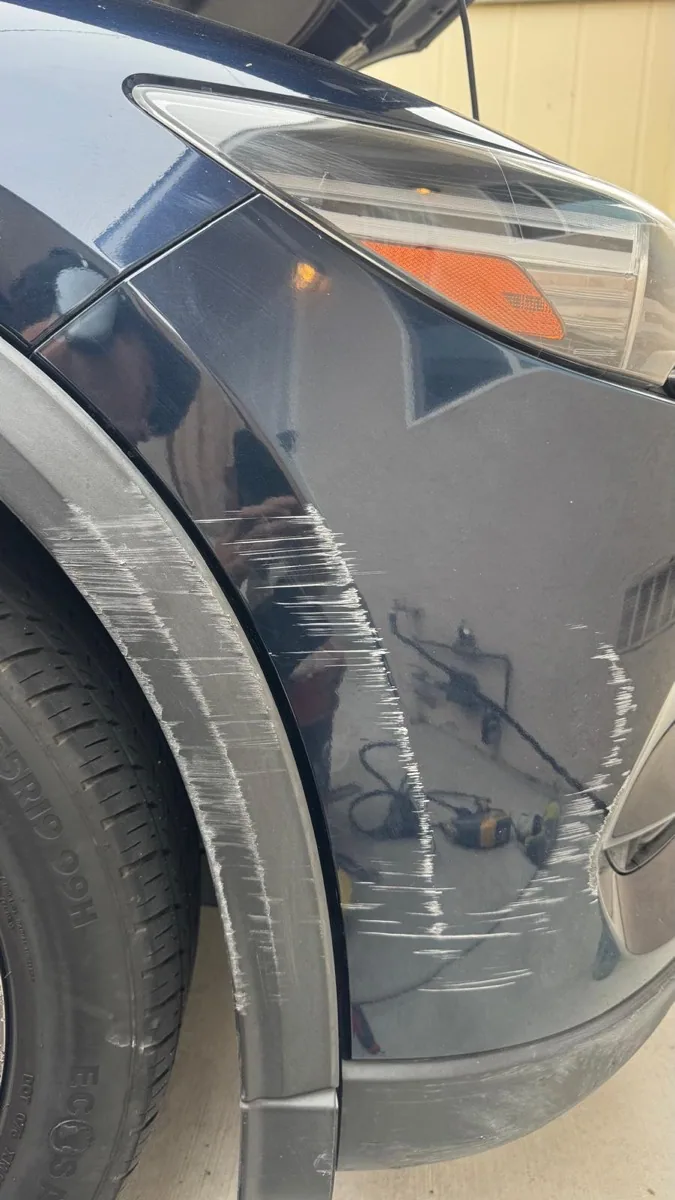
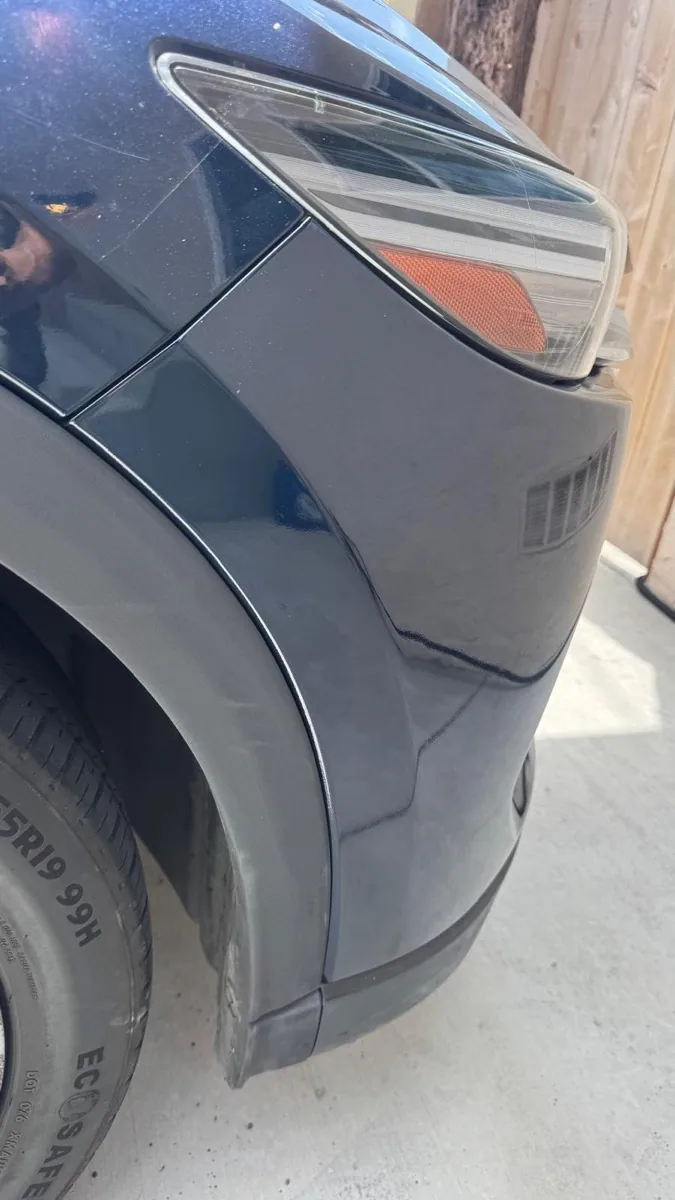
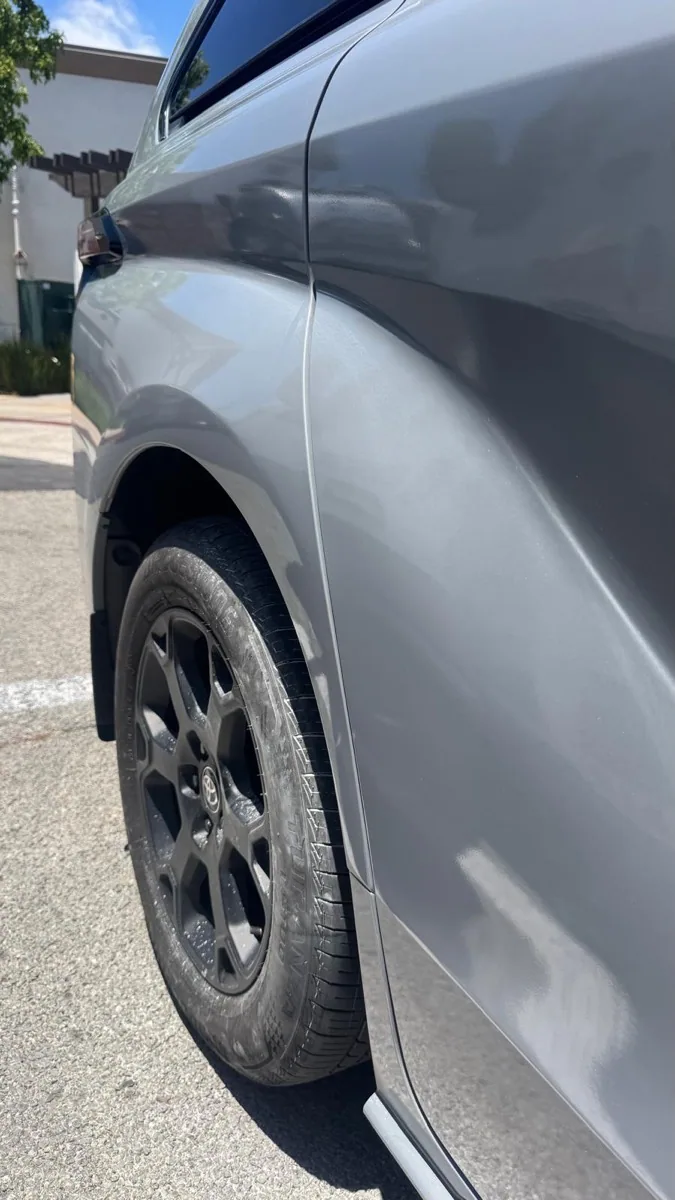
These are two vehicles from the same week. Neither needed a new panel and neither went to a body shop. Both were scraped hard enough that the owner assumed the panel was finished, and both came back with the factory color still on the car.
Before
After
Front fender and arch trim. The scrape ran off the painted fender and straight across the textured trim, which is the part people expect to be replaced. Two surfaces, two different finishes, one continuous line of damage. Both were repaired in place.
Before
After
Rear quarter and slide door. Long, shallow, and running across a panel gap, which is the hard part. A scrape that crosses a gap has to come back on both sides of it or the eye finds the seam every time. Done in the customer's parking lot.
Look at the before on the gray one and you can read our van reflected in the paint. That is the working condition on a mobile job, and it is also the honest version of these photos. Nothing was staged, and nothing was shot in a booth.
Masked, Then Refinished
A whole door taped off so one repair lands clean.
One Standard, Two Crafts
Scratch on a Dent? We Do Both.
If the panel is pushed in and the paint is broken, the metal gets worked first and the refinish comes second. And if the dent's paint survived intact, it belongs with paintless dent repair, where your factory paint is never touched at all.
You do not have to know which repair your damage needs. Text the photos, and Myke tells you which craft it calls for, what it costs, and how long it takes. One conversation, the full picture.
The repair comes to you. Home driveway, office parking lot, anywhere in San Diego County with room to work. Text a photo from anywhere in the county and we'll tell you the schedule and a real quote.
What owners search after finding a scratch. Straight answers, and the photos settle every one of them.
Paint has depth. Reading it correctly is the whole repair, and the reflection is the test.
What does the fingernail test actually tell me?
It tells you which repair you need. Drag a fingernail across the scratch: if it glides over, the damage is in the clear coat and often polishes out. If it catches, the scratch is through the clear and needs a refinish to disappear. Send photos either way and we confirm it before you spend anything.
Will a scratch rust if I leave it?
On a steel panel, a scratch that reaches bare metal will corrode, and coastal San Diego air speeds that up. Aluminum panels and plastic bumpers do not rust, but exposed paint edges still lift and spread. Depth decides the urgency, which is exactly what the photos tell us.
Why are dealership scratch quotes so high?
Because dealerships sublet the work to a body shop, add their handling on top, and quote a full panel respray as the default. We refinish the damage your panel actually has, at your location, and the quote comes from photos of your scratch instead of a rate book.
Can car wash scratches be fixed?
Yes. Swirl marks and light brush haze usually polish out with no paint involved. A deeper single line from grit dragged across the panel follows the fingernail rule. If the whole panel is hazed, that is a polishing job, not a respray, and we tell you which one the photos show.
Who This Is Actually For
Built for Owners Who Want It Gone, Not Hidden.
A good scratch repair starts with understanding the finish you want. We explain suitable repair options and their trade-offs, with careful color matching and complete satisfaction or no charge applied. Use the estimate form to share your vehicle details and photos.
Then it is a hybrid repair, and it is still worth doing properly. The metal gets pushed back to shape with paintless technique first, and only then does any paint work start. That order matters more than most people realize, because the further the metal comes back, the less of your panel ever needs to be refinished.
The alternative, and what a lot of shops default to, is to skip straight to filler and repaint the whole panel. That is faster for the shop. It also means more of your original factory finish is gone, a bigger blend, and a bigger number. Pushing first is the difference between refinishing a patch and refinishing a door.
One-Day Hybrid RestorationPDR and painting combined, finished in a day
The Push-to-Paint ProcessMetal back to shape before any paint work starts
01
Read What the Paint Actually Did
Run a fingernail across it. If it does not catch, the paint held and this is a straight paintless repair. If it catches, the clear coat is broken and the finish needs its own plan. We tell you which one you have from the photos, before anything is booked.
02
Push the Metal Back First
This is the step that saves you money and almost nobody explains. The dent is worked from behind the panel and returned as close to its original plane as the metal allows, exactly as it would be in a paintless repair.
03
Now the Paint Area Is Small
Because the metal is already back where it belongs, what is left to refinish is a fraction of what it would have been. Less filler, less blending, less of your original factory paint disturbed. A body shop that skips step two paints the whole panel instead.
04
Refinish to Your Paint Code
The area is leveled and refinished to your vehicle factory color code and blended into the surrounding panel so it reads as one continuous surface. Checked in direct light before it is called done.
The honest part: a hybrid repair costs more than paintless and less than a full panel repaint, and it is not always the right answer. On some damage the paintless result alone is good enough and we say so. On others the paint was too far gone and it belongs at a body shop, and we say that too. Send two photos and you get told which of the three you are actually looking at.
Scratch Repair, Real Answers
What You Need to Know Before You Decide.
How much does scratch repair cost in San Diego?
A panel scratch repair and refinish starts at $550. The price follows the color (a tri-coat finish takes more stages than a flat color), the depth of the scratch, its length, and how many panels it crosses. A clear-coat scratch that has not reached the color can often be polished out for far less. Text photos and you get the real number in minutes.
Can a scratch be buffed out without repainting?
Only if it lives in the clear coat. Run a fingernail across it: if the nail glides over, polishing can usually erase it. If the nail catches, the scratch has cut past the clear and the panel section needs to be leveled and refinished to your factory color code. Photos tell us which one you have before you spend anything.
Do you repair key scratches?
Yes. A key scratch is usually deep and long, often crossing two or more panels, which is exactly why it is priced per panel from photos. The scratch is leveled, primed where it reached metal, and refinished so the line disappears into the factory color.
How much does it cost to fix a scratch on a car door?
A single door panel runs $550 to fix properly, which covers leveling the scratch and refinishing that section to your factory paint code. A light clear-coat scratch on the same door can polish out for far less. The door is the most common scratch location we see, usually from another car, a bike handlebar, or a gate. Text a photo and you get the real number before you commit to anything.
Can you fix a deep scratch near the door handle?
Yes, and it is one of the most common spots. The recess around a handle collects fingernail and key marks, and the curved surface there is why a touch-up pen never blends. The area is leveled and refinished to your factory code so the repair reads as one continuous surface rather than a patch you can find in the light.
How much to fix a scratch on a bumper versus a metal panel?
A bumper is plastic, so it flexes and needs a different prep and a flex additive in the finish. A dented corner with the paint intact starts at $250 because nothing is refinished. A scratched corner starts at $395 and goes up. A full scuff panel runs $395 and a deeper bumper scratch $550. A metal panel scratch starts at $550 because there is more surface to blend. If your scratch crosses from the bumper onto the fender, both get quoted, and we say so up front.
How much does it cost to fix a scratch on a Tesla?
The same as any other vehicle of that color, $550 for a panel refinish, because a scratch is a paint repair and the badge does not change the paint work. What does change it is the color. Tesla's reds and multi-coat whites take more stages to match than a flat color, and that is true of any brand with a tri-coat finish. Send a photo of the scratch and the paint code from your door jamb.
Do you repair scratches at my home or office?
Yes. Scratch repair is a fully mobile service across San Diego County. Prep, color match, and refinish happen at your location, and most single-panel repairs are finished the same day.
Will the repaired area match my factory color?
Yes. The refinish is mixed to your vehicle's factory paint code and blended into the surrounding panel so it reads as one continuous surface. Color match is checked in direct light before the job is called done.
How long does scratch repair take?
A clear-coat polish can be under an hour. A single-panel refinish typically runs two to four hours at your location. Key scratches across multiple panels can take a full day. You get the timeline with your quote before any work starts.
Should I file an insurance claim for a scratch?
Rarely. Most scratch repairs cost less than the deductible plus the premium increase a claim brings, and paying out of pocket keeps the repair off your record entirely. For vandalism-level damage across many panels, a claim can make sense, and we tell you honestly which side of that line your damage sits on.
Start Here
Two Photos. Real Answer in Minutes.
Straight-on and at an angle, in natural light. You get the depth read, the honest repair, a written estimate, and how long it takes. A scratch never gets cheaper by waiting, and bare metal has a clock on it.
 Before
  After
After 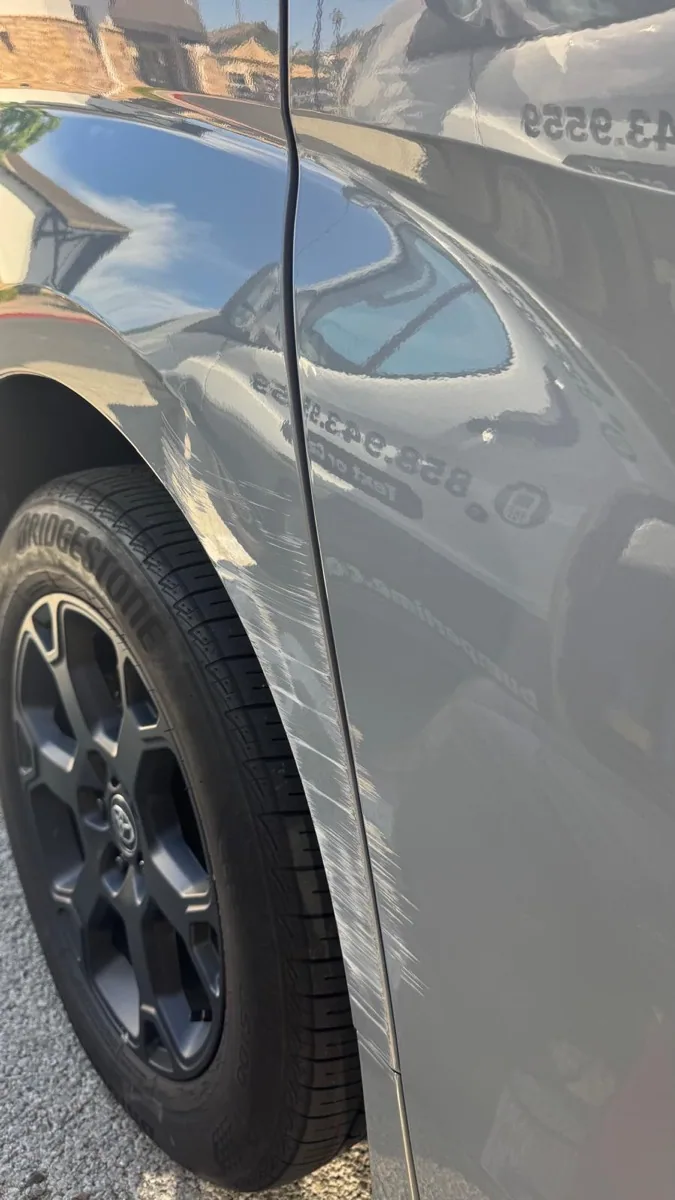 Before
  After
After