Standard Door Ding
$197 to $250
60 to 90 minutes
The everyday parking-lot ding. The most common repair we do, usually finished in a single visit.
Paintless dent repair is not a magic trick. It is precision metalwork, priced by what the repair actually takes. Here is the why, the how, and exactly what moves the number, so you can decide on value, not guesswork.
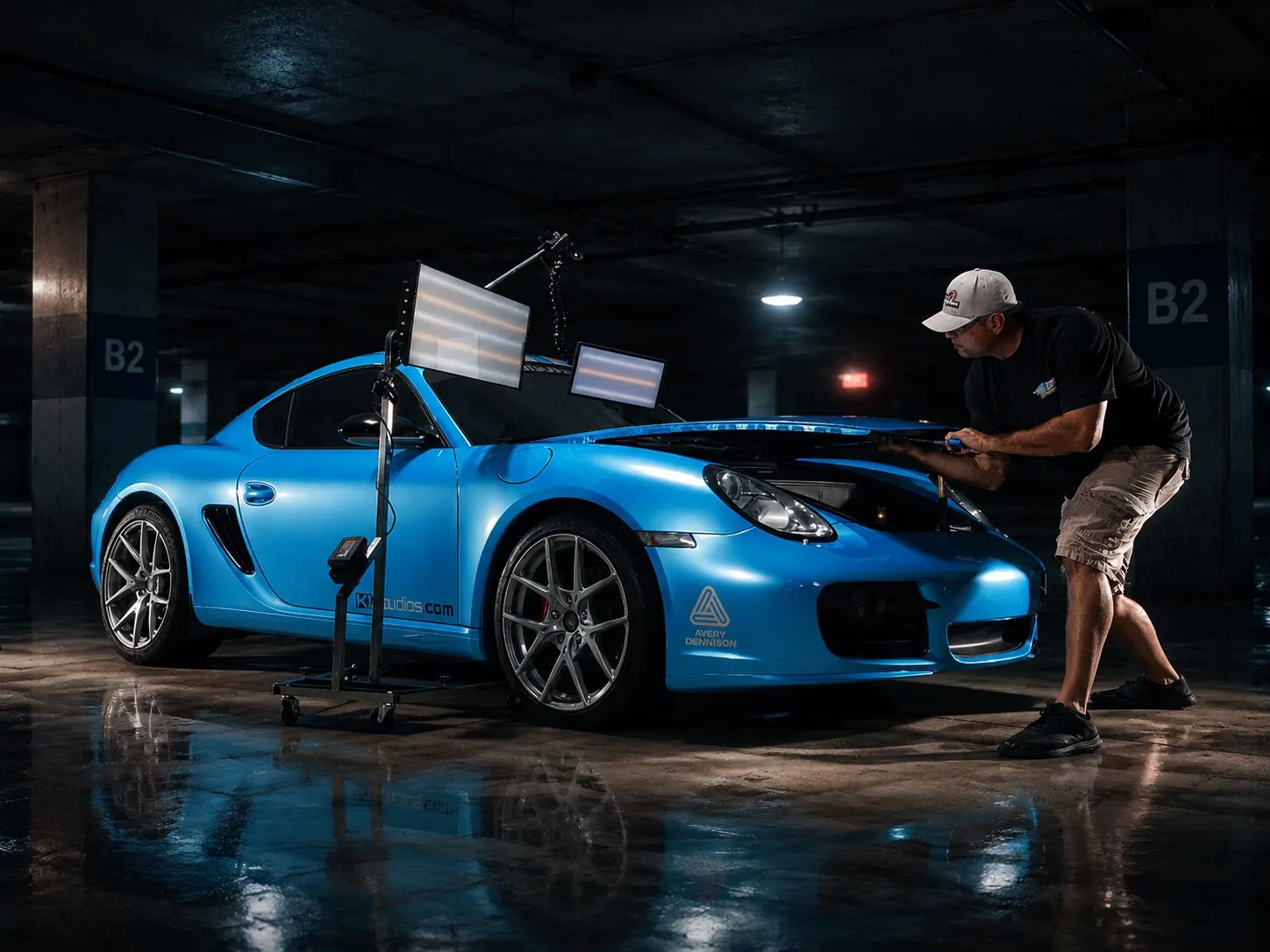
Every price on this page is time and skill. This is what it looks like. Tap WATCH and the page becomes the theater, sound on.
Drag or use the arrows · tap watch for full screen
Answer four quick questions and watch how each factor moves the number. This is a preliminary range. A technician follows up with a written estimate after a photo review.
What's behind the panel can change this number. Two dents that look identical from outside can be two different repairs, because braces, beams and wiring sit behind some spots and not others. That is why this is a preliminary range, never a quote sight unseen.
See what's behind the panelThis is a preliminary range based on your answers. Send two photos and a technician replies within minutes with a written estimate. The final price is always confirmed in person, once we can see what is behind the panel. No obligation.
Two dents that look identical from outside can be two different repairs, because braces, beams and wiring sit behind some spots and not others. That is why this is a preliminary range, never a quote sight unseen.
Better has a real number here. Practical takes out the major part of the damage at about 30 percent less than Premium, measured against the real Premium number for your dent.
You do not see it. Not from any angle, not from any distance, not if you go looking. The dent is gone rather than reduced.
Newer vehicles, leases, anything where resale is the point.
You will still find slight imperfections at different angles if you go looking. They are not obvious and most people never notice, but they are there.
Older vehicles, daily drivers, and damage nobody is inspecting.
For your situation:Practical. It is close to perfect, with a few slight imperfections left at certain angles, and you can step up to Premium during the repair.
Or keep reading. The full reasoning is below.
Most paintless dent repair in San Diego runs $197 to $500 for everyday dents. The price comes down to five things, and every one of them is about the work, never a markup. Here is what each type runs, and your written estimate is free in minutes from a photo.
A clean ding or small body dent, massaged out with the factory paint untouched.
Deeper or wider damage on a door, fender, or quarter panel. Same flawless finish.
A line dent along the body. Worked out section by section without breaking the paint.
The body shop says new panel. We look at the paint first and often save it.
Priced by the storm and the panel count, usually $1,500 to $8,000 or more. This is the one repair where insurance usually makes sense. We work every panel, keep the factory finish, and handle the claim with your insurer directly.
Every price depends on the dent depth, where it sits on the panel, and the access behind it. Panel material matters too. High-strength steel and aluminum take more skill and time. Most repairs also come in two finish levels, so the result fits your vehicle and your budget.
Complete satisfaction or no charge applied. Factory finish. No Carfax record. Your written quote is free and confirmed in person before any work begins.
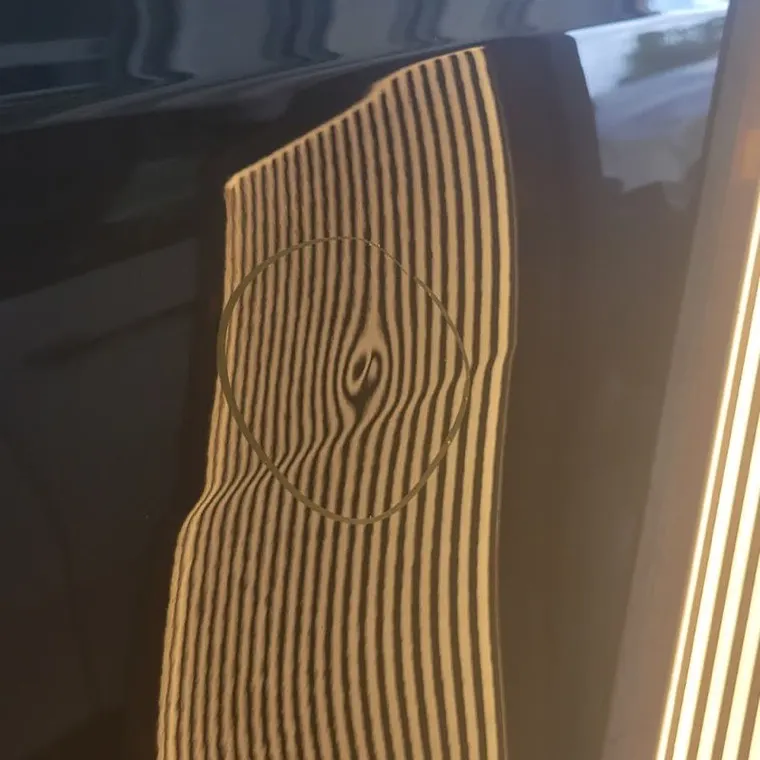
A lot of people see a dent disappear and assume it was easy. It was not. The metal you see returned to flat was moved back into place a fraction of a millimeter at a time, from behind the panel, by a technician reading the reflection of a light board after every single push.
There is no filler hiding the work. There is no repaint covering it. The original factory surface is still there, untouched, which is the entire point. That result takes years to learn and real time to perform. You are not paying for a trick. You are paying for the one repair method that fixes the dent and keeps everything the factory built.
That is the value. The factory finish stays. Nothing lands on the Carfax. The car keeps its resale. Most repairs are done the same day. Price is what you pay. Value is what you keep.
The most common question San Diego drivers ask after a bad experience is: how was I supposed to know? The answer is always visible, if you know what to look for. Poor PDR leaves metal that was pushed with the wrong tools, clearcoat stressed or cracked from sharp contact, and in some cases holes drilled where none belonged. None of that can be undone by another technician. Every car in this section was dent-repairable before the first shop touched it. This is what to look for before you hand your car to anyone.
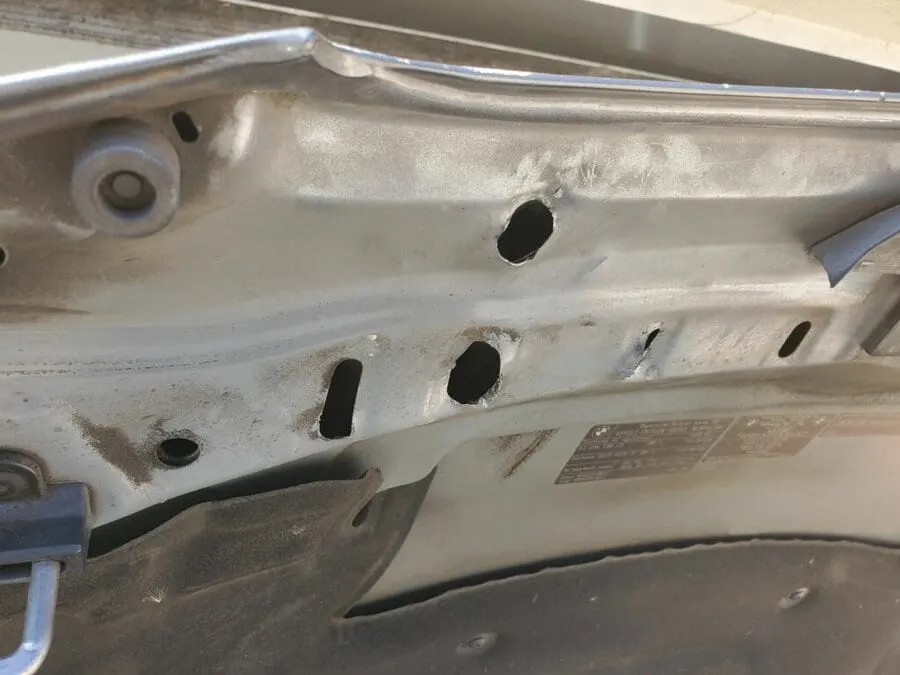
Multiple holes drilled through the panel where none were needed, then left open, unsealed, unprotected. Every one of those openings is now a rust point working inward. The structure is compromised.
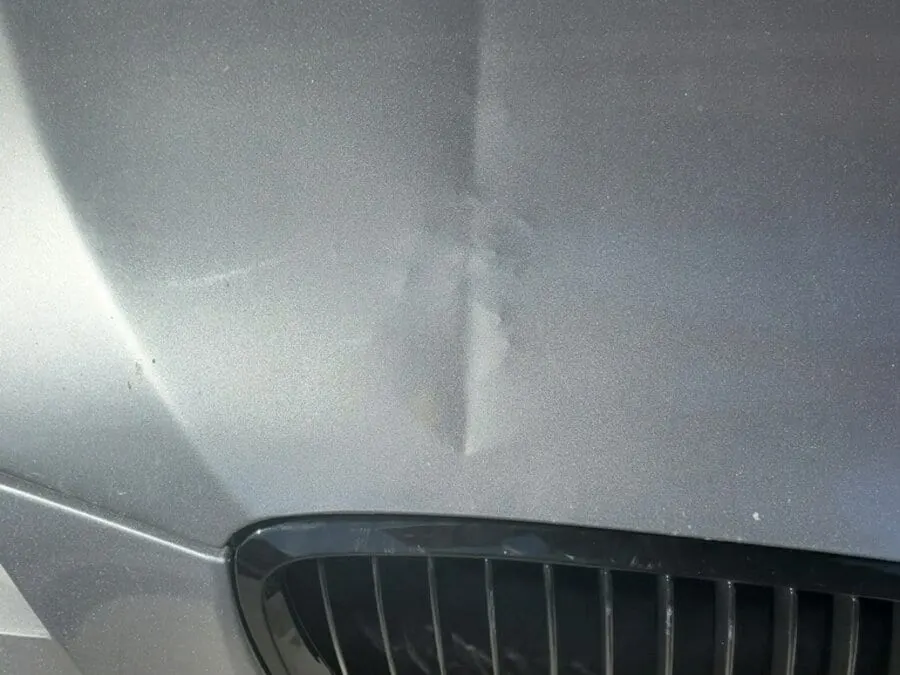
Done by a technician who called himself experienced. A sharp tool pushed with too much force created high spots across the hood and stressed the paint at every contact point. Once the paint is broken from underneath, PDR is no longer an option. The panel needs a full respray.
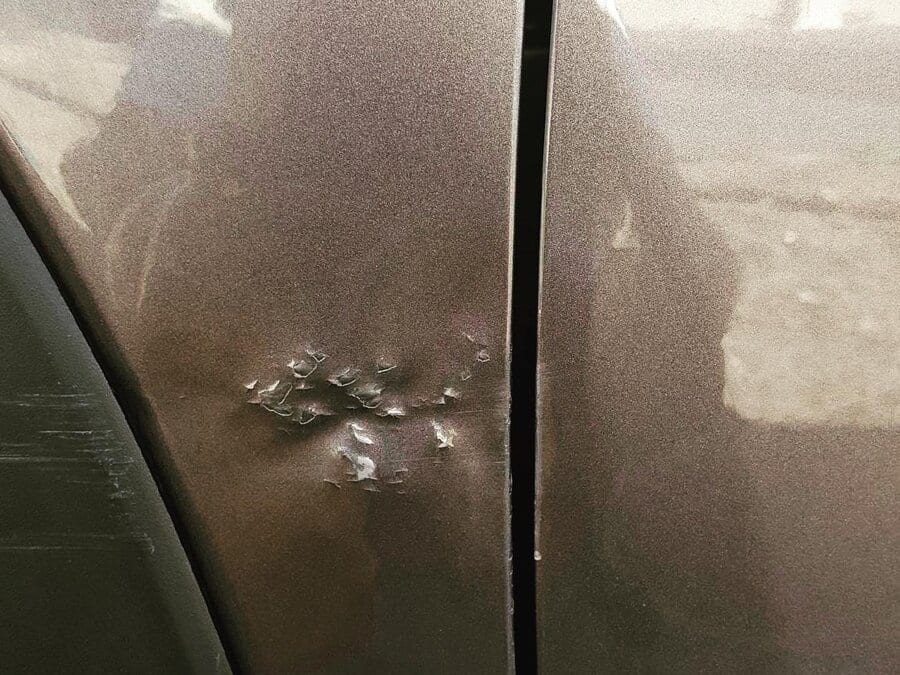
Aggressive pushing with the wrong tools poked the metal up from underneath across the panel. Each raised point broke the paint surface from below. There is no pushing these back down. The factory finish is gone.
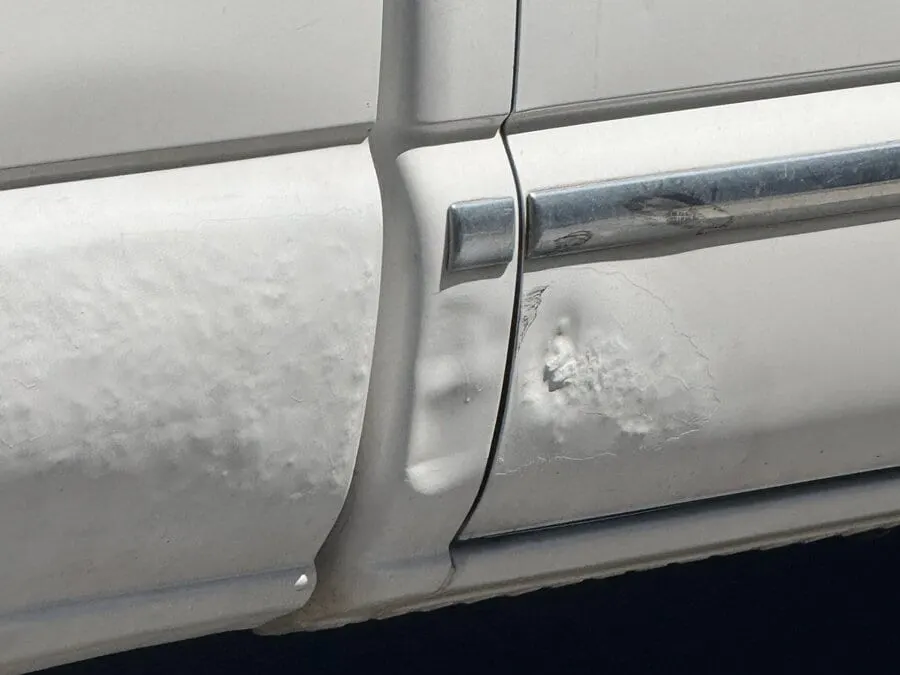
A mobile company in a Walmart parking lot told the owner it would wash away by tomorrow. It didn't. What they applied bonded to the paint and lifted it, leaving the panel in worse shape than the original dent. This car now needs new panels and collision work that could have been avoided entirely.
Every panel above was dent-repairable before the first technician touched it. The damage in these photos was not caused by the original impact, it was caused by the repair. That distinction matters, because it changes what you are actually deciding. The dent is not the risk. The technician is.
Myke Toledo · Dent Time
When you buy a gallon of milk, every gallon at every store is the same product. Choosing the one that costs less makes sense. PDR is not that. Two technicians looking at the same dent will make completely different decisions about access, pressure, and where to stop. One of those decisions preserves your factory finish. The other one does not.
Thirty-five years in this trade is not a marketing number. It is the count of dents, panels, and metal types that live in a technician's hands as muscle memory. You cannot buy that experience at a lower price point. You can only find it or not find it.
The tool does not read the metal. The technician does.
These are the actual ranges Dent Time charges across San Diego County. Door dings start at $197, hail is priced by the storm. What moves a number inside its band is depth, sharpness, location on the panel, access behind the metal, and whether the panel is steel or aluminum.
The everyday parking-lot ding. The most common repair we do, usually finished in a single visit.
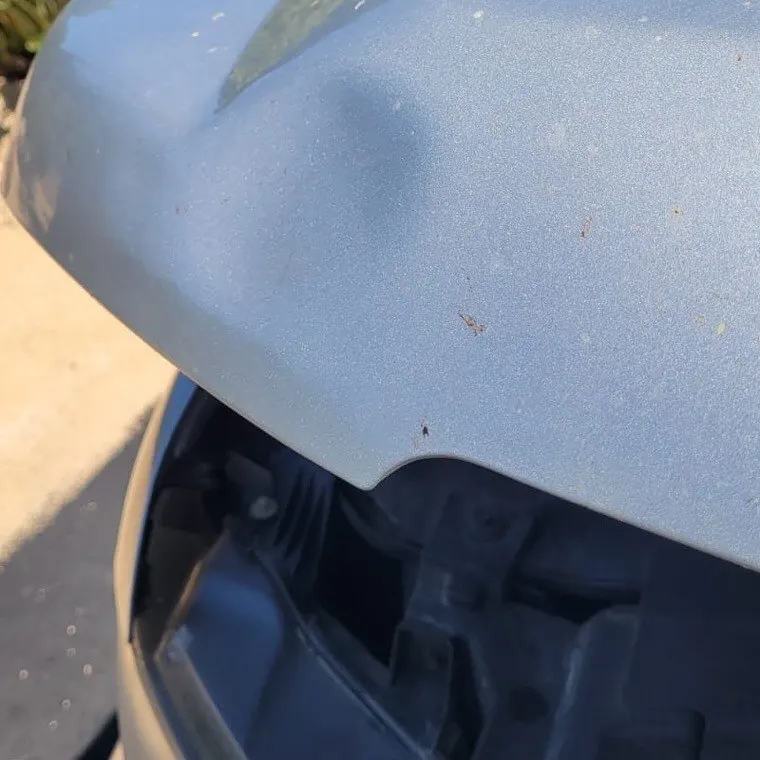
Deeper than a ding, still shallow enough for clean PDR. Common on quarter panels, doors, and hood edges.
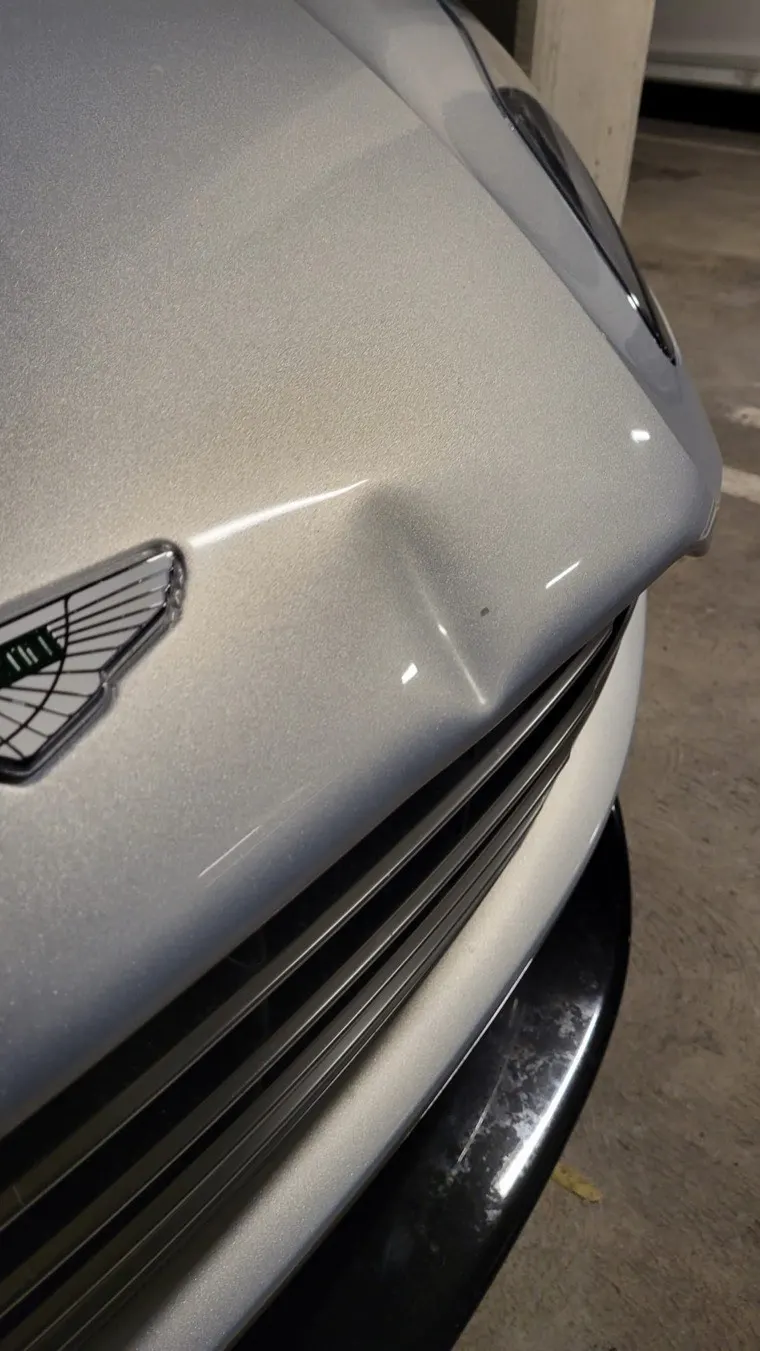
Sharper than a dent, follows a line or edge. Price tracks depth and how tight the crease sits against a body line.
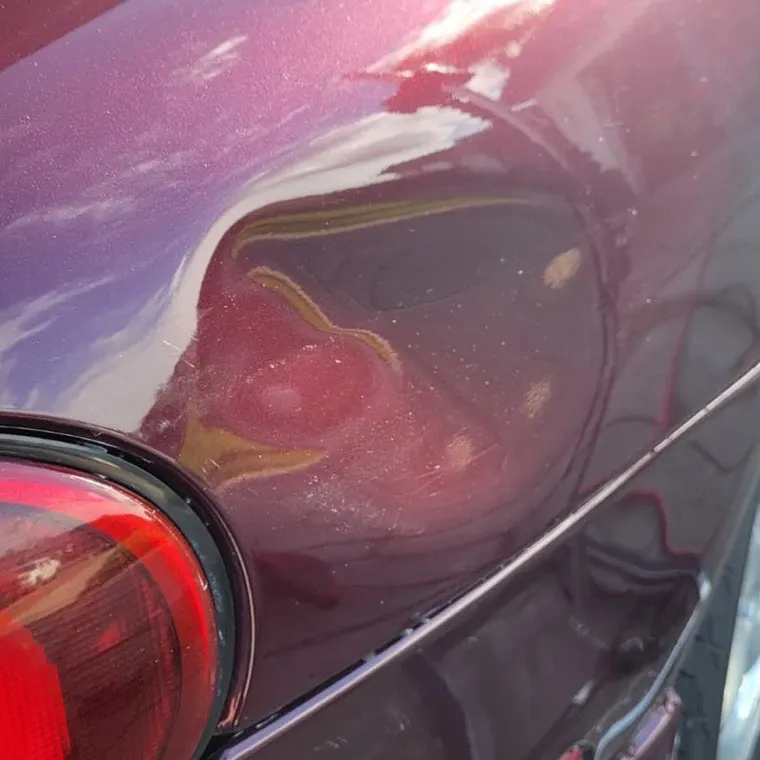
Big impacts, hidden crowns, trapped pressure. Some route to the shop for controlled conditions, and we say so before booking.
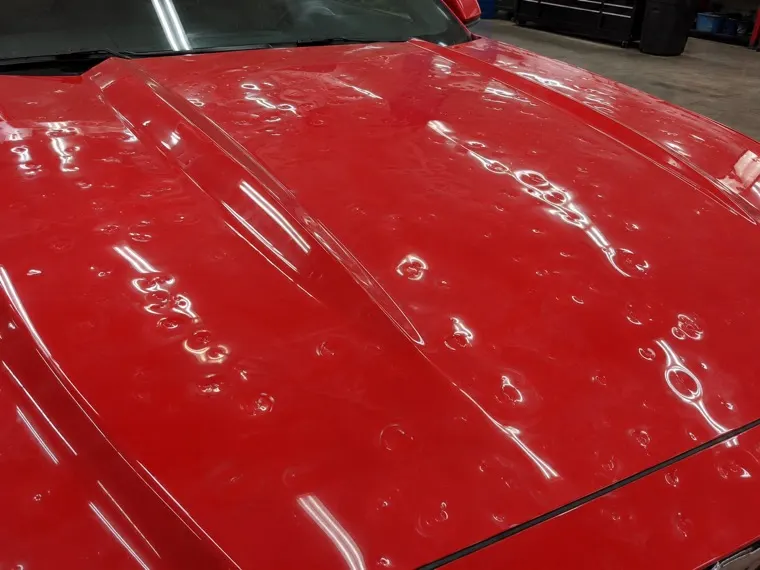
Priced by the storm, not the panel. Insurance-eligible when the deductible math works, out of pocket when it does not.
What drives the number. Not the width of the dent. A small sharp impact can cost more than a wide soft one, because keeping factory paint intact over a tight crown takes more skill and more time. Send two photos through the estimate form and a real technician replies with your written estimate in minutes.
Two dents that look the same to the eye can cost different amounts. Here is exactly why, in plain terms.
Size is not what drives the price. Sharpness is. A small, sharp dent, the kind a BB or a rock leaves, can take more skill and cost more than a large, soft, hand-sized dent. When metal is bent that sharply, the paint is stretched tight over a tiny point. Bringing the metal back without cracking the factory clear coat is the real skill. A large shallow dent moves with ease. A tiny sharp one fights every move and puts the finish at risk.
A door ding starts at $197, but a small sharp impact can run more than a big soft dent. The price follows the sharpness and the risk to the paint, not the width.
A dent in the open middle of a flat panel is the most predictable repair. A dent on a body line, a crease, or near an edge is harder. The metal is under more tension there, and the line has to stay perfectly straight. A crease is like folding a piece of paper and then trying to iron the line out: flattening it is easy, making the fold disappear is another job entirely.
Same size, more difficulty, higher price. A crease runs more than a flat-panel ding of the same width.
PDR is worked from behind the metal. If the back of the panel is open, the technician reaches it directly. If a brace, a liner, a speaker, or a window track blocks the path, the part is removed and reinstalled first. This is also why a price is not final until we see what is behind the panel.
That removal and installation is real labor. It is why two identical dents can carry different prices.
Steel and aluminum behave very differently. Steel has memory. It wants to return to its original shape, and a skilled technician uses that to help the repair. Aluminum has no memory. It is lighter but stronger, and it gives nothing back, so every correction takes far more force, control, and accuracy to move the metal and set it back into shape. High-strength steel on newer vehicles resists movement too.
Aluminum panels on a Tesla, Rivian, Audi, or BMW run about 50% more than steel. High-strength steel runs about 25% more.
PDR works when the factory paint is intact. If the dent cracked or chipped the clear coat, the metal can still be shaped, but the paint needs its own plan. We never hide that from you.
Intact paint is a clean PDR job. Cracked paint means we evaluate both and give you an honest recommendation. When the paint has to be involved, the metal still gets pushed back to shape first, which is what keeps the paint work to a minimum.
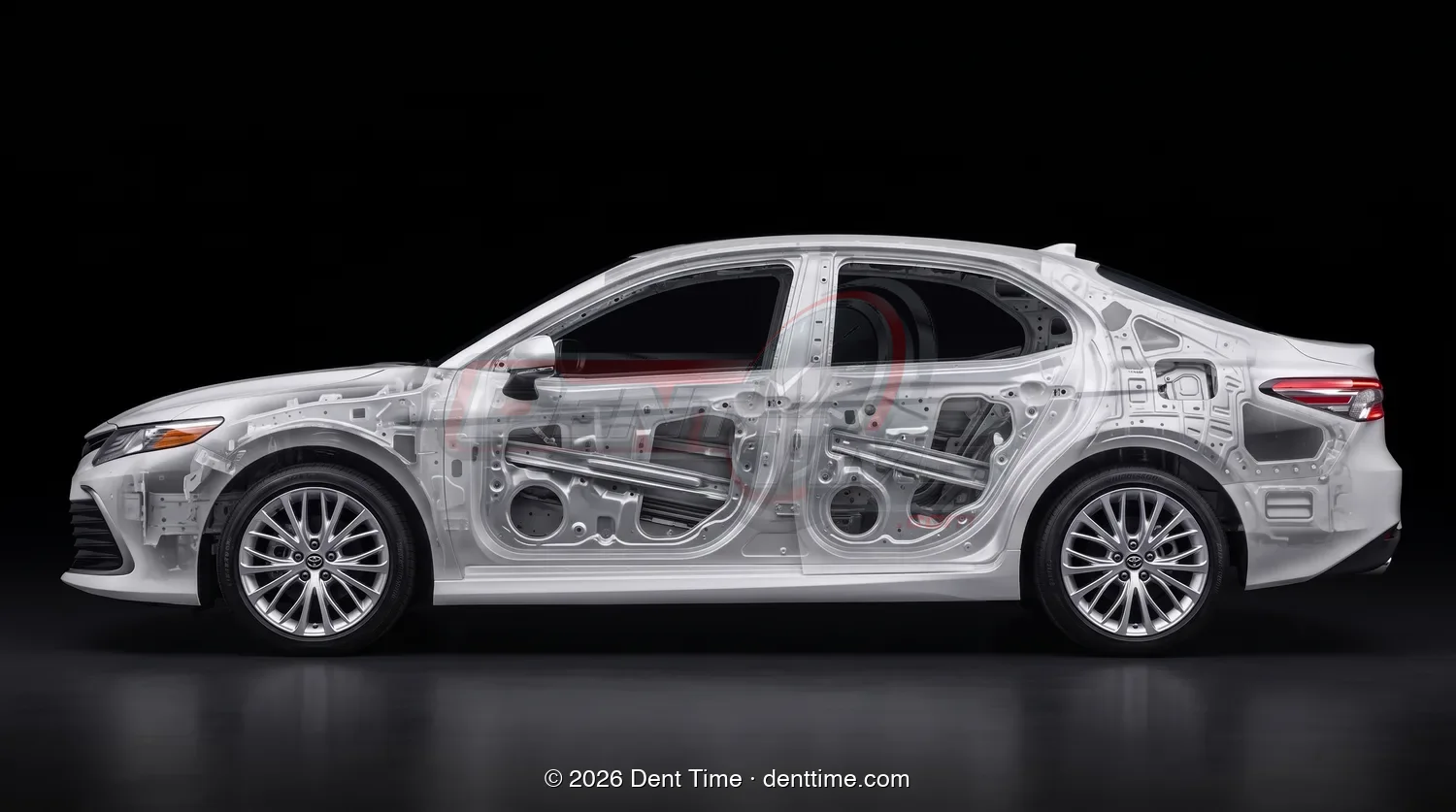
A car door is not one panel. It is a thin outer skin over an inner frame, with a reinforced impact beam, a window track and regulator, wiring, and a speaker packed behind it. A door ding on the open skin is a clean paintless dent repair. The same dent sitting over the impact beam or behind the regulator has to be reached from the back, and that is what changes the work and the price.
It is why two door dings that look identical from the outside can be two different repairs. One is massaged out from behind in minutes with the factory finish untouched. The other needs the door panel, and sometimes the glass, removed and reinstalled first to reach the metal. Neither is a flat rate, because the honest number depends on what sits behind that exact spot.
So we read the panel before we quote. The price reflects the real door dent repair, not a number pulled to win the call. Either way it stays paintless, with no filler and no repaint, the factory paint kept, and nothing on the Carfax. See exactly what drives the price.
This is why we give a preliminary price range, never a firm quote sight unseen. A firm price before anyone sees what is behind the damaged panel would be a guess, and a guess is where surprise charges come from. You get an honest range from your photos up front, then the firm number once the panel is seen in person. No bait, no upsell, just the real cost when it can actually be known.
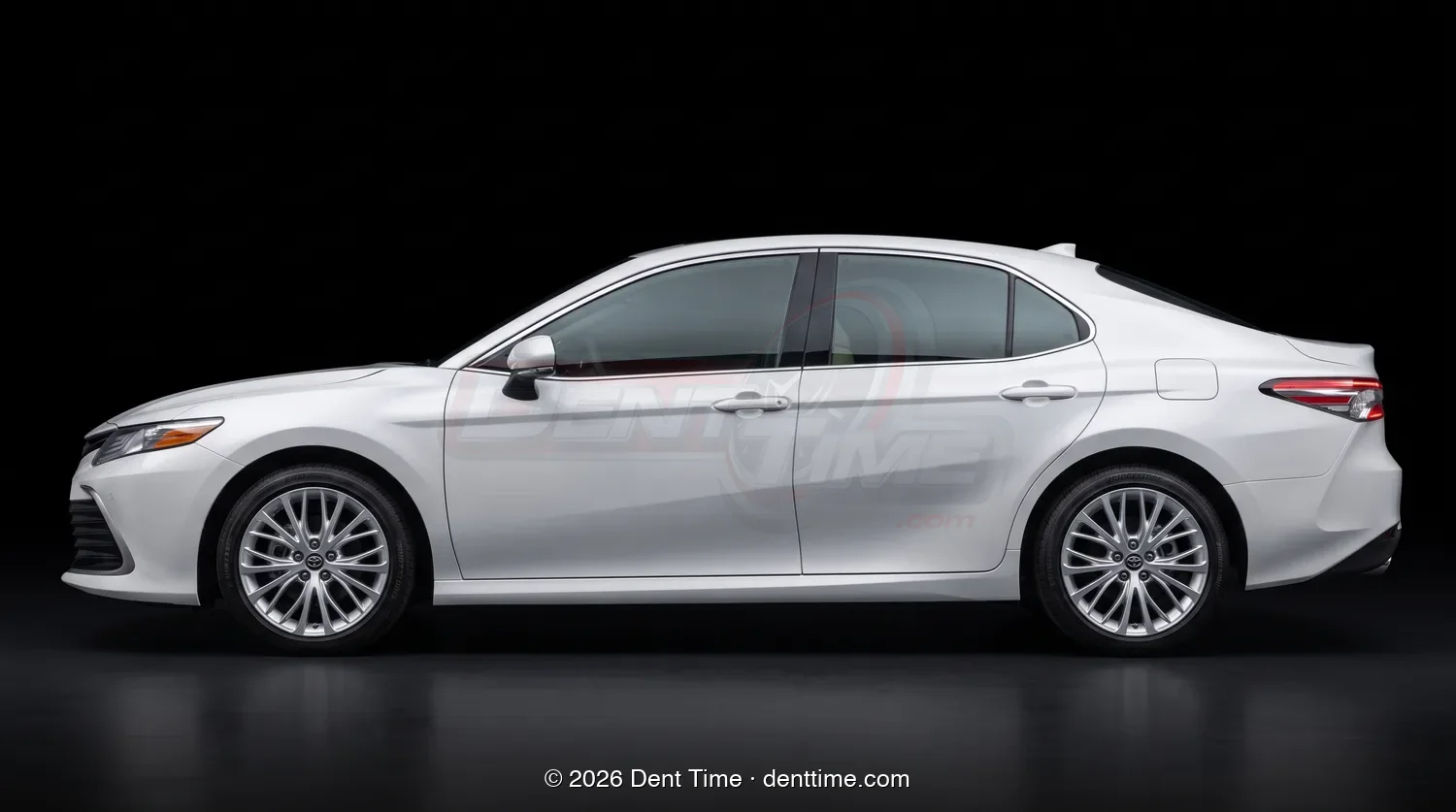
The same car, inside and out. What you can't see is exactly what sets the price.
Your dent may not be on a door, and that changes very little. Hoods, fenders, quarter panels and tailgates all have structure behind them too: braces, reinforcement bars, brackets, wiring, and on a hood the whole underframe. Some spots on your car are wide open from behind and take minutes. Others sit directly over a brace and have to be reached a harder way, or reached after something comes off first. That is the single biggest reason two dents that look the same are not the same price.
Your paintless dent repair cost depends on the damage, access, and finish you choose. Complete the estimate form with your vehicle details and photos so Myke can review your repair and explain suitable options, including a more affordable approach when the damage allows.
Drag any handle. These are actual Dent Time repairs and what each one cost. Find the one closest to your dent, then text us a photo for your written estimate.
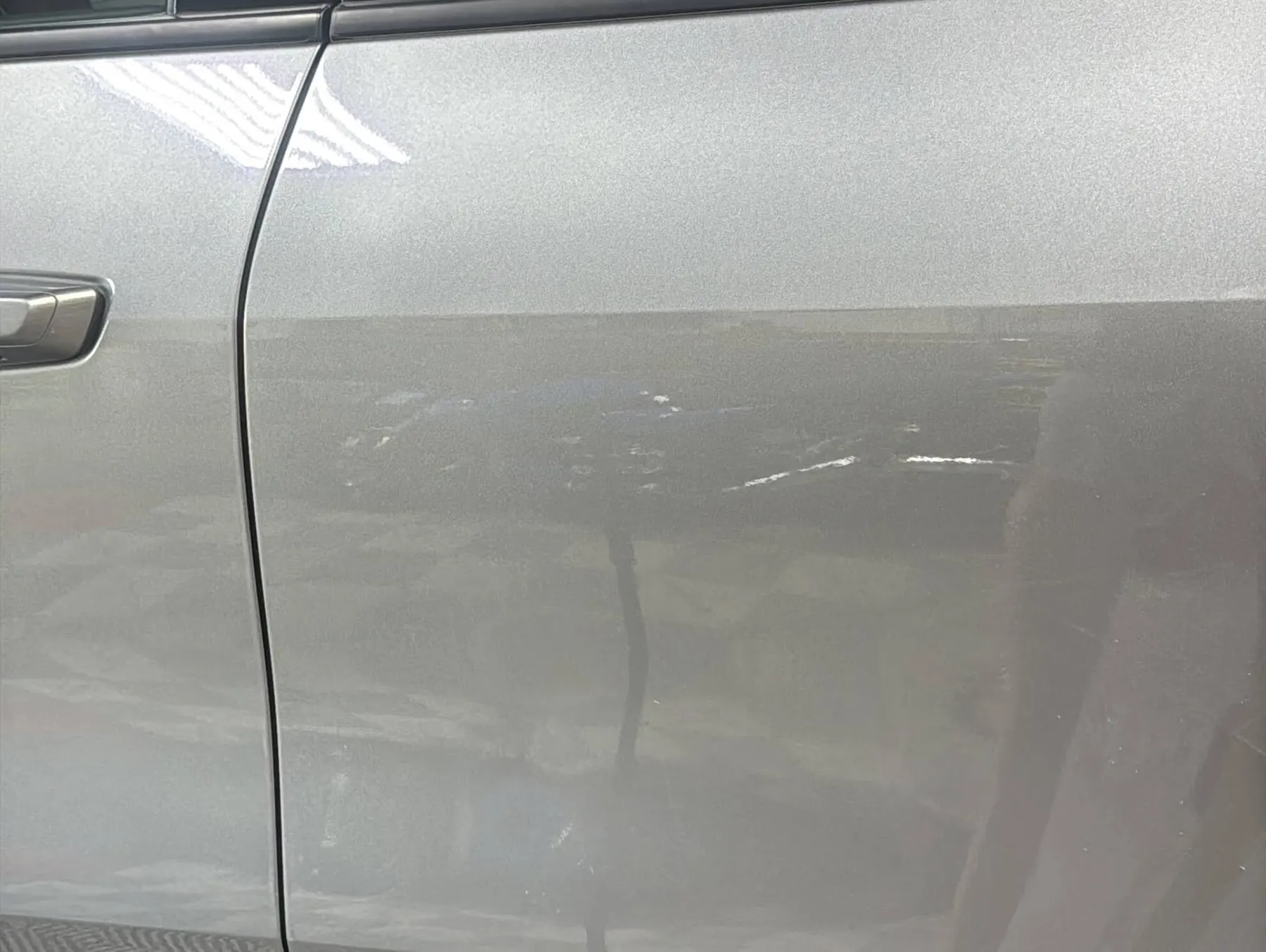
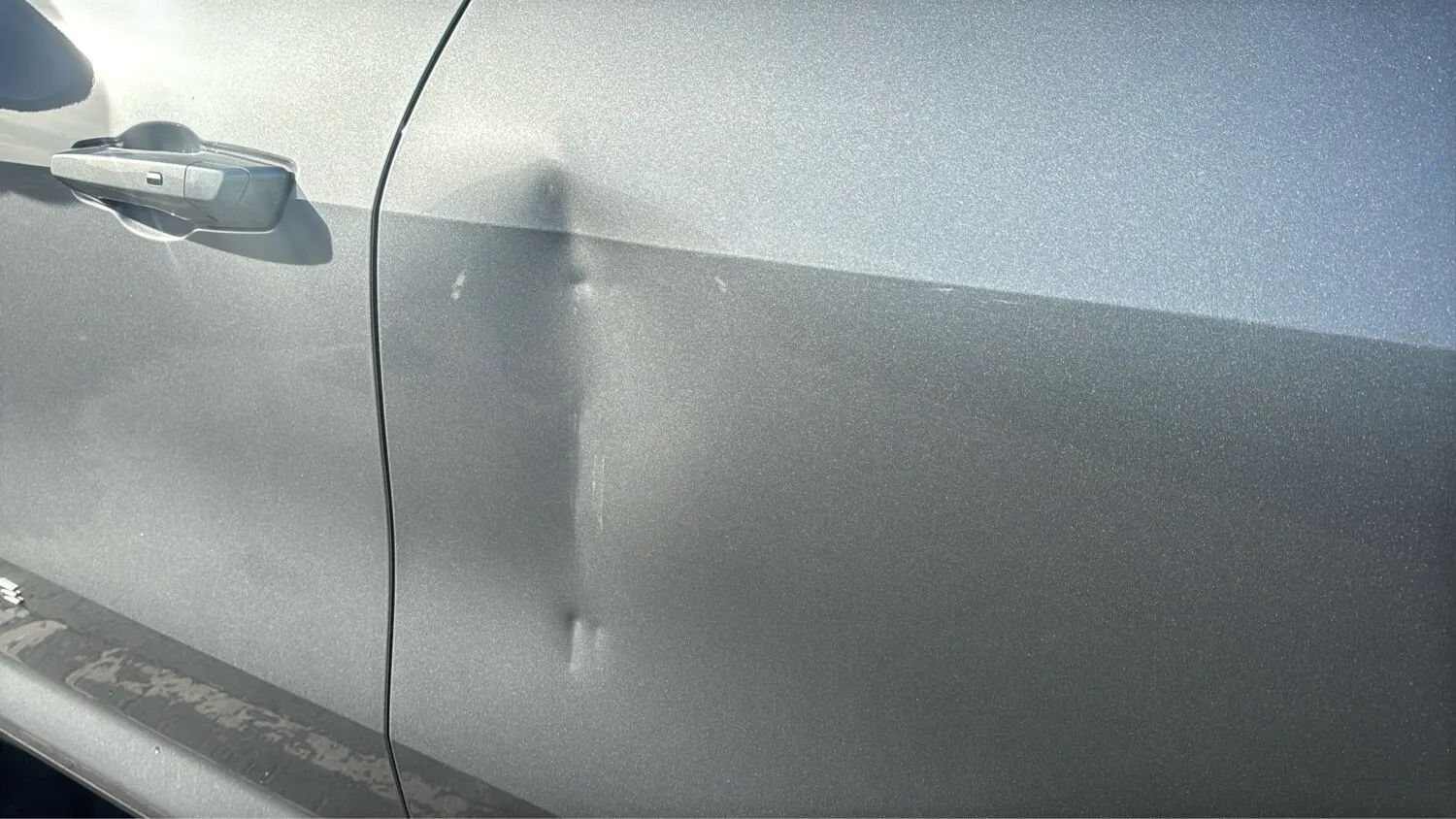
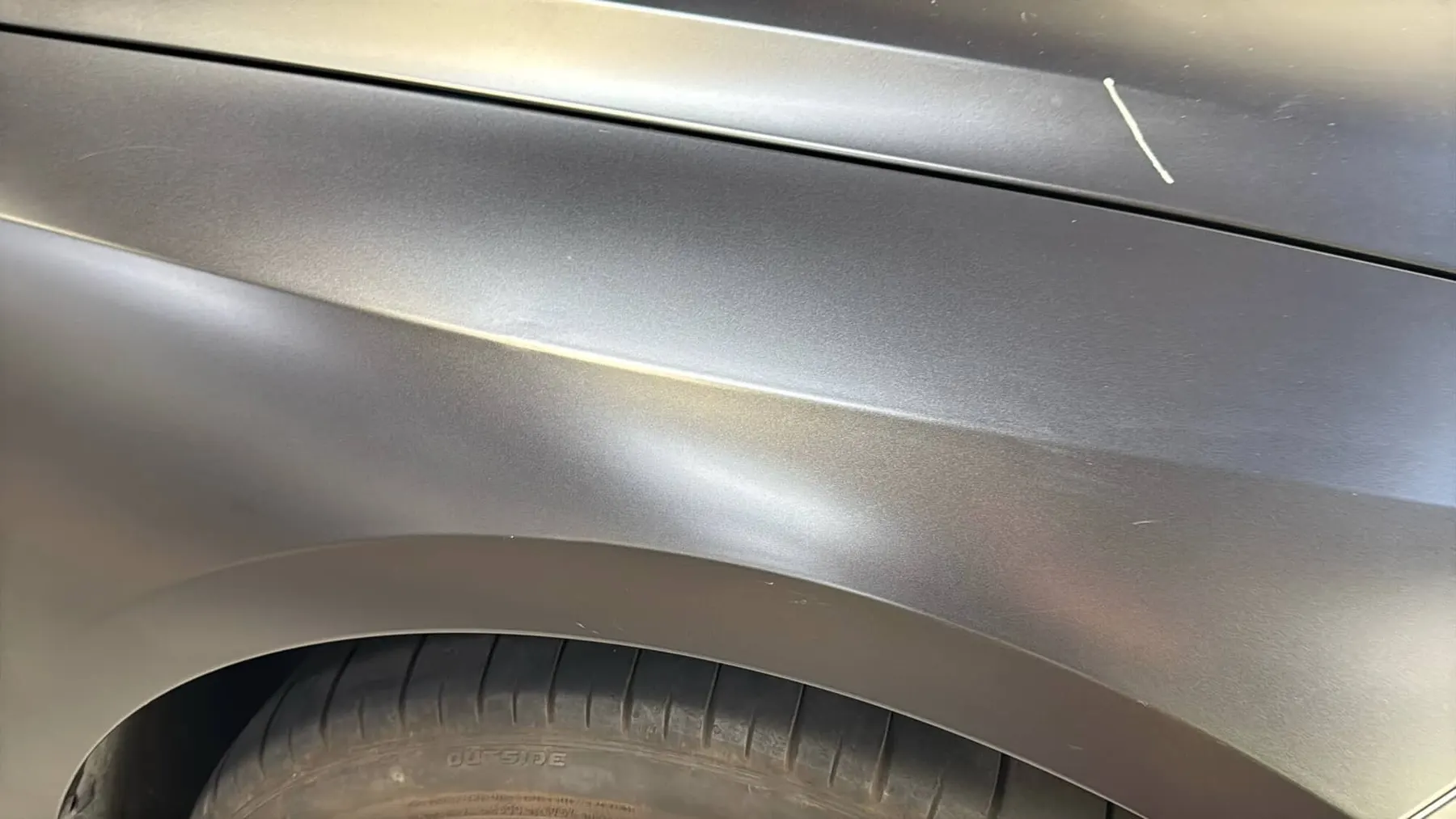
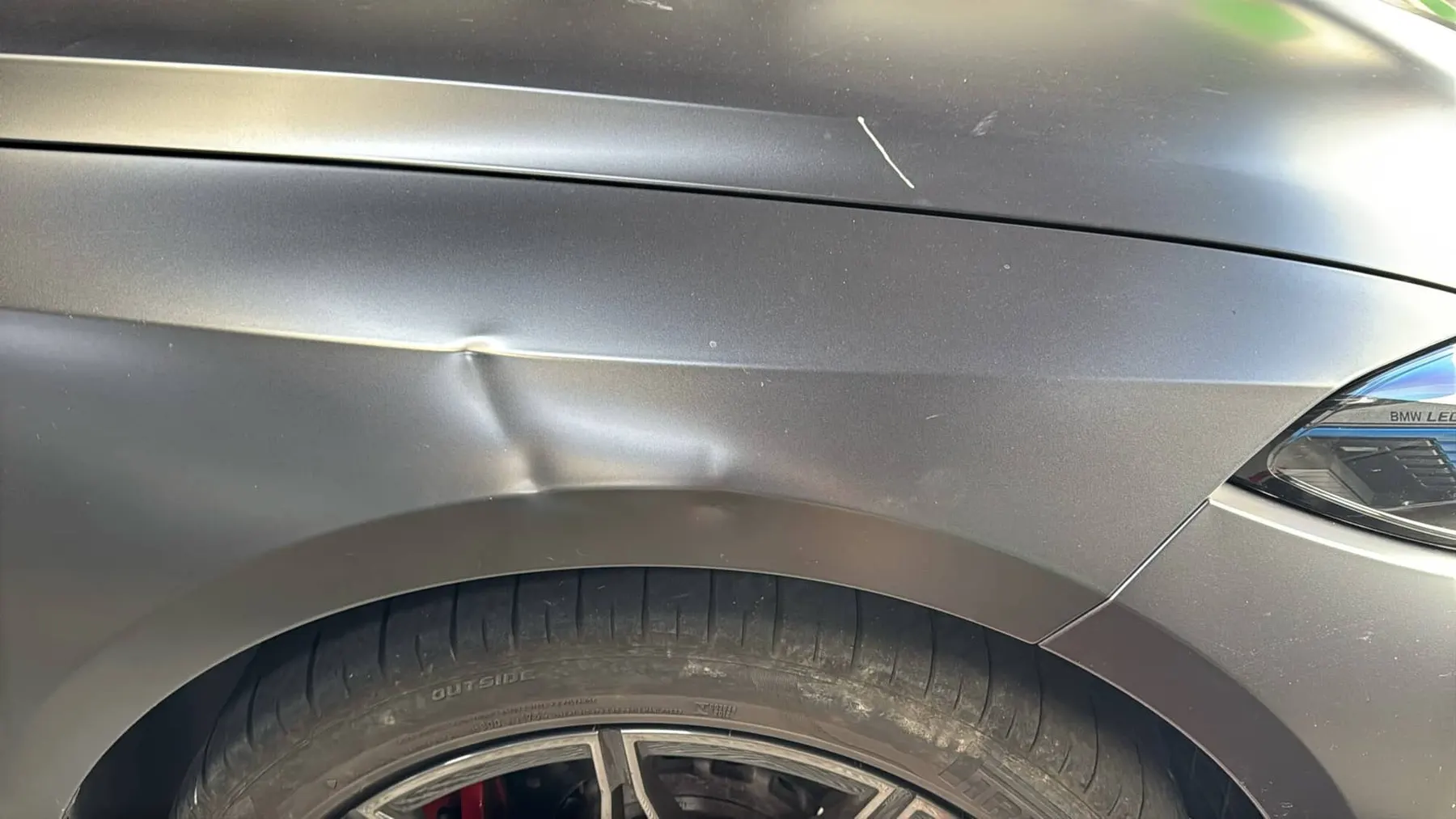
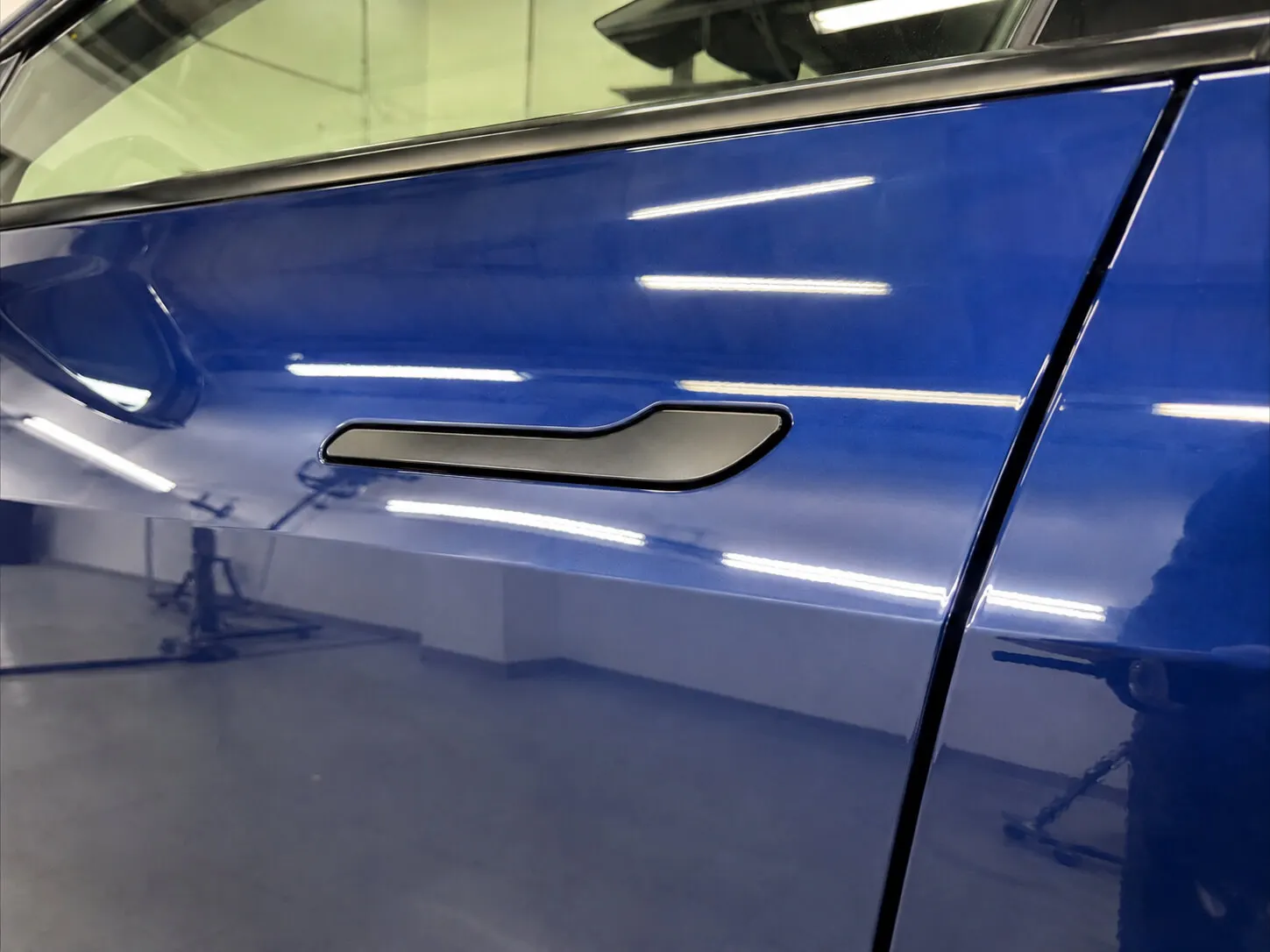
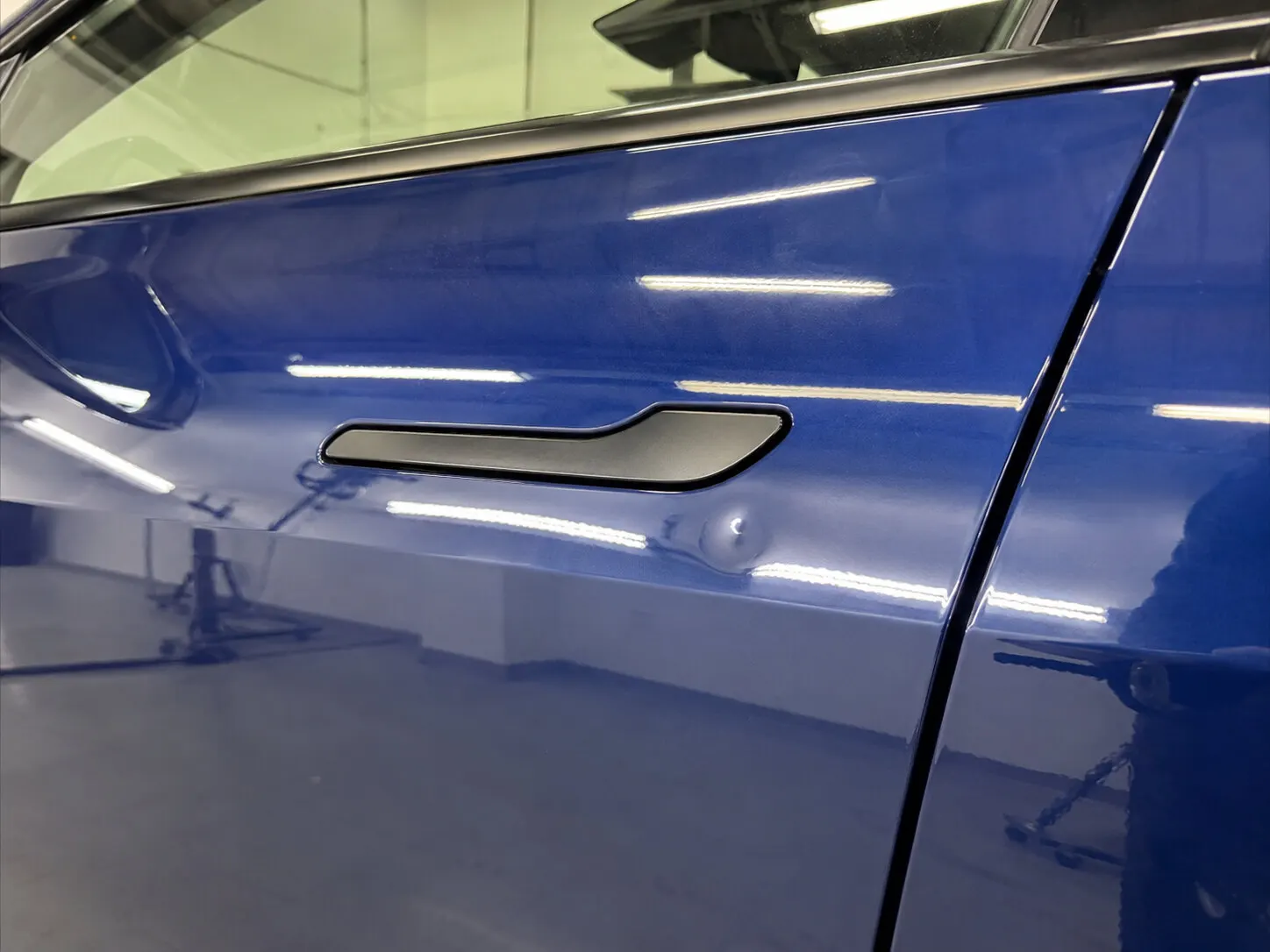
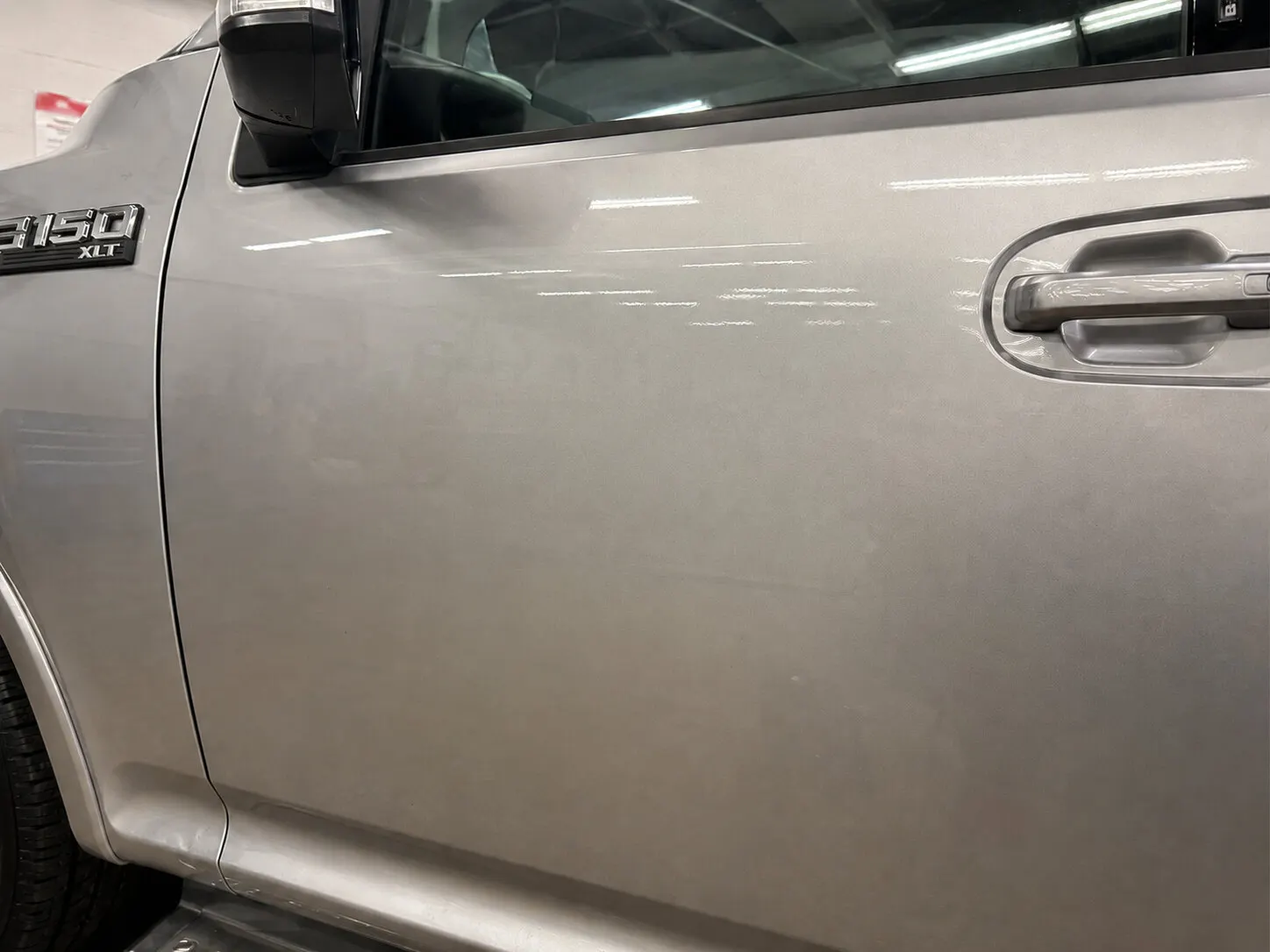
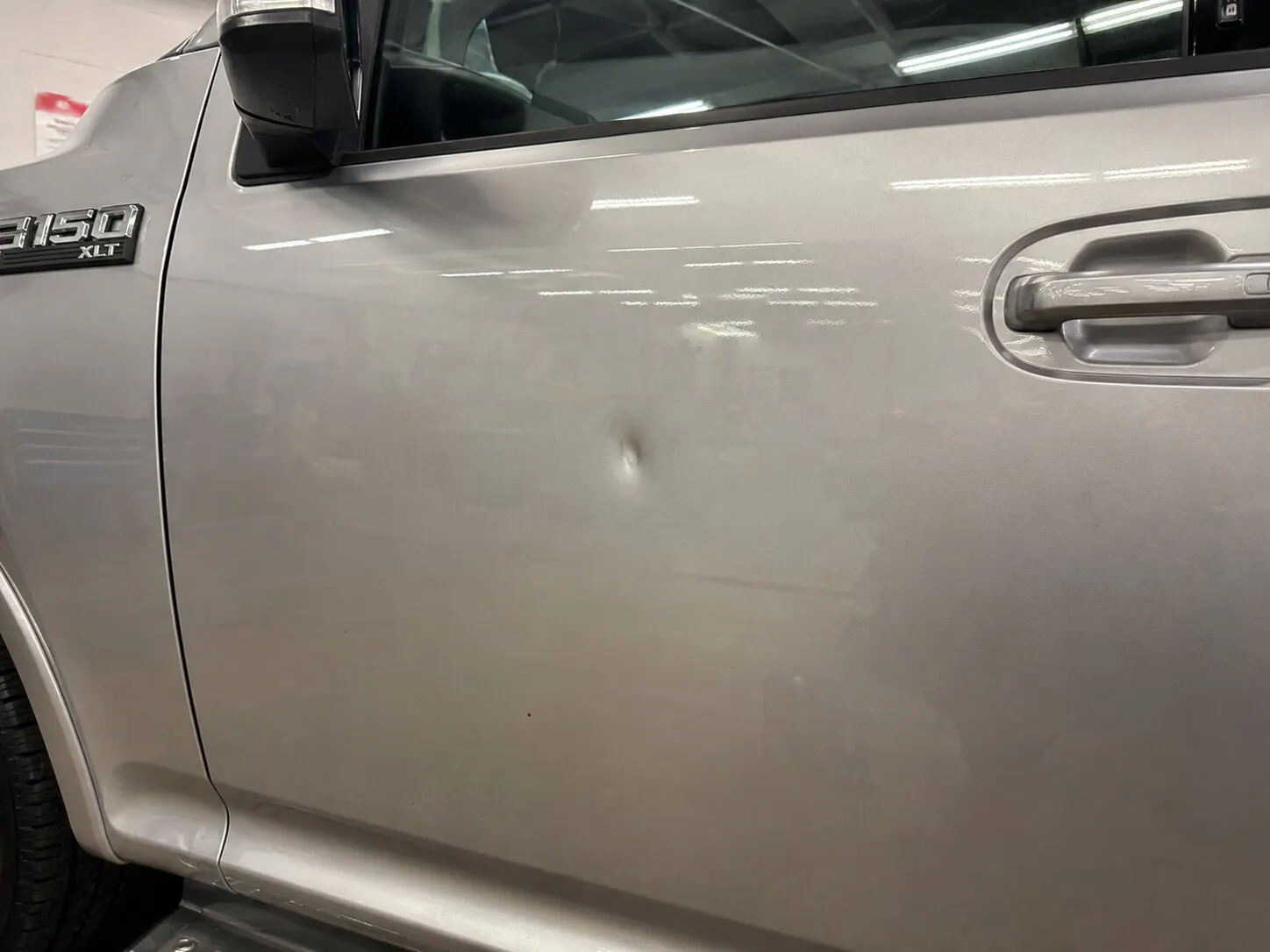
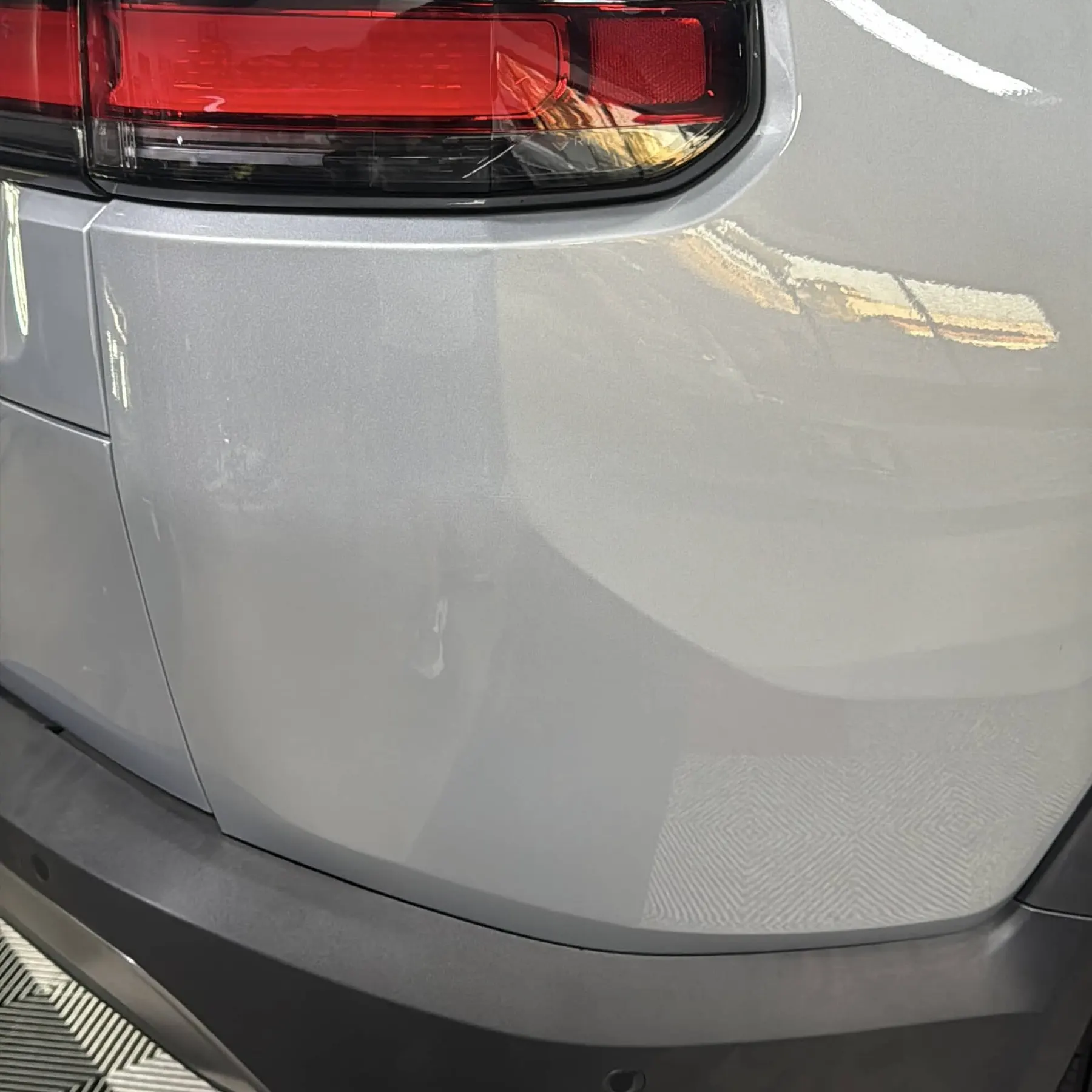
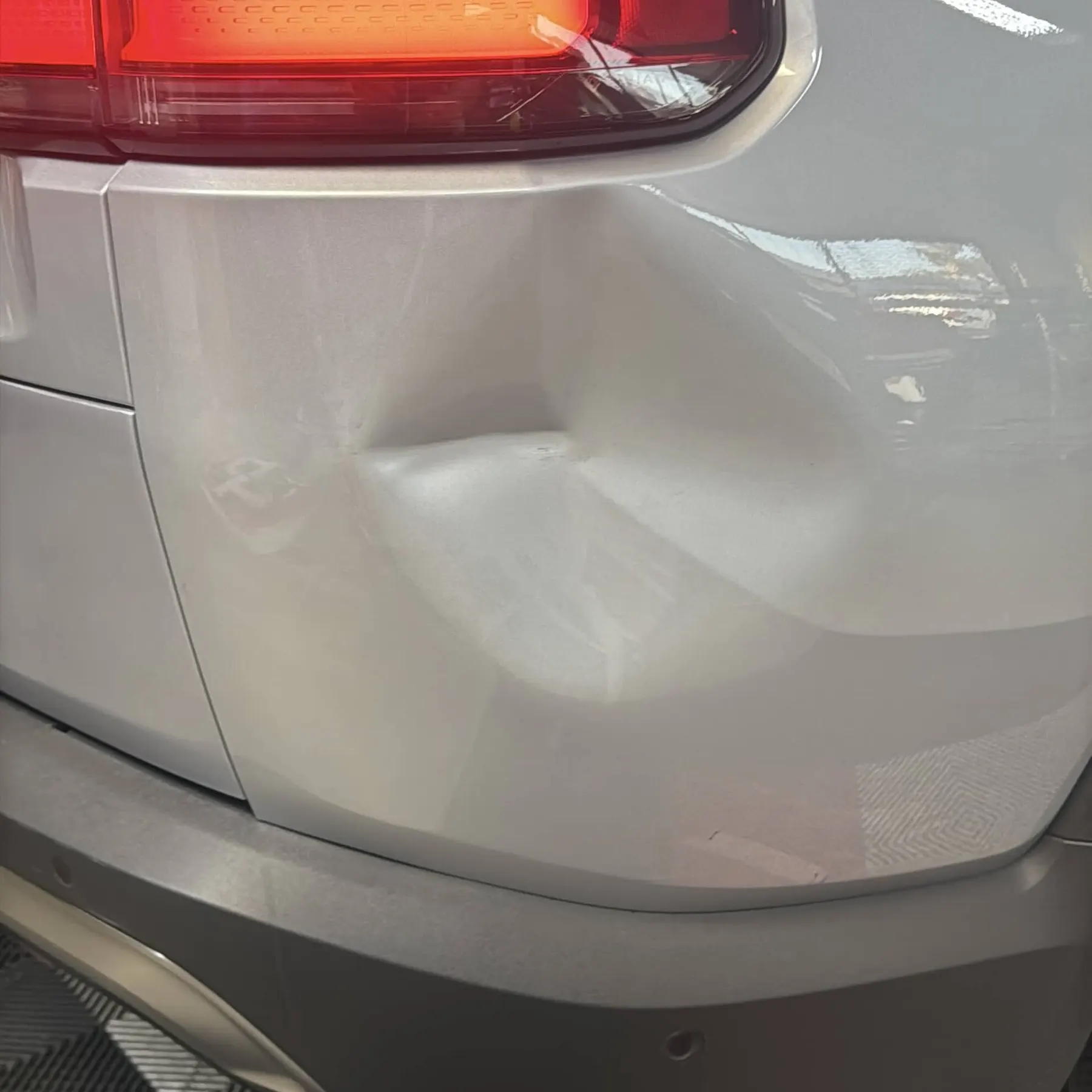
Every repair above kept the original factory paint. No filler, no repaint, nothing on the Carfax. Prices do not include R&I (removal and installation), added only when backside access is needed to reach the metal.
We assess each dent before recommending a repair. Your vehicle, the result you want, and your budget all matter. Our standard is careful workmanship and an honest explanation of what is achievable.
My car matters. I want it solved, not patched.
Premium and Practical options let you choose the finish that suits your vehicle and budget when the damage qualifies. We also explain whether mobile or shop service is appropriate, so you can plan your time.
You should understand the expected result before you approve the work. We explain the scope, finish limitations, and cost of each suitable option. If another repair method is a better fit, we will tell you.
Careful dent repair starts with useful information. Submit your vehicle details and photos through the estimate form, and we will help you choose the next step.
Get a Free EstimateWe may not offer the lowest quote. Our focus is the technician doing your repair, the agreed finish, and a straightforward experience. Ask about suitable options for your budget and compare what each estimate includes.
Yes, you can use insurance for paintless dent repair, and we work with every insurer. The real question people ask is whether it is worth it. For large, deep, or complex dents that run into the thousands, a claim often makes sense. For most everyday dents, paying out of pocket protects you more than a claim does. Here is the honest math, because no one else will give it to you straight.
The repairs where insurance comes up most are the large ones, the deep creases, stretched metal, and advanced multi-panel damage that run well into four figures. Severe hail counts too, but it is not the headline. So when we tell you how a PDR insurance claim really works, it comes from fighting these claims every week.
You pay your premium every single month. The one time you actually need them, the company is working out how to pay you the least, slow you down, and protect its own number. That is not your side. That is the business model.
Before you file, look at what a claim quietly takes from you.
They are not on your side. We are. Dent Time fights for the repair that keeps your factory finish, your resale, and your record clean.
When a repair runs $1,500 to $8,000 or more, the deep creases, stretched metal, advanced multi-panel work, and yes severe hail, filing is usually worth it. These are also the repairs that often belong in the controlled environment of our shop. We hold the factory finish and handle the claim with your insurer directly, so you are not fighting it alone.
Out of pocket is often the better bet. No premium hike, no Carfax entry, your car back same day or next, and the factory finish stays untouched. The claim would likely cost you more over time than the repair itself.
A word on where the work happens. We bring mobile PDR to most repairs, including many complex ones, with no compromise. But for the largest and most advanced dents, the controlled environment of our Escondido shop, with its lighting, fixturing, and the time to do it right, is the better room for the cleanest possible result. A driveway is convenient. For a high-ticket repair, controlled conditions are the standard, and we will tell you honestly when a job belongs in the shop.
So does insurance cover paintless dent repair? It can, and we work with every insurer. The real question is whether a claim is worth what it quietly takes from you, including the diminished value a repaint stamps on your car for good. Send photos first. We will tell you the truth, even when the truth is to skip the claim and keep your record clean.
Most repairs come with two options, so the result fits your vehicle and your budget. The standard does not drop. The choice is yours.
Same PDR precision. Same factory finish preserved. Worked to a clean, honest result at a price that makes sense for the vehicle. Around 30% less than premium.
Every reflection chased to perfect under raking light. The highest standard we offer, for the vehicle that warrants it. The result you would expect off a showroom floor.
You pick the standard. You pick the budget. We hold the quality inside whatever option you choose.
Every number on this page is money. There is a second price on every repair and almost nobody counts it. A body shop means three to five days without the car, a rental, two trips across town, and a permanent line on the vehicle history. Most people weigh the invoice and never weigh the week.
A dent done here is usually an hour or two, often at your own driveway while you work. You are not charged extra for that and you do not lose a day to it. The speed is not the selling point though, and we would rather you did not choose anybody on it. Speed here is what falls out of experience. A technician working to a clock is a technician who stops at ninety percent, and the last ten is the part you look at for the next five years.
Done properly the repair is invisible, the factory paint is still the factory paint, and nothing lands on the Carfax. That is the full argument, laid out.
A body shop sands the panel, works in filler, repaints, and hopes the color matches. The result can look fine, but the factory finish is gone and a record is attached to your vehicle. PDR keeps the original metal and the original paint. The dent leaves. Nothing else about your car changes.
Get a Free Assessment| PDR (Dent Time) | Body Shop | |
|---|---|---|
| Factory Paint | ✓ Untouched | ✗ Resprayed |
| Carfax Record | ✓ None | ✗ Likely |
| Filler Used | ✓ Never | ✗ Usually |
| Turnaround | ✓ Same day | ✗ Days to weeks |
| Resale Value | ✓ Protected | ✗ Often reduced |
| Typical Cost | ✓ Lower | Higher |
The kit costs less up front, and that is where the savings end. The most expensive dents we see started as kit attempts: a suction or glue puller leaves high spots and trapped pressure, and resetting a panel someone has already worked on takes longer than repairing the original dent, so the price goes up. On factory paint a puller can also lift clear coat. The full picture is in our guide, do dent pullers actually work.
Most paintless dent repair in San Diego runs $197 to $500 for everyday dents. A standard door ding runs $197 to $250, medium dents run $275 to $500, and creases run $225 to $600 or more. Large dents start at $500, and hail is priced by the storm at $1,500 to $8,000 or more. The final figure depends on the depth, where the dent sits, the access behind the panel, the panel material, and the condition of the paint.
Most car dents cost $197 to $500 with paintless dent repair. The price follows the difficulty, not just the size: depth, location on the panel, access behind the metal, and whether the panel is steel or aluminum. Text a photo to 858-408-6200 for a written estimate in minutes.
The average everyday PDR job in San Diego lands between $197 and $500. Sharper, deeper, or harder-to-reach dents run higher, and aluminum panels add about 50%. There is no flat rate because no two dents are the same, so the honest answer is a range until we see photos.
A standard door ding runs $197 to $250. A small but sharp ding can run a little more, because keeping the factory paint intact over a tight impact takes more skill than smoothing a soft, shallow one. It is still the fastest, cleanest fix, usually same day. For a brand-specific breakdown, see BMW door ding repair cost.
Because sharpness matters more than size. A small, sharp dent, like a BB or a rock impact, stretches the paint tight over a tiny point, and bringing the metal back without cracking the factory clear coat takes more skill than smoothing a large, soft dent. A big shallow dent in the open middle of a panel can be easier and cheaper than a tiny sharp one. Location and access matter too. The price follows the difficulty and the risk to the finish, not the width.
Hail repair usually runs $1,500 to $8,000 or more, priced by the storm and the number of panels. This is the one repair where an insurance claim usually makes sense, and we handle it with your insurer directly while keeping your factory finish. Smaller, single-panel hits can come in well under that.
Aluminum panels on a Tesla, Rivian, or European vehicle run about 50% more than steel, because aluminum has no memory and takes far more force and accuracy to reset. A small aluminum door dent can start around $250 to $325, and deeper or stretched aluminum damage runs higher. We price it after seeing the depth and the access behind the panel.
Aluminum has no memory. Steel wants to spring back to its original shape and a technician can work with that, but aluminum gives no help coming back. It is lighter yet stronger, so every correction takes far more force, control, and accuracy to move the metal and set it back into shape. That added difficulty is why aluminum panels on EVs and European vehicles run about 50% more than steel.
Usually, yes, but that is not the point. PDR keeps your original factory paint, creates no Carfax record, and is often finished the same day. A body shop sands, fills, and repaints the panel, which can reduce resale value and shows up on the vehicle history. PDR is not the cheaper choice. It is the better one.
Yes. PDR keeps your original factory paint, leaves nothing on the Carfax, protects your resale, and is usually done the same day. A body shop sands, fills, and repaints, which costs more in the ways that matter most. PDR is not the cheap option. It is the one that keeps your car the way the factory built it.
It depends on the size of the repair. For severe hail or high-ticket damage running $1,500 to $8,000 or more, a claim usually makes sense, and we handle it with your insurer directly. For repairs around $1,500 or less, paying out of pocket is often the better choice. A claim can raise your premium for years, lands on your Carfax, takes days to approve, and can keep your car for one to four weeks. Insurance is built to limit what it pays, not to get you the best repair. We tell you honestly which path is worth it before you file anything.
R and I means removal and installation. PDR is worked from behind the panel, so when a liner, brace, speaker, or trim blocks access, the technician removes it, performs the repair from clean factory access, and reinstalls it. That is real labor and it is added when the access requires it. It is also the right way to avoid drilling holes in your vehicle.
Text a few photos to 858-408-6200. A technician reviews the depth, location, panel, and paint and replies within minutes with a real range. You approve the number before any tool touches the car. The estimate on this page is a preliminary range. Photos get you a written estimate, and the final price is confirmed in person.
Yes. Complete satisfaction or no charge applied. If the result is not right when you pick the car up, you do not pay. Dents done right do not come back, so we stake the invoice on it.
Most mobile operators hand you one number and one standard. Take it or leave it. That is easier for the shop and it quietly decides something that was yours to decide. We quote Premium and Practical on the same damage, show you what each one actually looks like, and let you pick. The price changes with the option. The person doing the work does not.
Same damage, same technician, two standards. Drag each slider against the same before. Practical runs 30 percent less than Premium. Your number comes from your photos, in minutes.
Options start once a repair is over $500. Below that there is one honest way to do it and a straight cost range, so there is nothing to choose between. Above it the damage is involved enough that how far you take the repair becomes a real decision, and that decision is yours to make with your budget and your standard in mind, not ours to make quietly on your behalf.
This is not a good, better, best ladder with a discount at the bottom. They are two honest answers to one real question: how far do you want to take this? A ten-year-old daily driver and a leased car turning in next month deserve different answers, and pretending otherwise is how people end up paying for something they did not need or accepting something they did not want.
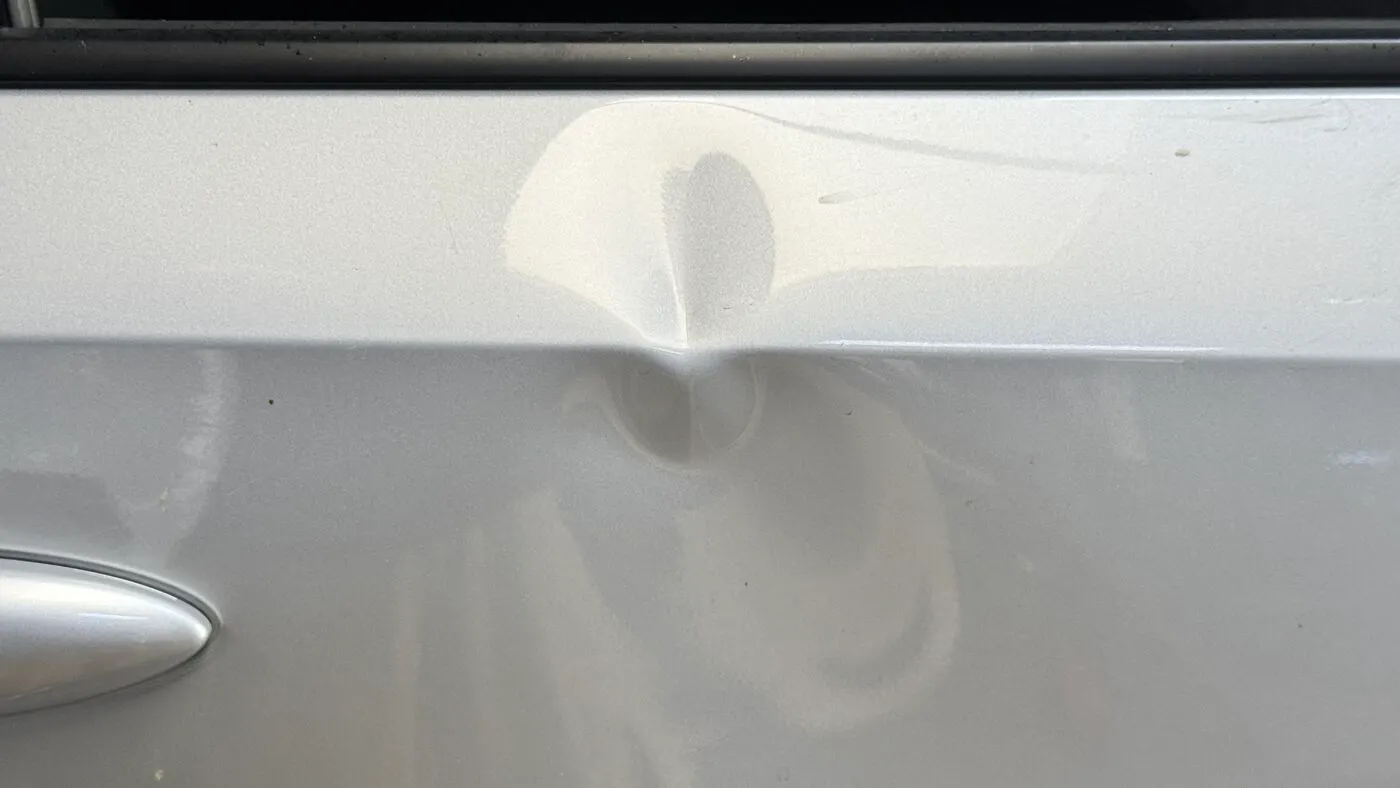
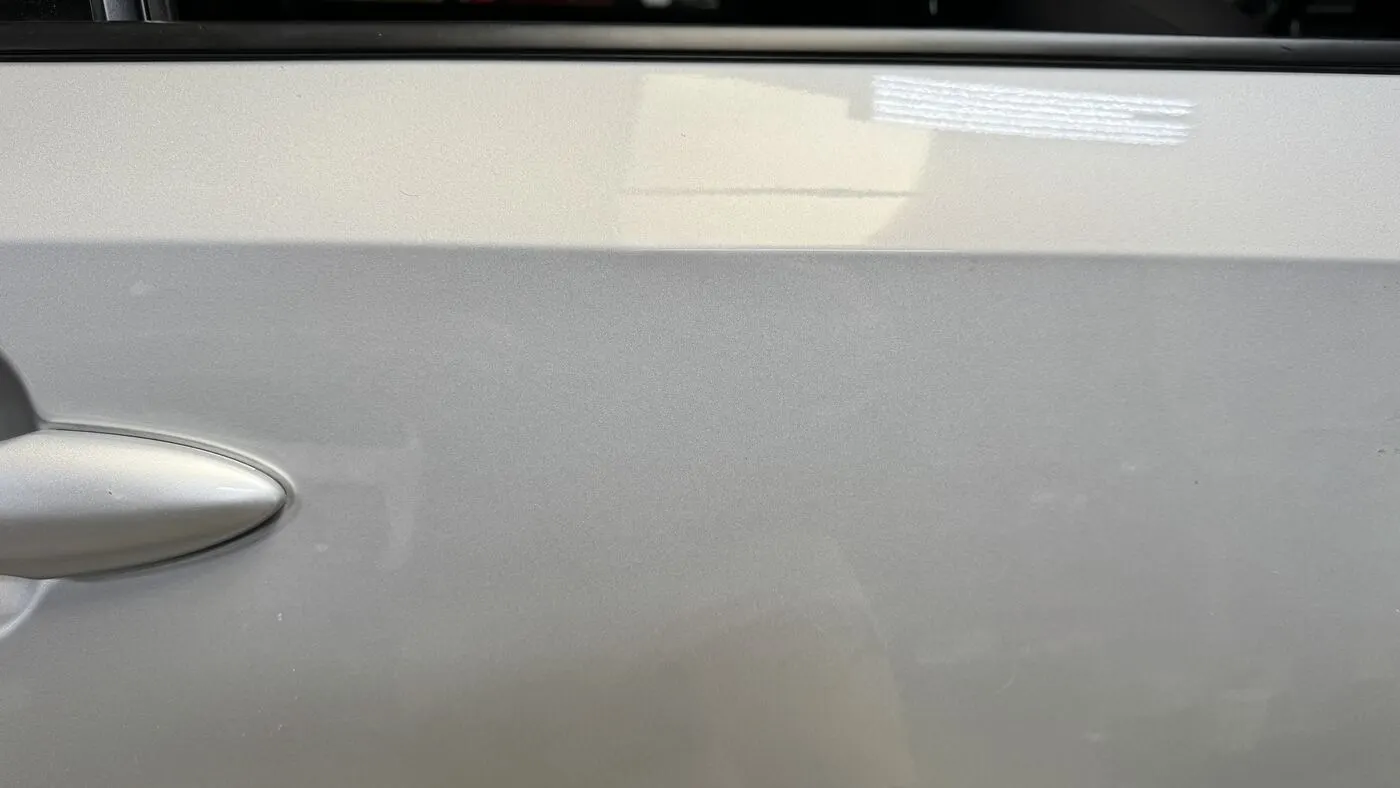 Before Premium
 You do not see it. Not from any angle, not from any distance, not if you go looking. The dent is gone rather than reduced, and there is nothing left for anybody to find later. This is the standard you want on a car you are keeping, selling, or turning in on a lease.
Best for: Newer vehicles, leases, anything where resale is the point.
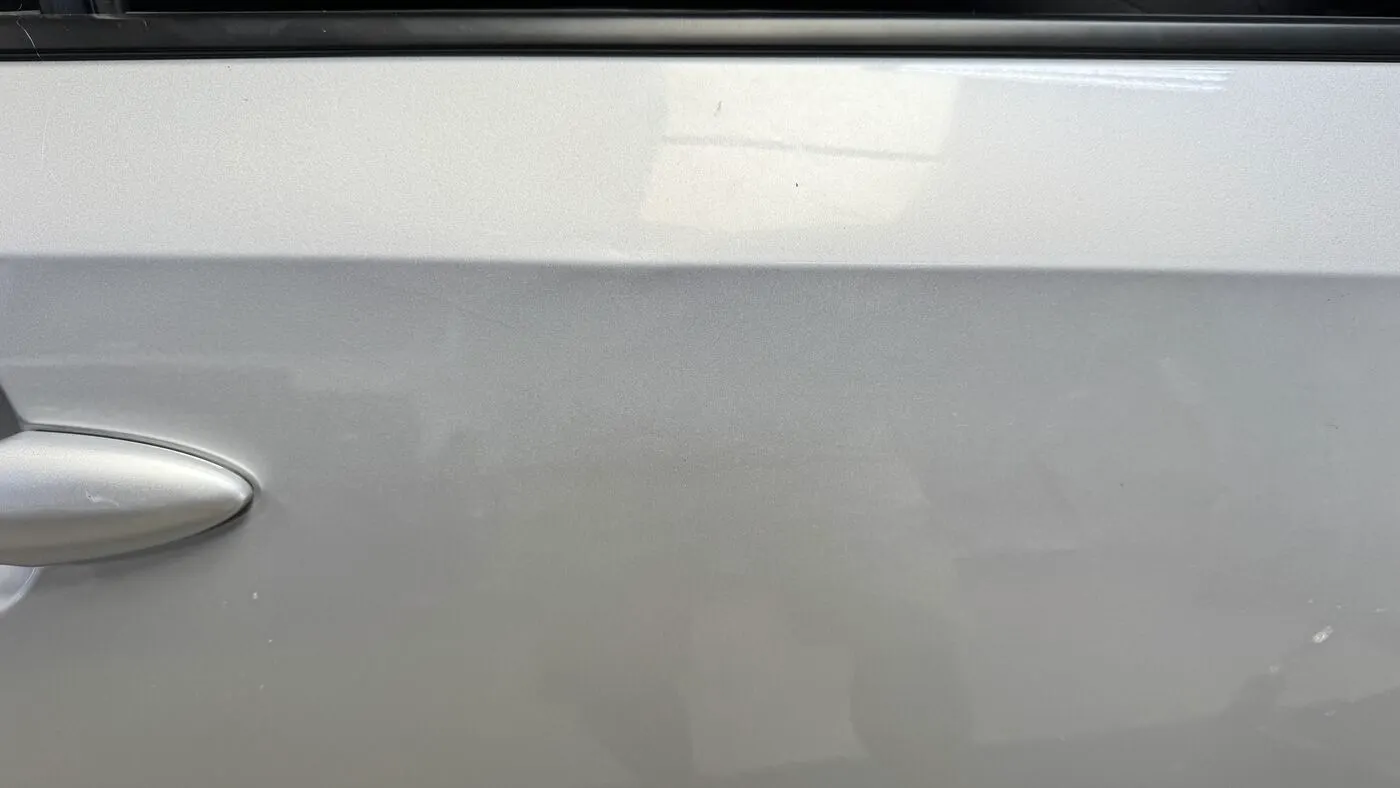 Before Practical
 You will still find slight imperfections at different angles if you go looking for them. Drag the slider and you will see it on this panel: what is left is barely visible near the body line. That is our Practical standard, and it runs higher than most competitors’ premium.
Best for: Daily drivers, work vehicles, and anyone who wants it gone without paying for perfect.
What moves your number is the access behind the panel, how sharp the damage is, and whether the panel is aluminum or steel. Text two photos and the real range comes back in minutes.
Two minutes with Myke on what actually separates the options, what you get for the difference, and when the cheaper answer is genuinely the right one. The same conversation you would get standing next to your car.
Not sure which one your panel needs? Send two photos and we quote both.
Here is what actually decides how your panel turns out. Not which option you picked. Not the price. Whoever is holding the tool.
Paintless dent repair has no licensing body. Anyone can buy a set of rods and call themselves a technician, and the work looks finished to an untrained eye on the day. It shows up later, under garage lighting or against a painted parking line, long after the person who did it stopped answering.
So the question worth asking is not really which repair you are buying. It is who is performing it. A Practical repair from someone who has read metal for thirty-five years beats a Premium price from someone learning on your car, every time.
See what the difference actually looks like in real bad repairs, or send two photos and we will quote both options on your panel.
Then it is a hybrid repair, and it is still worth doing properly. The metal gets pushed back to shape with paintless technique first, and only then does any paint work start. That order matters more than most people realize, because the further the metal comes back, the less of your panel ever needs to be refinished.
The alternative, and what a lot of shops default to, is to skip straight to filler and repaint the whole panel. That is faster for the shop. It also means more of your original factory finish is gone, a bigger blend, and a bigger number. Pushing first is the difference between refinishing a patch and refinishing a door.
Run a fingernail across it. If it does not catch, the paint held and this is a straight paintless repair. If it catches, the clear coat is broken and the finish needs its own plan. We tell you which one you have from the photos, before anything is booked.
This is the step that saves you money and almost nobody explains. The dent is worked from behind the panel and returned as close to its original plane as the metal allows, exactly as it would be in a paintless repair.
Because the metal is already back where it belongs, what is left to refinish is a fraction of what it would have been. Less filler, less blending, less of your original factory paint disturbed. A body shop that skips step two paints the whole panel instead.
The area is leveled and refinished to your vehicle factory color code and blended into the surrounding panel so it reads as one continuous surface. Checked in direct light before it is called done.
The honest part: a hybrid repair costs more than paintless and less than a full panel repaint, and it is not always the right answer. On some damage the paintless result alone is good enough and we say so. On others the paint was too far gone and it belongs at a body shop, and we say that too. Send two photos and you get told which of the three you are actually looking at.
Text a few photos and a technician replies within minutes with a specific quote. No pressure, no guesswork, just an honest answer from someone who has been doing this since 1991.
More on the work: paintless dent repair, door ding repair, mobile dent repair, EV & Tesla repair, aluminum dent repair. Paint damage priced separately: bumper repair cost.
Leave your name and number and Myke will call you back during business hours, Monday to Friday, 8:30am to 4pm.
Julie texts you back right away from (858) 408-6200.