PDR Pricing Guide

A $197 Dent vs $500.Why Paintless Dent Repair Prices Vary So Much

Two dents, same city, same hands, two very different prices. Dent pricing is not about size. Here are the six things that actually decide your number, with the real figures no one else will show you.

Watch What You Are Paying For

The Work Behind the Price.

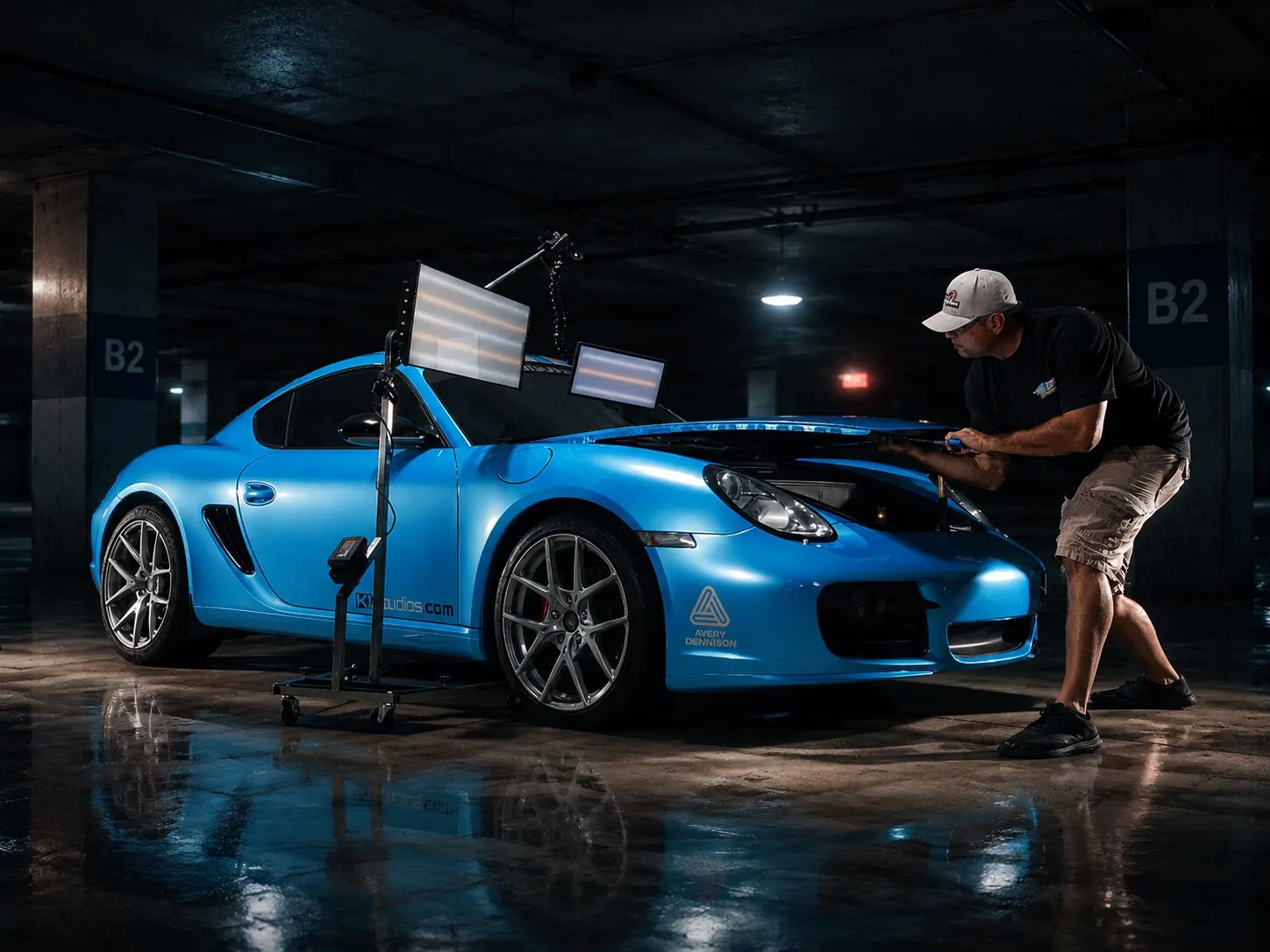
Two dents the same size can be an hour apart in work. This is what that hour looks like. Tap WATCH and the page becomes the theater.

Drag or use the arrows · tap watch for full screen

Myke Toledo, founder of Dent Time and PDR technician since 1991 Myke Toledo Founder, Dent Time · On the tools since 1991
Updated June 2026 9 min read

Two dents in the same city, fixed by the same technician, can cost $197 and $500. They can even look the same size. So why the gap? Because dent pricing was never really about size. It is about how hard the dent is to fix without breaking the paint, and six different things decide that.

The most common question we get is some version of "why did my neighbor’s dent cost half what mine did?" Almost always, their dent sat in the easy middle of a flat steel panel, and yours sat on a body line, or in aluminum, or with a brace hiding right behind it. Same width, completely different repair.

It helps to know what you are actually paying for. Paintless dent repair does not sand, fill, or repaint anything. We work the original metal back to its exact shape from behind the panel, so the factory paint you are looking at stays the factory paint. Nothing lands on the Carfax, and nothing fades a year later in a slightly wrong color. The price is not for a part or a coat of paint. It is for the skill and the time to move that one piece of metal back without breaking the finish, and the harder that is to do, the higher the number goes.

Here is the honest breakdown, so you can look at your own dent and have a real idea of the number before you ever send a photo.

Watch

PDR Pricing, Explained.

Interactive · Why It Varies

Build Your Dent. Watch the Price Move.

Set the size, where it sits, and the metal. The estimated range and the reason update live, the same way a real quote does.

Dent size Small dent
Quarter-sizedCredit-card sizedHand-sizedDinner-plate sized
Where it sits
Panel material
Estimated PDR range
$197 $230
Base size Location Material

A small dent on a flat panel, in standard steel. Flat panel, standard steel, clean access. This is base price.

A range, not a final price. Text two photos and you get the real number, usually within minutes.

What Drives the Price

The 6 Factors Behind Every Quote.

Factor 1 is size, and it is the obvious one and the least interesting. A flat one-inch ding takes about twenty minutes. A five-inch crease takes ninety. More metal to move means more time, and more time means more money. That part you already guessed. The surprise, the thing that makes two same-size dents cost double, is the next five. They are about difficulty, not width, and they are where a fair quote separates itself from a number pulled out of thin air.

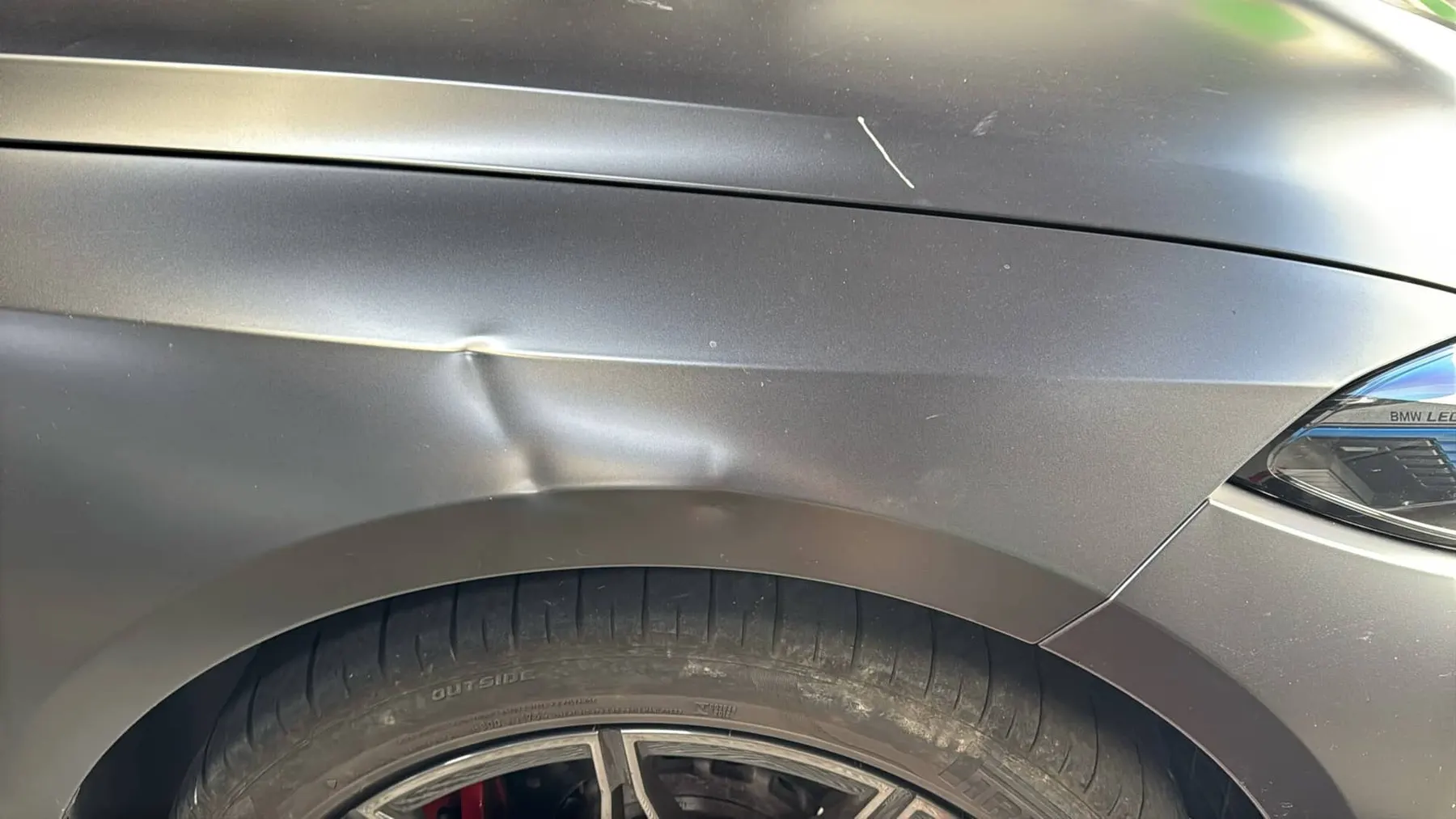
The same matte BMW fender after paintless dent repair, the body line restored
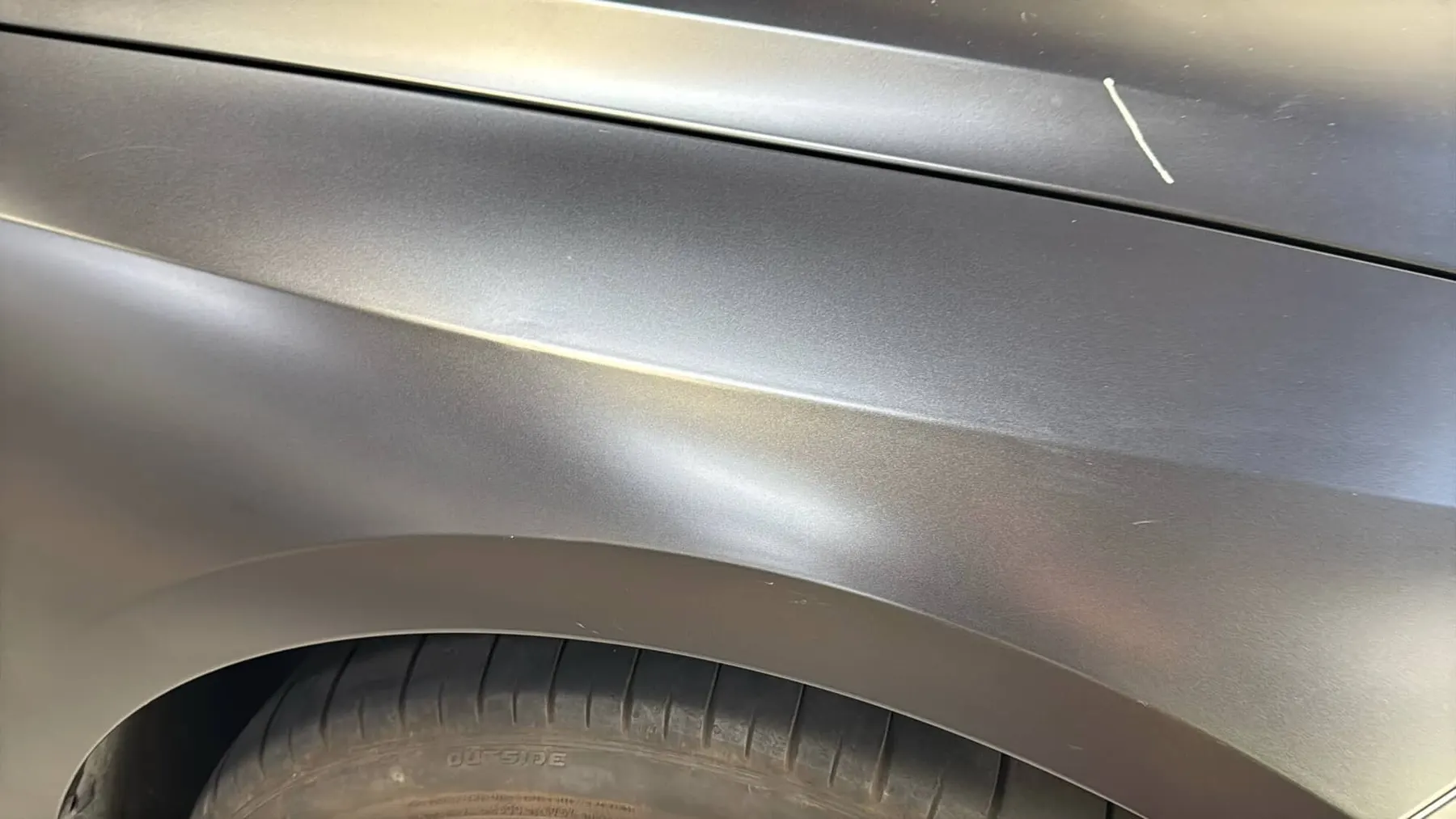
Matte BMW fender with a sharp crease dented into the body line before paintless dent repair
Before After
02

Location On The Panel

The single biggest price driver, and the one nobody expects. A flat-center ding is base price. The same dent on a body line fights the metal’s memory and risks a permanent crease, so it climbs fast. The repair in this photo ran $775 to $900: a sharp crease sitting right on the body line, on a matte finish that shows every flaw and cannot be polished back. A clean 2-inch ding at panel center would have been about $220.

Body line +50% · a sharp crease and matte finish climb higher
03

The Panel Material

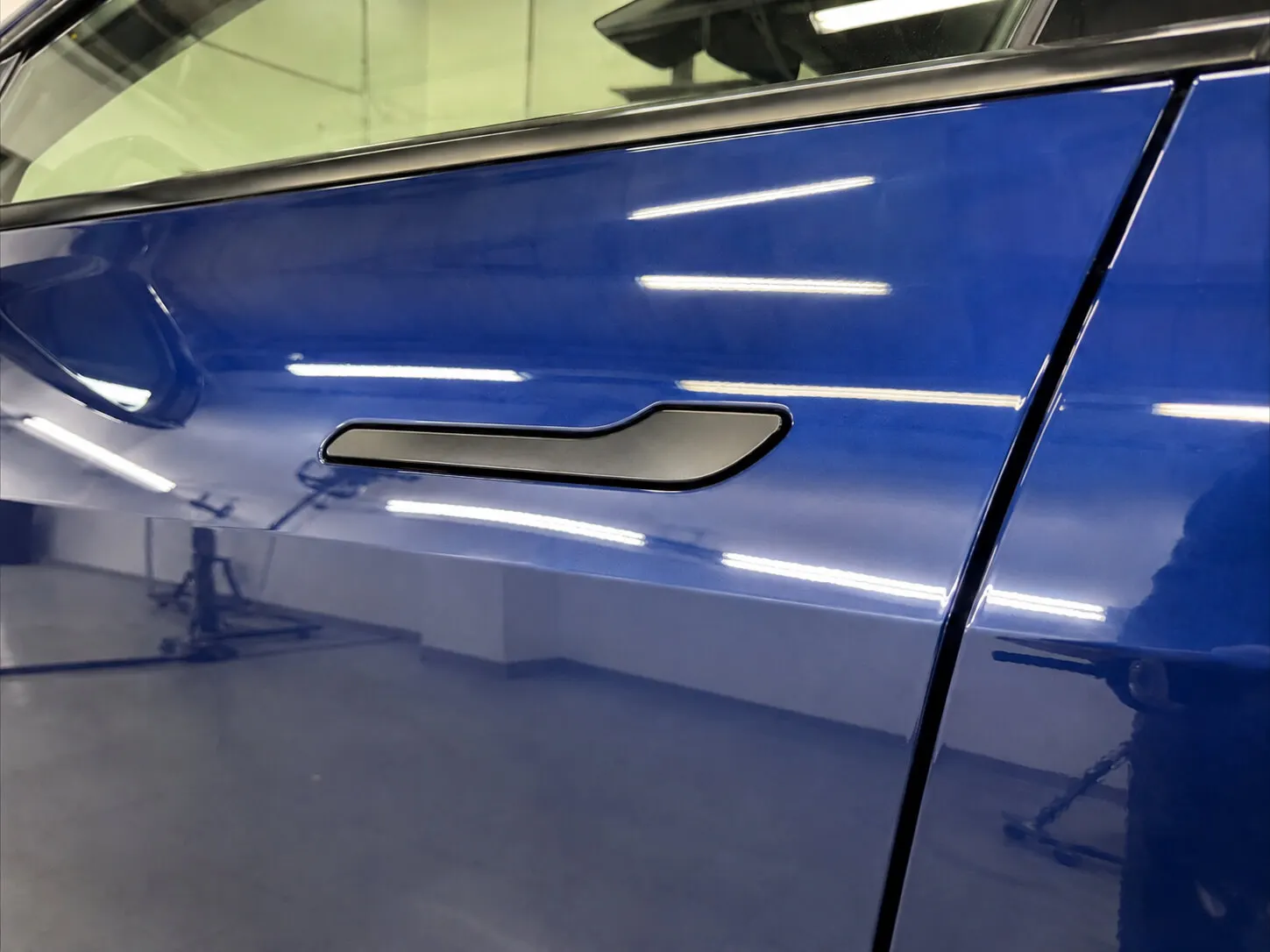
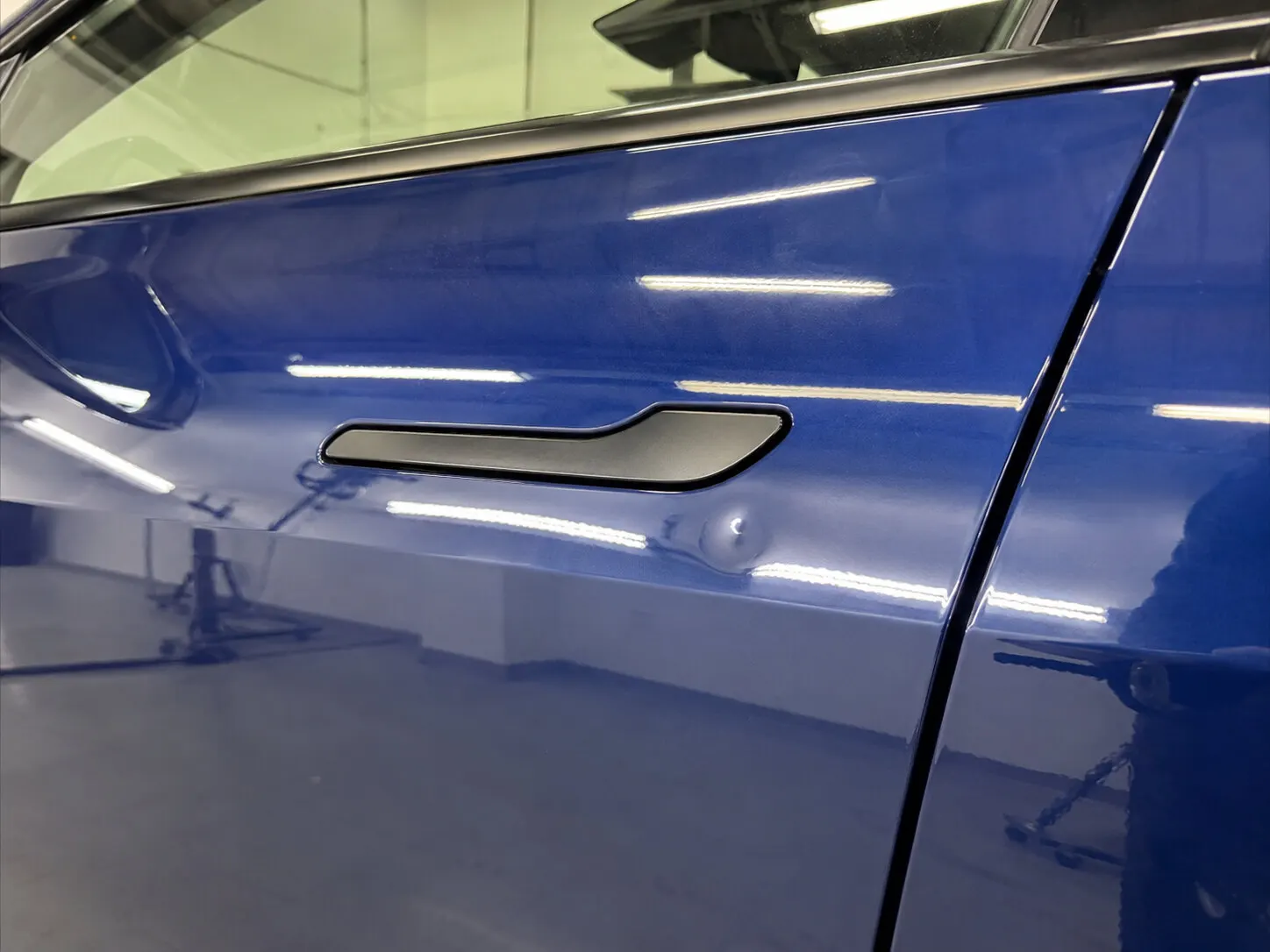
Aluminum has no memory. It gives nothing back and work-hardens fast, so it takes more force, more accuracy, aluminum-specific tools, and often a glue-pull. Steel has memory and works with you. A dent on a steel Honda Accord door runs about $210, with its depth doing most of that. The same dent on an aluminum Tesla door with a brace behind it runs about $350, because the aluminum and the hidden access stack against you.

+50% aluminum · +25% high-strength steel
The same blue Tesla aluminum door after paintless dent repair, finish flawless
Dent in the aluminum door of a blue Tesla before paintless dent repair
Before After
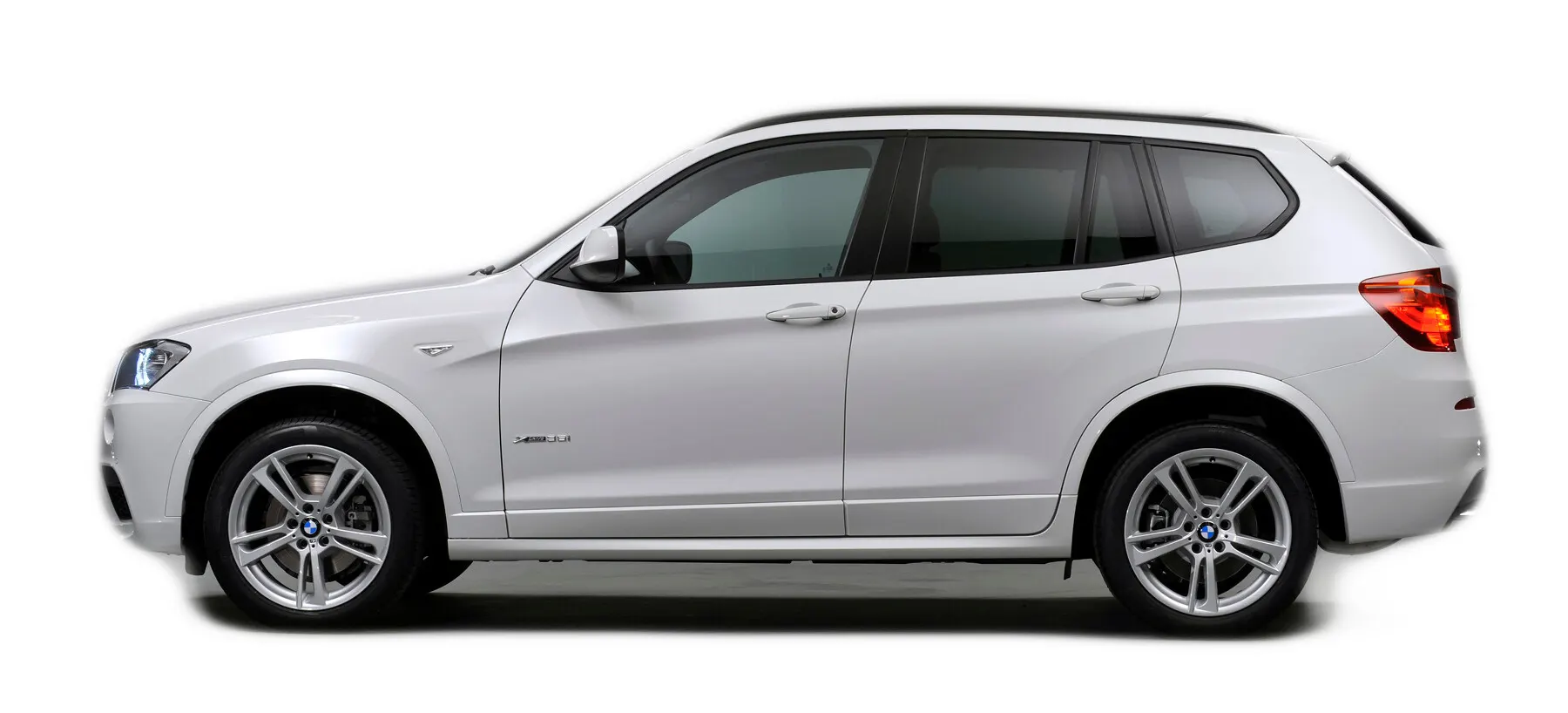
The same BMW door seen from the outside
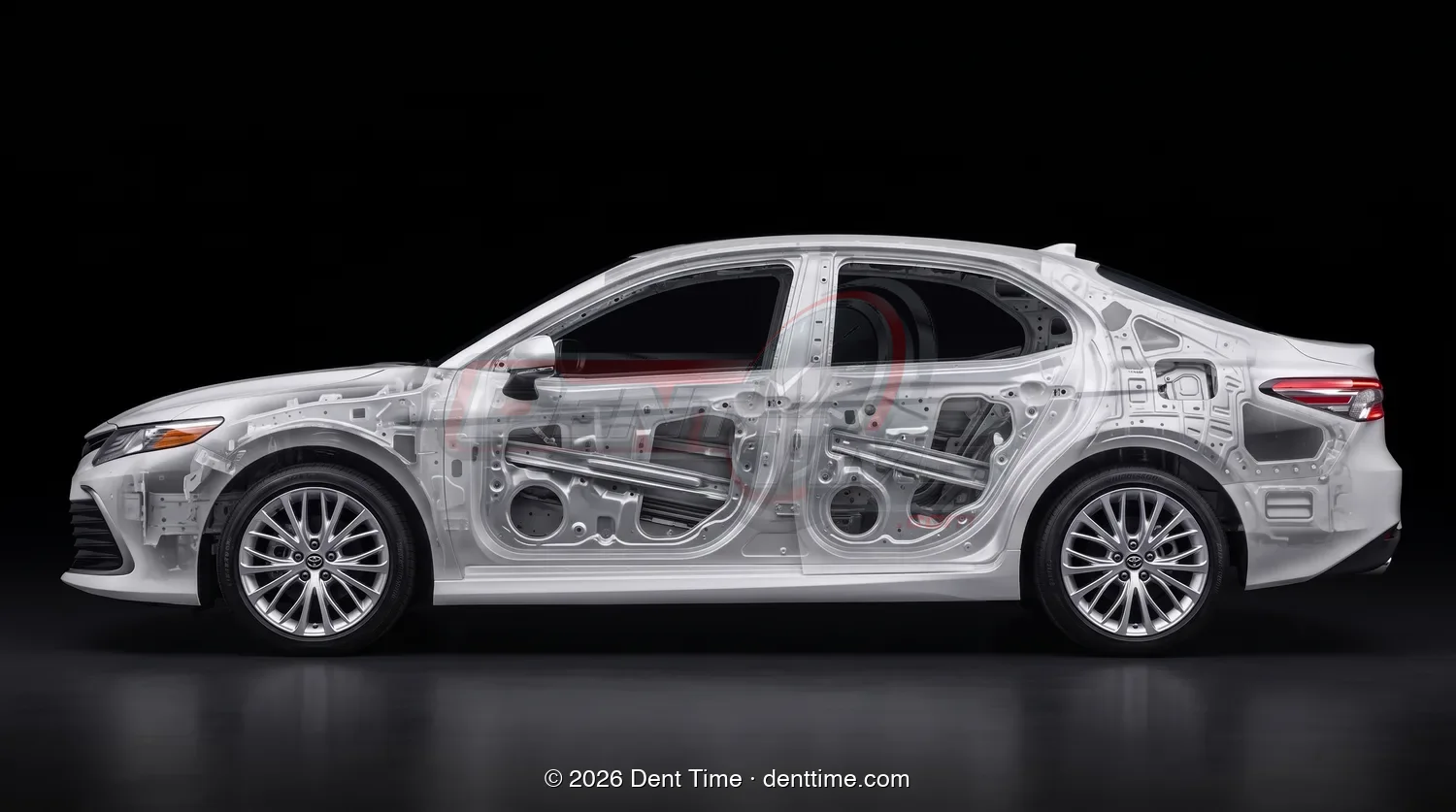
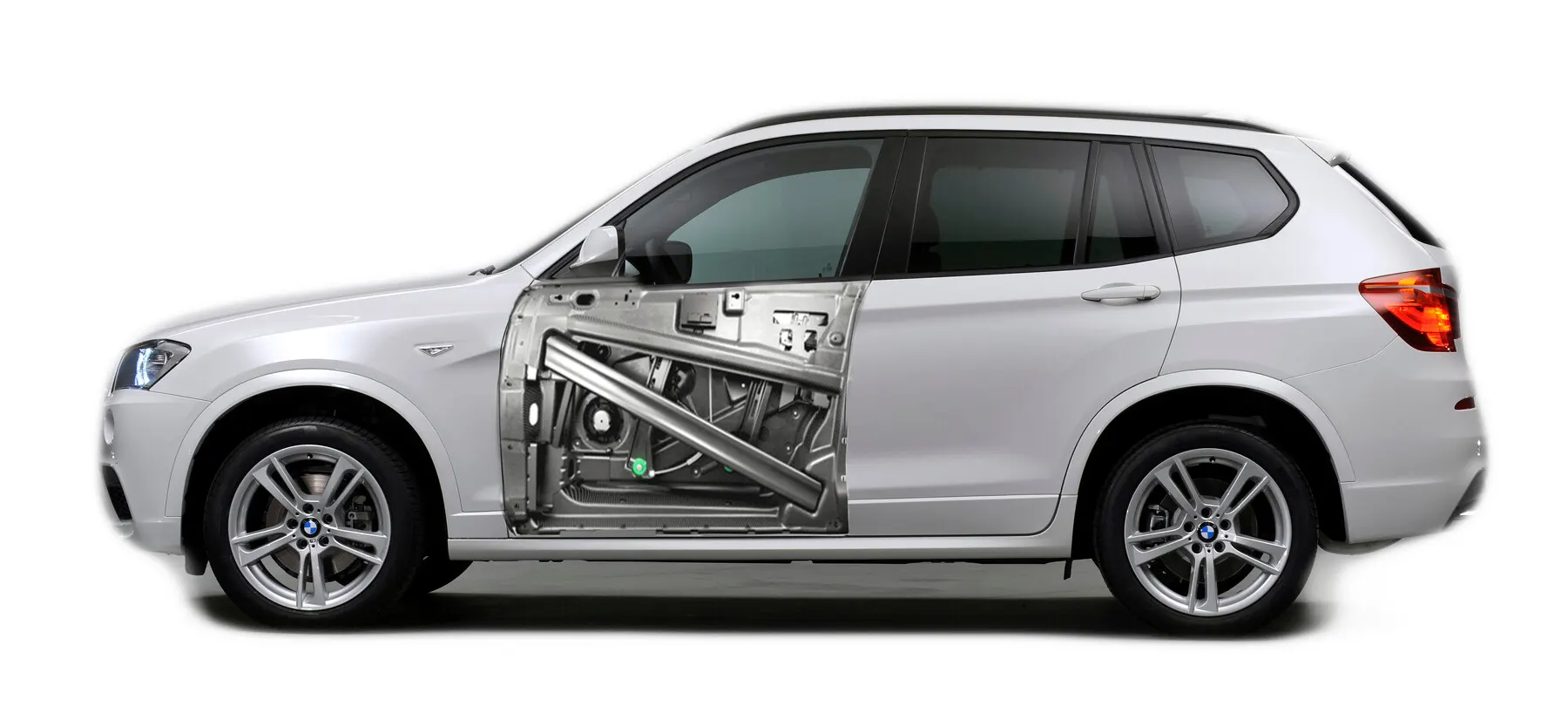
Cutaway of a BMW door showing the internal bracing, speaker, and structure behind the panel
What Is Inside The Panel
05

What Is Behind The Panel

A brace, a speaker, or the sound deadener inside a modern door can block the path to the metal. Reaching it cleanly sometimes means removal and installation, taking the panel apart and putting it back the factory way. That is real labor, and it is why two identical-looking dents carry two different prices.

Sound deadener +25% · R&I adds $50 to $200+

Factor 4 is depth and shape. A shallow dome is base price. A deep impact work-hardens the metal and adds about 30 percent, because it has to come out slowly. A sharp crease adds about 25 percent and gets released progressively, like carefully unzipping a zipper. Rush it and the paint cracks.

Factor 6 is how many dents you have. Good news here. The first dent is full price. Additional dents on the same panel are about half of base each, not full price, because the setup is already done. A whole panel of dings comes in well under the math you would expect.

The gap is widest on aluminum, which is its own discipline. See aluminum and EV dent repair and the specifics for electric vehicles like Tesla and Rivian, where the metal gives nothing back. And the reason a too-cheap quote can cost you later is the work itself. A rushed body line leaves a crown or a ripple, the kind of bad paintless dent repair that is harder to fix than the original dent.

By the Inch

Price by Dent Size.

A flat-panel, standard-steel starting point. Location, material, depth, and access move it from here.

Dent sizeTypical PDR priceTime
1 inch door ding$19720 minutes
2 inches$220 – $26430 minutes
3 inches$290 – $34445 minutes
4 inches$370 – $42560 minutes
5 to 6 inches$480 – $58490 minutes
8 inches and up$700 – $900+2 hours+
The Cheat Sheet

What Moves the Price, Factor by Factor.

Start from the base price for your dent size, then add for where it sits, what the panel is made of, how deep it is, and what is hiding behind it. These are the same multipliers a fair quote uses.

Location On The Panel

Flat center of the panelBase
Near a panel edge+25%
On or against a body line+50%
Behind a brace or obstruction+25%

Panel Material And Finish

Standard steelBase
High-strength steel+25%
Aluminum, most EVs+50%
Matte or satin finish+30%

Depth And Shape

Shallow domeBase
Medium depth+15%
Deep, work-hardened impact+30%
Sharp crease+25%

What Is Behind It

Open, clean rod accessBase
Sound deadener in the way+25%
Internal brace+25%
Removal and installation+$50 to $200

One more that works in your favor. The first dent carries the full price, then every extra dent on the same panel is about half of base, because the hard part, the setup and the read, is already done. That is why a whole door of shopping-cart dings or a hail-hit panel comes in far below the per-dent math. Hail is priced by panel and by dent count, and it is the one job where an insurance claim often earns its keep.

Two Real Repairs

$197 vs $500.

$197
The Standard Door Ding
  • Car 2020 Honda Civic
  • Damage 1.5″ round, front door
  • Location Center, flat, away from lines
  • Metal Standard steel
  • Access Clean rod access
  • Result 25 minutes, factory
$540
Looks Standard, Isn’t
  • Car 2022 BMW M4
  • Damage 2.5″, rear door
  • Location Directly on the character line
  • Metal High-strength steel
  • Access Sound deadener throughout
  • Result 90 min, multiple passes
The Value Math

Is PDR Worth It?

A 3-inch parking-lot dent on a 2023 Camry, three ways. PDR is not the cheap option. It is the one that keeps the car’s value.

Paintless dent repair~$320 · 1 hourOriginal, untouched+$400 to $600 at resale
Body shop respray$800 – $1,200 · 3 to 5 daysSanded, filled, repainted−$500 at resale
Ignore it$0 · NoneCan rust from the inside−$1,500 or more

This is the part that gets lost when people shop on the lowest line alone. The cheapest quote is rarely the cheapest outcome. A body shop will sand, fill, and repaint the panel, and the day it leaves it looks fine. Then a paint meter reads the refinished area, the repair shows on the Carfax, and the resale value quietly drops by hundreds, a hit the industry calls diminished value. Paintless dent repair never touches the paint, so none of that happens. Even a standard door ding repair leaves the panel exactly as the factory built it, and in every way a buyer or a dealer actually checks, the car is still original.

Where it really pays for itself is the moment you hand the car back. Lease returns get charged $200 to $500 per dent. A private sale with a few dings removed asks $800 to $1,500 more. On a $40,000 to $100,000 car, keeping the factory finish is not a nice-to-have, it is most of the value. PDR is not the cheaper choice. It is the one that keeps the car worth what you paid for it.

What a Quote Really Means

What Your Quote Is Really Telling You.

Here is the part the industry does not advertise. The skill gap between one paintless dent repair technician and the next is enormous, and the price is the first place it shows. A low quote is rarely a bargain. More often it is a newer mobile tech who knows he is not there yet and competes on price because he cannot yet compete on the result. Most people never learn the difference until the dent is half-corrected and the paint is already stressed. So before you chase the lowest number, it pays to know what each number is actually telling you.

$80–120
The Lowball Mobile Tech

The low number is the strategy, not a deal. Skill takes years, and a less experienced tech leans on price because that is the only place he can win. On a flat-panel ding he may get away with it. On aluminum, a body line, or any depth, that gap turns into a crown or a ripple that is harder to fix than the dent was.

Where We Sit
$197–500
Trained And Fully Equipped

The quote reflects the real difficulty, not a guess. Aluminum tools, body-line skill, and removal and installation when the panel calls for it. You are paying for the result that holds, and a finish that stays factory.

$500+
The Shop, For Bigger Damage

Bigger smash damage belongs in a controlled shop, not a driveway. The controlled environment and professional setting are what get a heavy repair to its best result. We take the panel fully apart, work it without rushing, and give it the one to three days a major hit honestly needs to come back right. Some clients just prefer a brick-and-mortar shop too. So we offer both, mobile for most repairs and our Escondido shop for the big ones.

Five Questions Before You Hand Over Your Keys

  • Do you have aluminum-specific tools?
  • Can you work a body line without leaving a crown?
  • What is your process for sound deadener and tight access?
  • Do you quote from a clear photo, or only in person?
  • Is it complete satisfaction or no charge applied?
Where the Line Is

What Paintless Dent Repair Can and Cannot Fix.

Paintless dent repair fixes most dents where the paint is still intact. If the metal is creased, deep, or hidden behind a brace, that changes the price and the time, not whether it can be done.

PDR is the right call when

  • The paint is not cracked or chipped
  • Door dings, hail, and parking-lot dents
  • Body-line and crease dents, priced higher, still paintless
  • Aluminum and EV panels, with the right tools
  • Large dents that still allow clean access

A body shop fits better when

  • The paint is cracked, chipped, or already repainted
  • The metal is torn or folded with nothing to work
  • A panel is rusted through from the back
  • The damage spans seams, trim, and structure

The honest answer comes from the photo. We will tell you which path actually serves the car, even when that path is not us, and we will not talk you into a paintless repair that should go a different way. The decision stays yours, made with the real information instead of a guess.

Plain English

The Pricing Words, Decoded.

A few terms come up on every quote. Here is what they mean, so the number is never a mystery.

Body line
The styling crease pressed into a panel. A dent on one is the hardest to fix and the most expensive.
Crown / high spot
Metal pushed out too far and left raised. The tell-tale sign of rushed work.
Work-hardening
Metal stiffening as it is bent. Deep and aluminum dents work-harden, so they come out slower.
R and I
Removal and installation. Taking the panel apart for clean access, then reassembling it the factory way.
Glue pull
Pulling a dent from outside with a tab when there is no access behind it. Common on aluminum and tight spots.
Base price
The cost of that dent size on a flat steel panel with clean access. Every other factor moves up from here.
Answered

PDR Pricing Questions.

Why does dent repair price vary so much?

Six factors drive it: size, location on the panel, metal type, depth and shape, what is behind the panel, and whether there is more than one dent. A 2-inch dent on flat steel is about $220. The same 2-inch dent on an aluminum body line with sound deadener behind it can cost $500 or more.

What affects PDR cost the most, size or location?

Location, more often than not. A 1.5-inch dent on a body line can cost as much as a 4-inch dent on a flat panel. The sharpness and the risk to the paint set the price, not the width.

Does PDR cost more for aluminum vehicles like Tesla?

Yes, expect about 40 to 50 percent more than a comparable steel repair. Aluminum needs different tools, a slower, more conservative technique, and not every PDR tech can do it well.

What is the average cost of PDR in San Diego?

A typical steel door ding runs $197 to $350. Medium dents of 3 to 4 inches run $280 to $425. Aluminum or body-line work adds 25 to 50 percent. Extra dents on the same panel are discounted, usually 30 to 50 percent off the first dent.

Is paintless dent repair worth it compared to a body shop?

Usually, yes, and not because it is cheaper. PDR keeps your original factory paint, leaves nothing on the Carfax, protects resale, and is often done the same day. A body shop sands, fills, and repaints, which costs more in the ways that matter most.

How do I know if my dent can be fixed with PDR?

If the paint is not cracked or chipped, there is a strong chance PDR can fix it. The metal can be stretched, deep, or on a tight body line and still come back, it just changes the time and the price. The fastest way to know is to text a clear photo. A technician can tell you what is realistic and give you a real range before you drive anywhere.

How much does it cost to fix a door ding?

A standard door ding runs $197 to $250. It climbs if it sits on a body line, is in aluminum, or has a brace behind it. Send a photo and you will have the real range in minutes.

How long does paintless dent repair take?

Most single dents take 20 minutes to 2 hours. A standard door ding is often done while you wait. Multi-panel hail can take a day or more.

Why is my dent quote so different from one shop to the next?

Because the price tracks difficulty, not just size, and not every technician can do the hard ones. The same dent can draw a $90 glue-pull and a $400 body-line repair. One is a gamble, one is the real fix that keeps your paint.

Does PDR work on deep dents or sharp creases?

Yes, as long as the paint is intact. Deep dents and creases take longer and cost more because the metal has to be released slowly, but they are still paintless and keep the factory finish.

Does hail damage cost more than a single dent?

Yes. Hail is priced by the number of panels and the dent count, usually starting around $1,500 and running to $8,000 or more on a heavy storm. It is the one repair where filing an insurance claim often makes sense, and we handle the adjuster for you.

Does matte or satin paint cost more to repair?

Yes, expect about 30 percent more than the same dent on a glossy panel. Matte and satin finishes cannot be polished and they show every imperfection, so the metal has to be read perfectly the first time. It belongs with a technician who has worked matte before.

The Bottom Line

Now You Can Read Your Own Dent.

Next time you walk up to a dent, you will not have to guess. Look at where it sits first, because location moves the price more than size does. Notice the panel, since aluminum and body lines are the two things that change the number most. Then think about how deep it is and what is hiding behind it. Do that and you will be within range before anyone quotes you a dollar.

And when you are ready, you do not have to drive anywhere to find out. Text a clear photo and a real technician, on the tools since 1991, sends back an honest range in minutes, along with the factors that set it. No bait price to get you in the door, and no surprise at the end. Just the real number, and a repair that keeps your car exactly the way the factory built it.

Stop Wondering. Get the Real Number.

Text a photo and a real technician sends back an honest range in minutes. No surprises, no bait price.