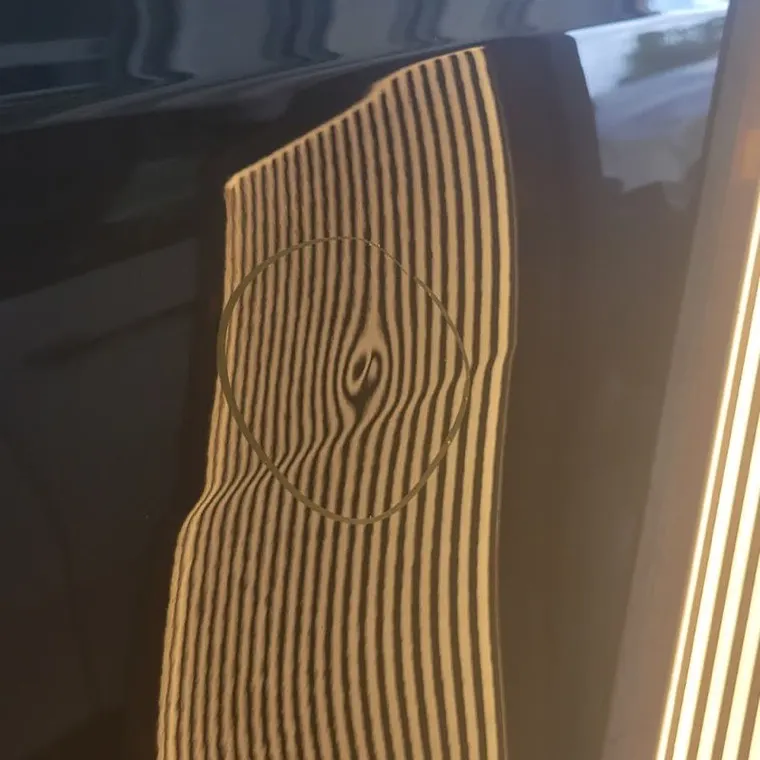
Standard Door Ding
$197 to $250
60 to 90 minutes
Soft, round, shallow. The everyday parking-lot ding, and the most routine repair in the trade.
Serving San Diego, Escondido, and the surrounding areas. Careful door ding repair preserves your factory finish and restores the shape of the panel. We explain the expected result and suitable service options before you book. Most are done same-day in about two hours, from $197.
What looks like a small surface ding sits in front of a precisely engineered structure. A PDR technician works blind, navigating every brace, bracket, and impact beam to restore the panel without a trace.
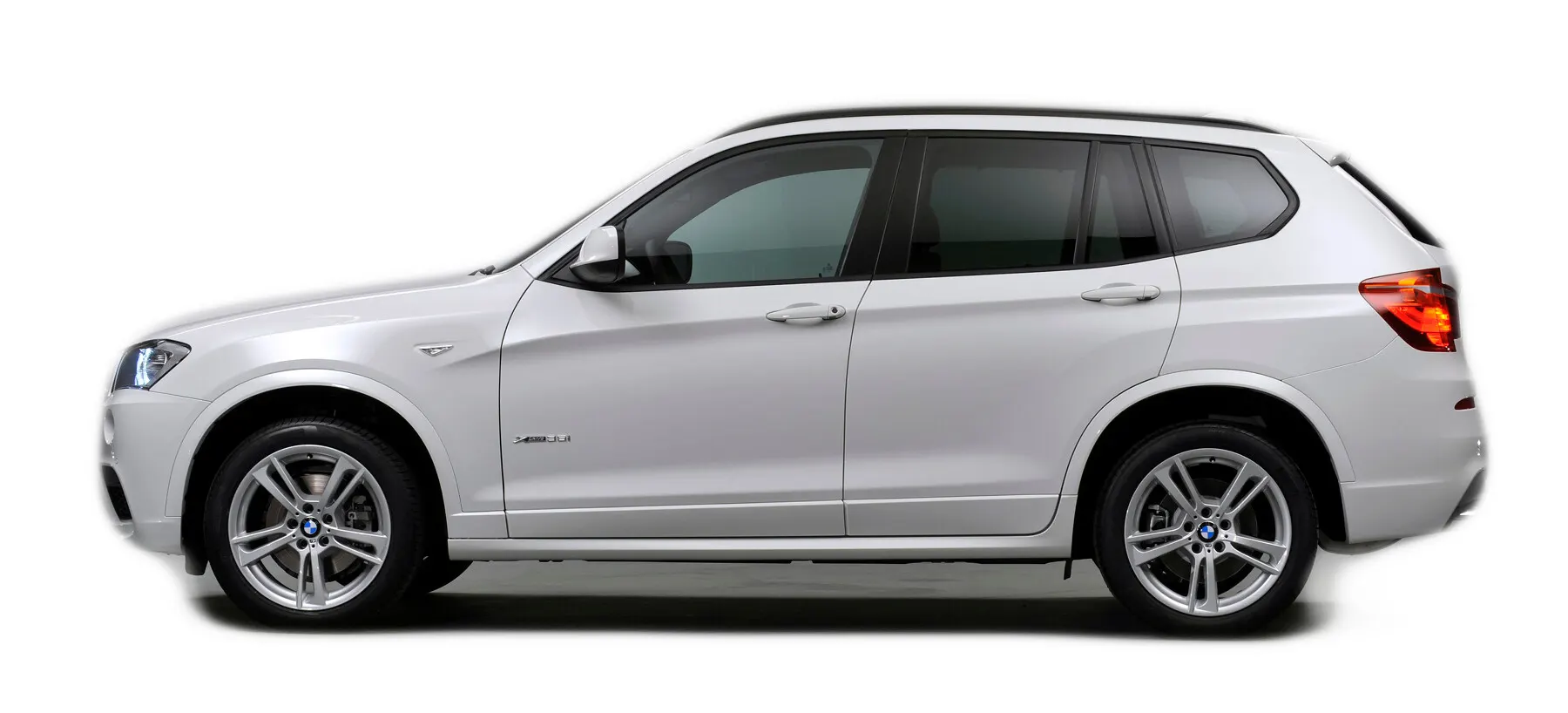
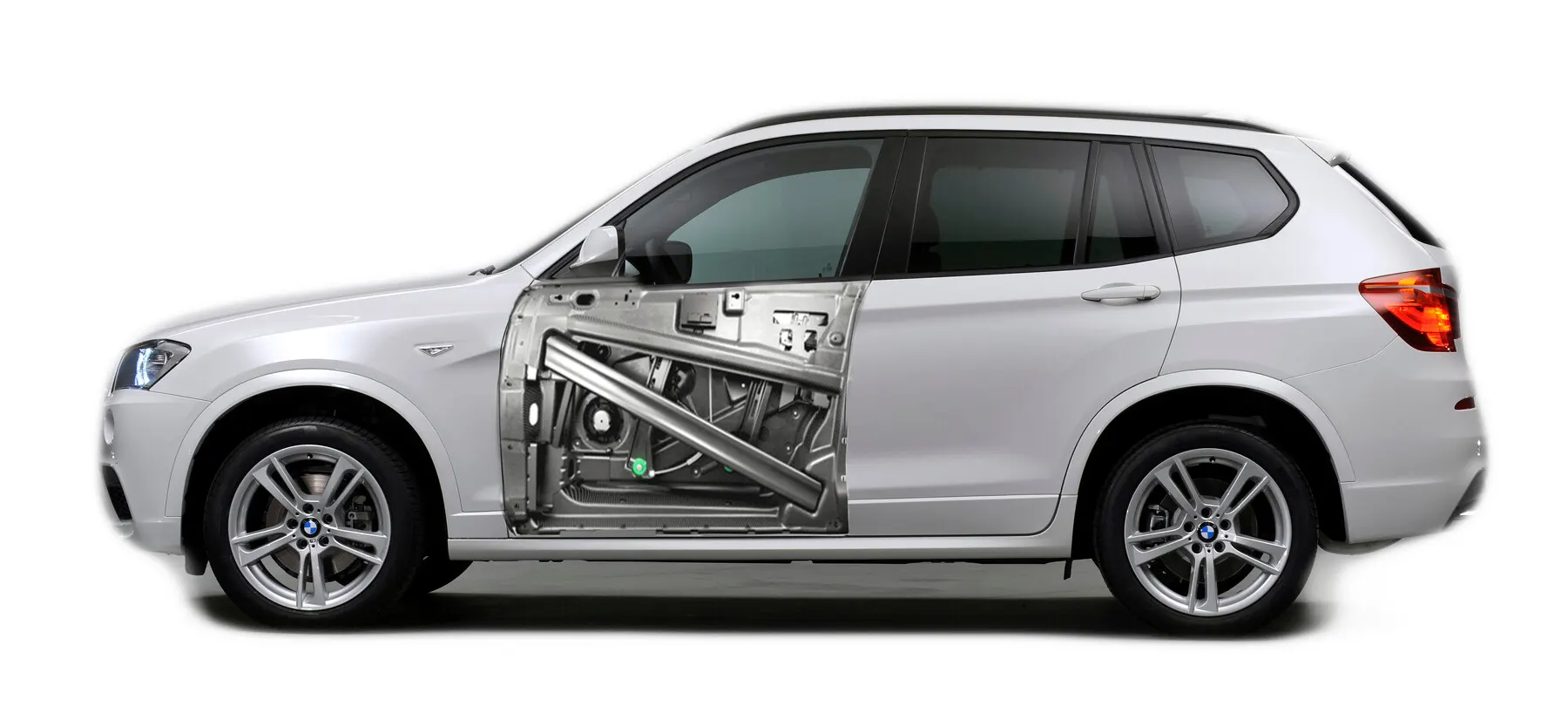
Drag to reveal the bracing. Every brace and beam is something the technician reads and works around to reach the dent from behind.
Watch: why dent repair cost differs. Straight from Myke at Dent Time.
Answer four quick questions for a preliminary range. Send photos and a technician replies in minutes with a written estimate.
What's behind the panel can change this number. Two dents that look identical from outside can be two different repairs, because braces, beams and wiring sit behind some spots and not others. That is why this is a preliminary range, never a quote sight unseen.
See what's behind the panelThis is a preliminary range based on your answers. Send two photos and a technician replies within minutes with a written estimate. The final price is always confirmed in person, once we can see what is behind the panel. No obligation.
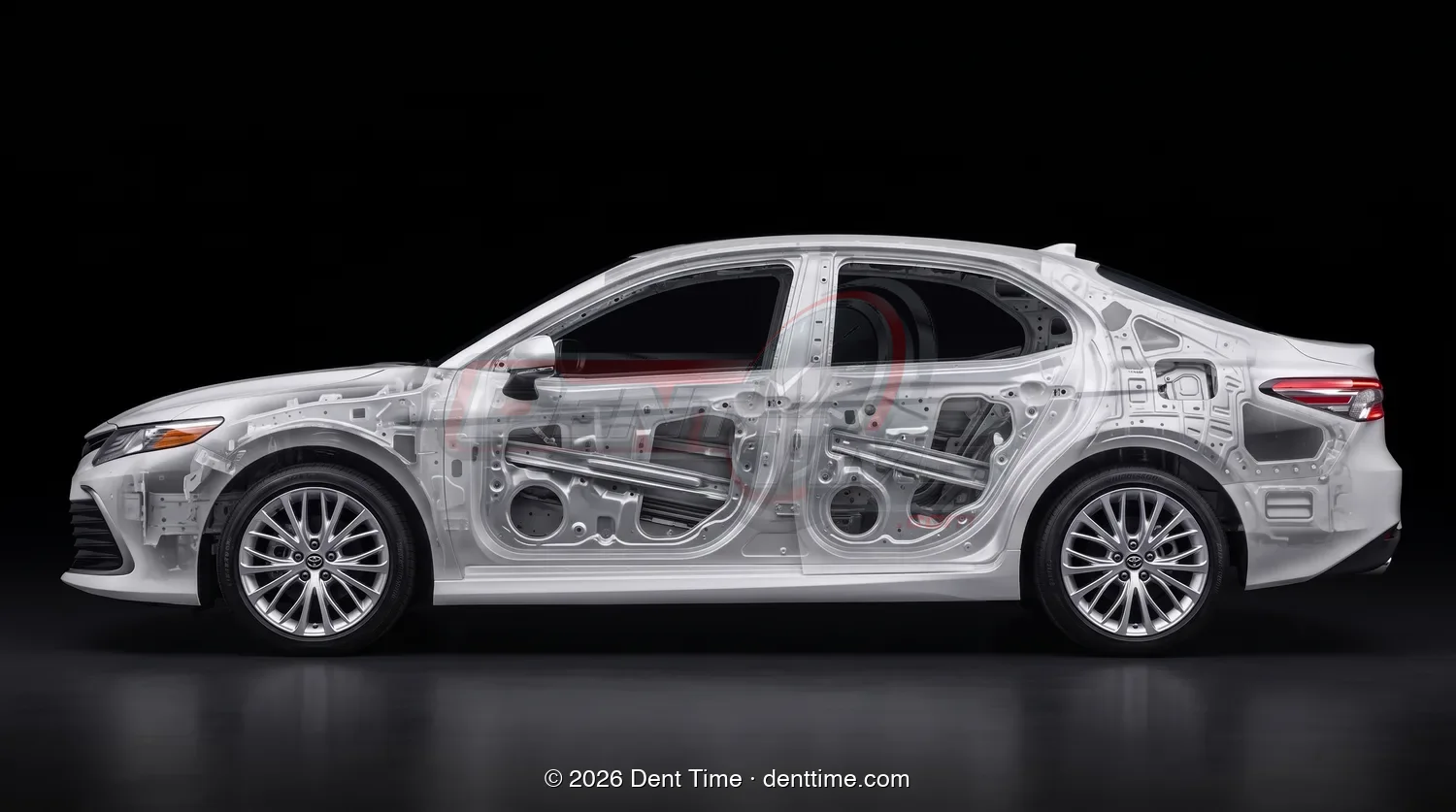
Two dents that look identical from outside can be two different repairs, because braces, beams and wiring sit behind some spots and not others. That is why this is a preliminary range, never a quote sight unseen.
Two photos and a few details is all it takes. One of the whole panel, one close up. A technician reads them personally and sends back a real range, usually within minutes during business hours. Nothing is booked and nothing is charged until you say so.
A door ding is a small, shallow dent in your panel, usually from another car's door, a shopping cart, or a stray elbow in a parking lot. The paint is almost always intact. Only the metal is pushed in.
Because the factory paint is unbroken, a door ding is the textbook case for paintless dent repair. We work the metal back to its original shape from behind the panel, so nothing is sanded, filled, or repainted. The finish stays exactly as the factory sprayed it, and nothing lands on the Carfax. Most door dings are finished the same day, in about two hours, from $197.
At that price a door ding almost never belongs on an insurance claim. Once you count the deductible and the premium hike, filing usually costs more than the repair, and it leaves a mark on your record for a dent we erase in an afternoon. See when a claim is actually worth it, and when to skip it.
Same panel. Palm trees on the right. The dent on the left.
The most common question San Diego drivers ask after a bad experience is: how was I supposed to know? The answer is always visible, if you know what to look for. Poor PDR leaves metal that was pushed with the wrong tools, clearcoat stressed or cracked from sharp contact, and in some cases holes drilled where none belonged. None of that can be undone by another technician. Every car in this section was dent-repairable before the first shop touched it. This is what to look for before you hand your car to anyone.
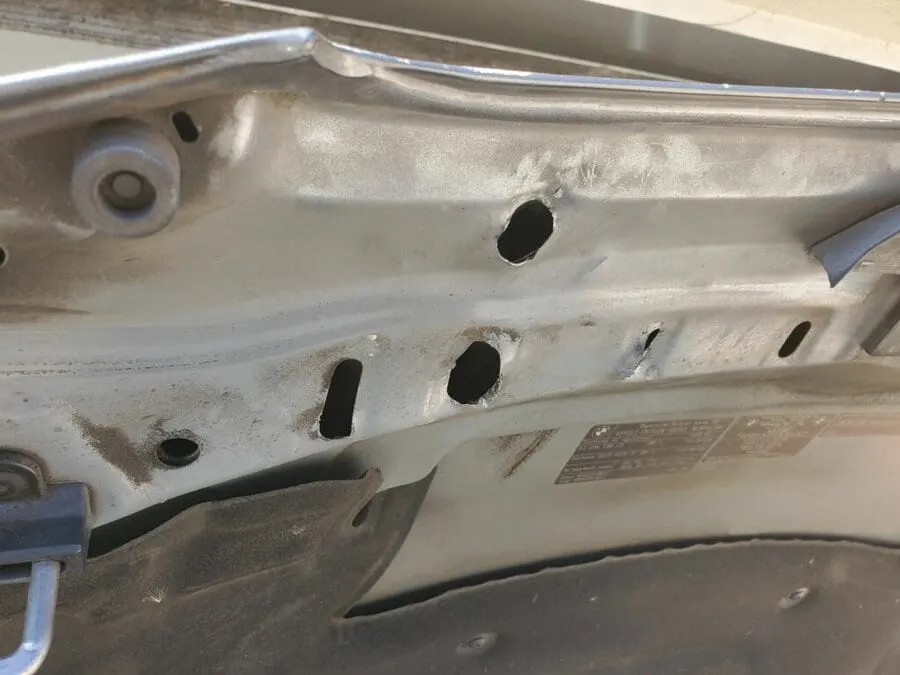
Multiple holes drilled through the panel where none were needed, then left open, unsealed, unprotected. Every one of those openings is now a rust point working inward. The structure is compromised.
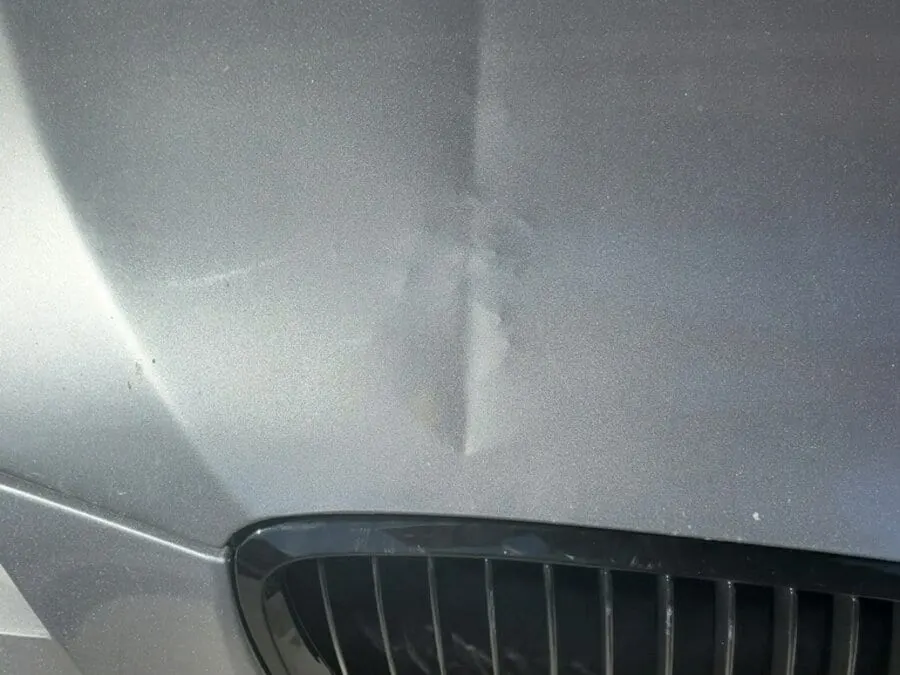
Done by a technician who called himself experienced. A sharp tool pushed with too much force created high spots across the hood and stressed the paint at every contact point. Once the paint is broken from underneath, PDR is no longer an option. The panel needs a full respray.
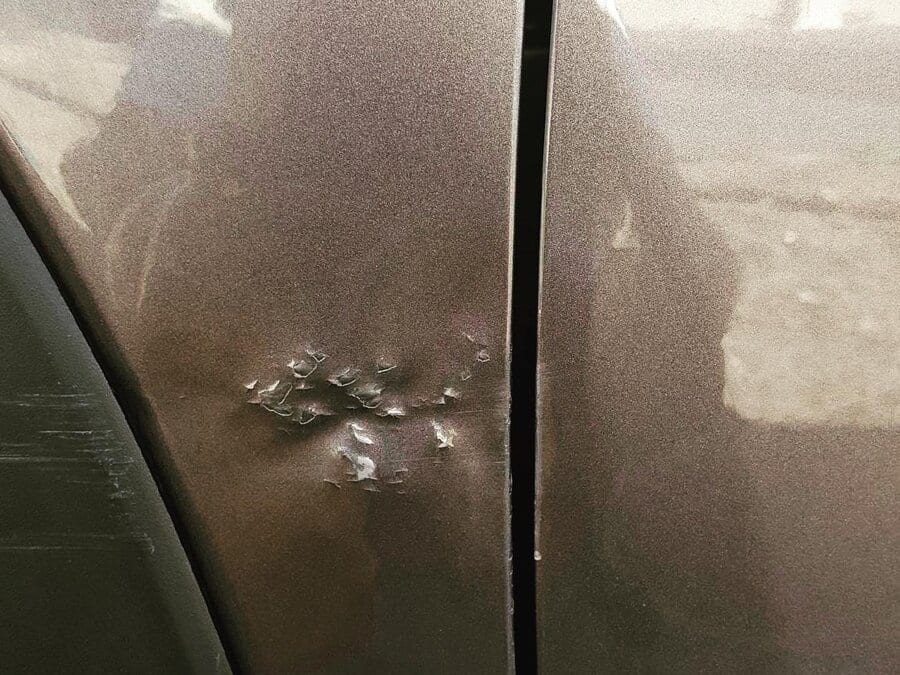
Aggressive pushing with the wrong tools poked the metal up from underneath across the panel. Each raised point broke the paint surface from below. There is no pushing these back down. The factory finish is gone.
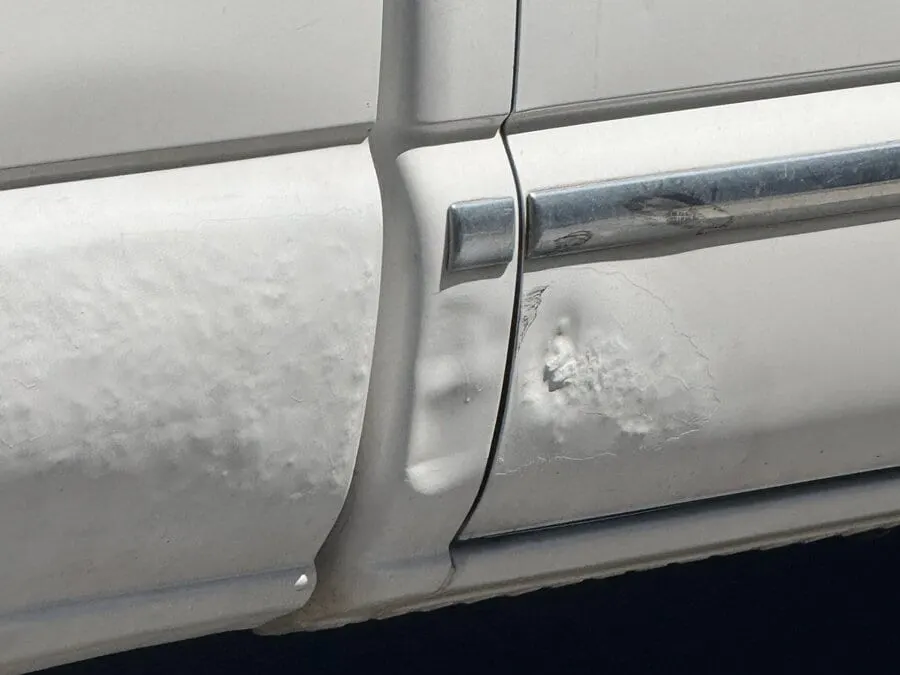
A mobile company in a Walmart parking lot told the owner it would wash away by tomorrow. It didn't. What they applied bonded to the paint and lifted it, leaving the panel in worse shape than the original dent. This car now needs new panels and collision work that could have been avoided entirely.
Every panel above was dent-repairable before the first technician touched it. The damage in these photos was not caused by the original impact, it was caused by the repair. That distinction matters, because it changes what you are actually deciding. The dent is not the risk. The technician is.
Myke Toledo · Dent Time
When you buy a gallon of milk, every gallon at every store is the same product. Choosing the one that costs less makes sense. PDR is not that. Two technicians looking at the same dent will make completely different decisions about access, pressure, and where to stop. One of those decisions preserves your factory finish. The other one does not.
Thirty-five years in this trade is not a marketing number. It is the count of dents, panels, and metal types that live in a technician's hands as muscle memory. You cannot buy that experience at a lower price point. You can only find it or not find it.
The tool does not read the metal. The technician does.
A standard door ding runs $197 to $250 and finishes in 60 to 90 minutes. A small but sharp ding runs $250 to $400, because a tight impact stretches the metal more than a wide soft one and takes more skill to bring back without cracking paint.
Soft, round, shallow. The everyday parking-lot ding, and the most routine repair in the trade.
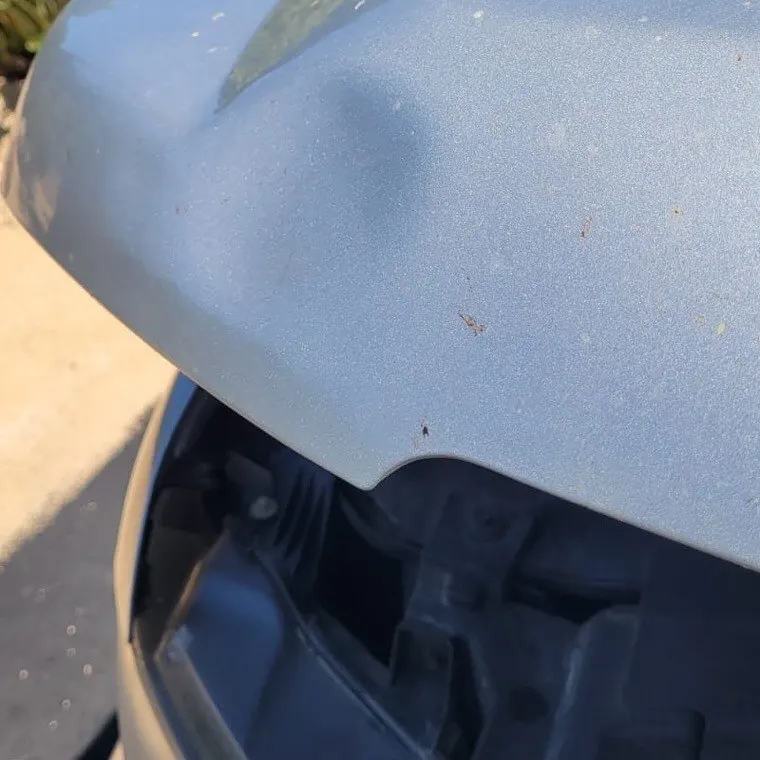
Small but sharp. A tight impact stretches the metal more than a wide soft one, so it takes more skill and time to keep the paint intact.
Small does not mean cheap, and small does not mean routine. The sharpness of the impact decides the work, not the diameter. Send two photos through the estimate form and get the real number in minutes.
Standard door ding repair starts at $197. Careful workmanship and convenient service both matter. Complete the estimate form with your vehicle details and photos, and Myke will review the damage, explain suitable options, and confirm the price before you book.
This is how a PDR tech sees a dent. A reflection board throws straight lines across the panel, and a dent bends them. Drag the slider, the same board, the same panel, before and after the repair.
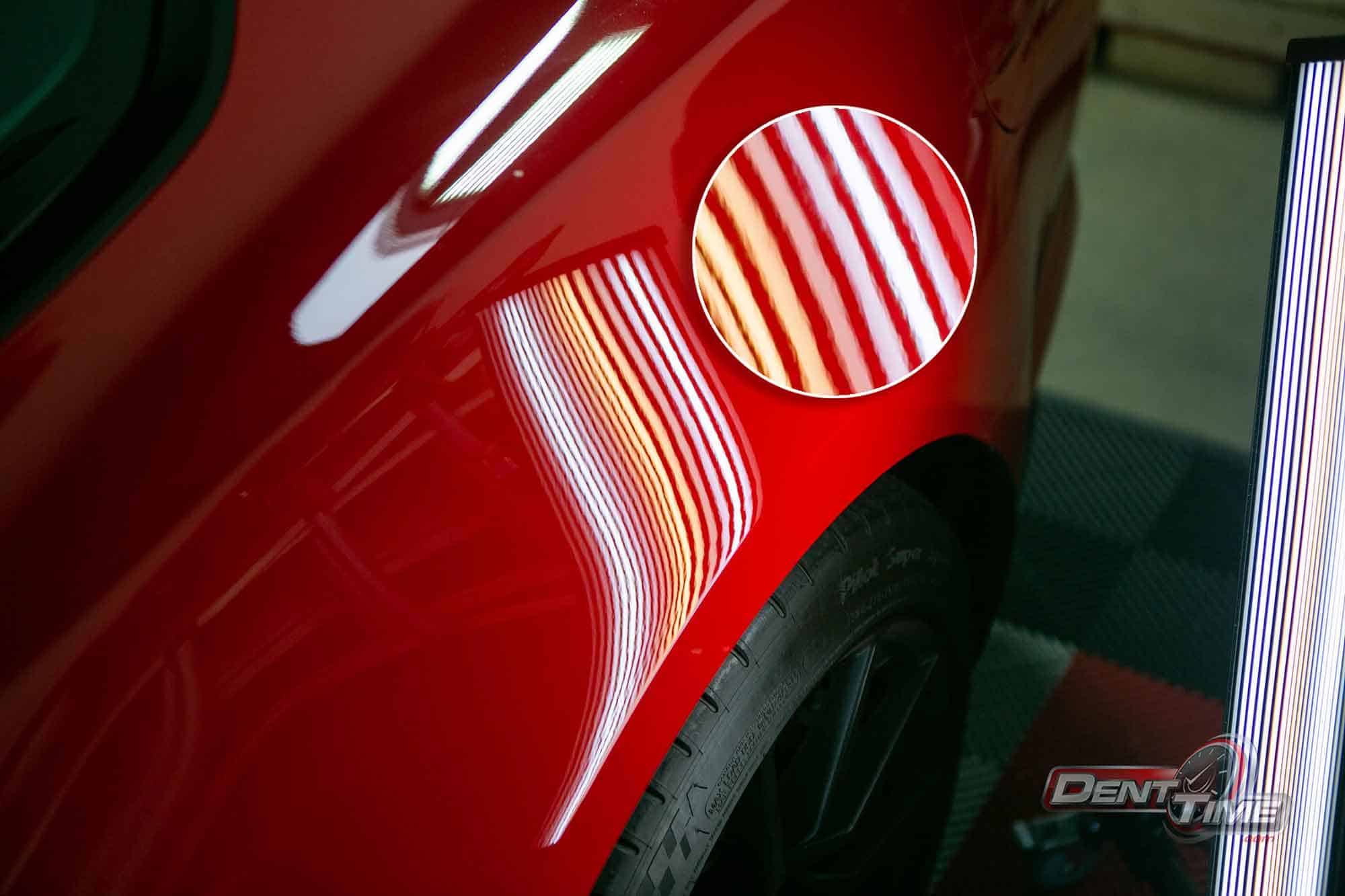
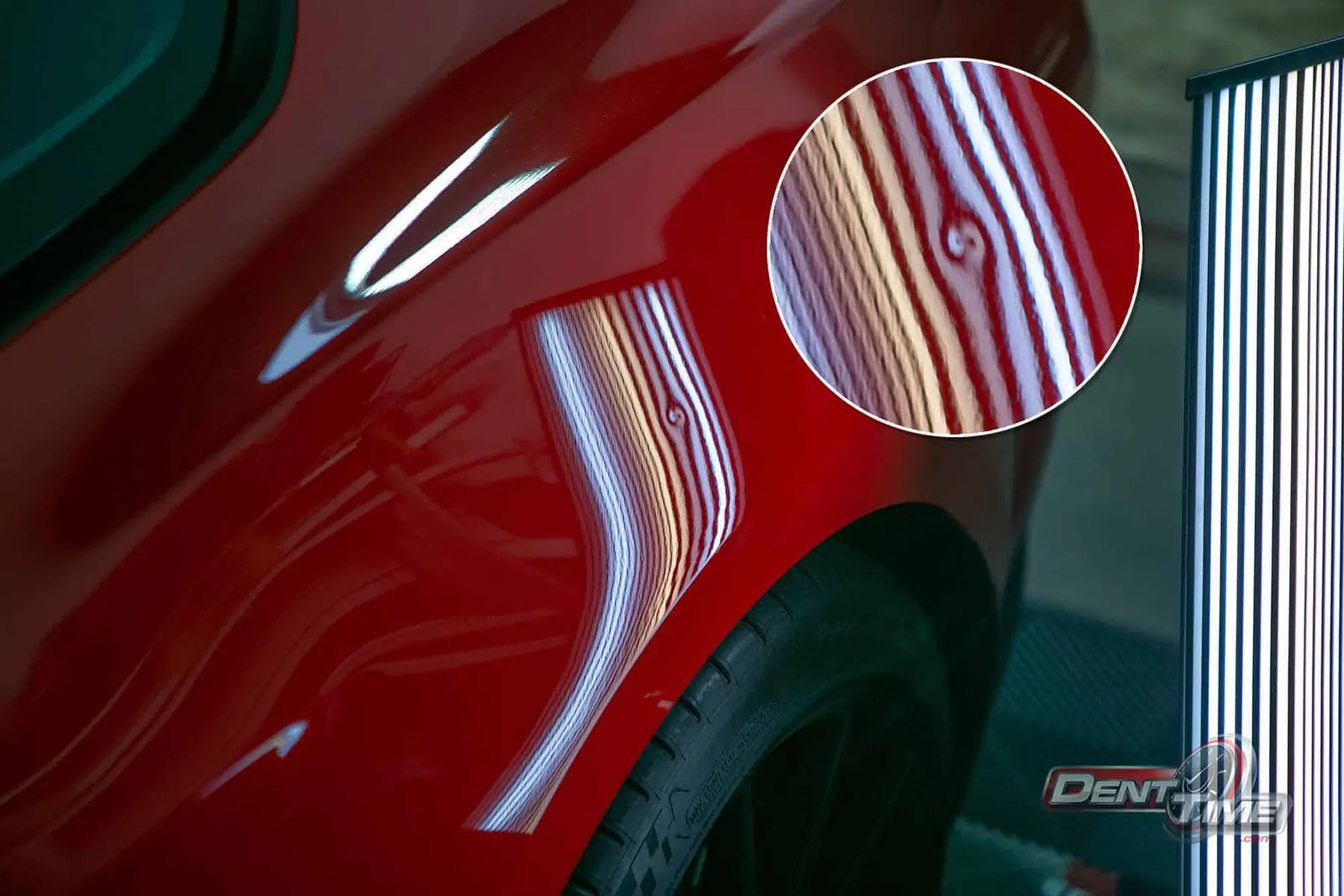
Straight reflection lines mean the metal is back to its original plane. No crown, no ring, no trace. A real Dent Time repair, read under the line board.
Real door dings, read straight. Send yours and see what it takes.
A door ding that needs a second pass wasn't done correctly the first time. We assess, work carefully, and inspect under proper lighting before you see it.
Push a dent too far and the metal passes the original plane and becomes a high spot. You can push a low spot up. You can't push a high spot back down the same way. Correcting a crown takes a different approach, and isn't always possible.
The margin between a perfect result and a crown is measured in millimeters of tool pressure. Myke has been reading how metal responds since 1991. That experience is what produces a result you can't find.
The factory paint is never touched. Nothing is reported.
Checked under raking light before the keys go back.
Get the ding looked at before anyone makes it harder. Send your photos.
The price reflects the precision required, not just the size. A ding on a body line is harder than a ding in open metal. Your preliminary estimate is free and comes back in minutes after you text a photo. You approve the number before a tool touches the car.
A clean parking-lot ding massaged out with the factory paint untouched. Same-day, 1–2 hours.
More than one ding on a door or fender, worked together for an even, flawless result.
A ding on a body line or crease needs precision access. Harder to do right, and we do it right.
Every price depends on the ding's location, depth, and the access behind the panel. A ding on a body line or panel edge takes more skill and time than one in open metal. Same size, different skill requirement. Most repairs also come in two finish levels, so the result fits your vehicle and your budget.
Complete satisfaction or no charge applied. Factory finish. No Carfax record. Inspected under raking light before you see it.
The shop is in Escondido, and we serve door ding repair throughout San Diego and the surrounding North County and coastal communities. Text a photo from anywhere in the county and we'll tell you the closest option and a real quote.
Wherever you park, send a photo and Myke texts back your estimate.
What people search right after finding a fresh ding. No scare tactics, just the real math.
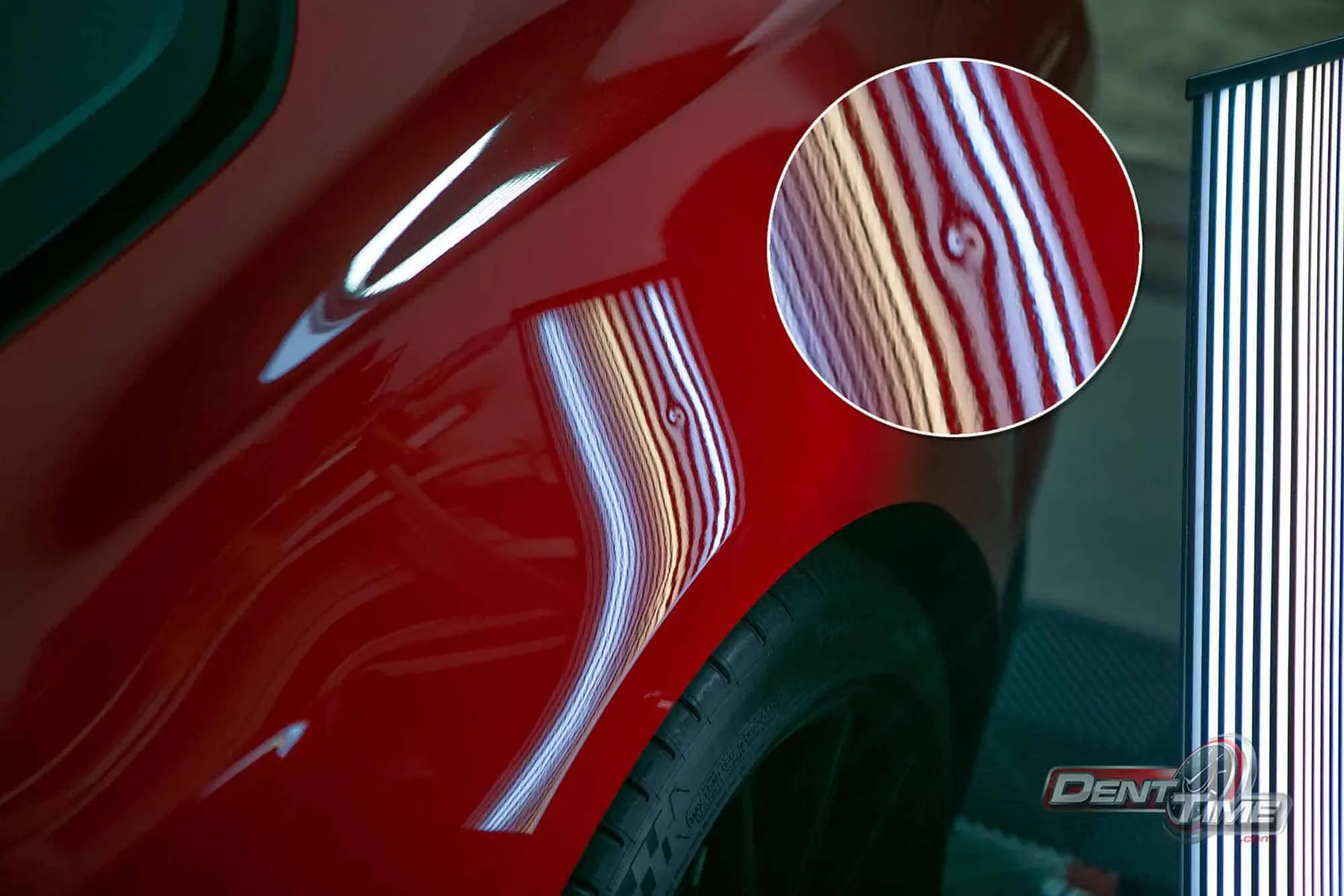
The parking lot happens. The repair makes it never have happened.
If you are anywhere in San Diego County or south Orange County, the honest answer is your own driveway. Our technicians live across the county and repair most door dings at your home or office, same standard as the shop. Text a photo to 858-408-6200 and the repair usually happens the same day.
Yes, and the math is short. A standard ding runs $197 to $250, takes about two hours, keeps the factory paint, and leaves no record on the Carfax. Skip it and every appraiser who walks the car flags it for more than the repair would have cost. Text a photo and get a written estimate.
More than it should. Appraisers walk every panel under light, and visible dings read as neglect, so the deduction routinely runs several times what the repair costs. Fixing dings before an appraisal is one of the few times car money math is this clean.
Park a row farther out, take end spots, and stay clear of the cart corral. That is honestly most of it. When it happens anyway, and in a busy parking lot it eventually will, two photos in good light get you a real price in minutes.
Often, yes. Most standard dings take about two hours of actual work, and same-day slots go to the photos that arrive early. Text yours to 858-408-6200 in the morning and there is a real chance the ding never sees a second sunset.
Most mobile operators hand you one number and one standard. Take it or leave it. That is easier for the shop and it quietly decides something that was yours to decide. We quote Premium and Practical on the same damage, show you what each one actually looks like, and let you pick. The price changes with the option. The person doing the work does not.
Same damage, same technician, two standards. Drag each slider against the same before. Practical runs 30 percent less than Premium. Your number comes from your photos, in minutes.
Options start once a repair is over $500. Below that there is one honest way to do it and a straight cost range, so there is nothing to choose between. Above it the damage is involved enough that how far you take the repair becomes a real decision, and that decision is yours to make with your budget and your standard in mind, not ours to make quietly on your behalf.
This is not a good, better, best ladder with a discount at the bottom. They are two honest answers to one real question: how far do you want to take this? A ten-year-old daily driver and a leased car turning in next month deserve different answers, and pretending otherwise is how people end up paying for something they did not need or accepting something they did not want.
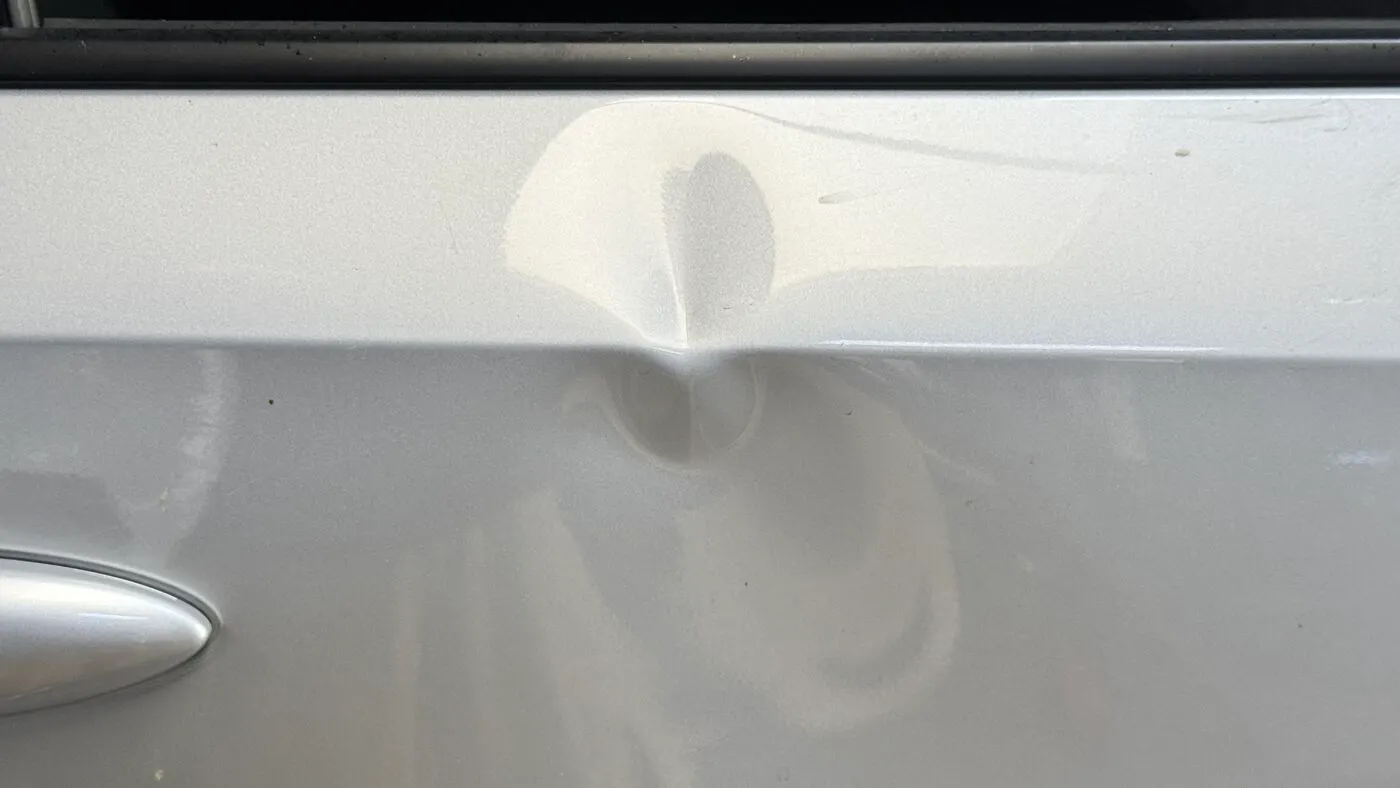
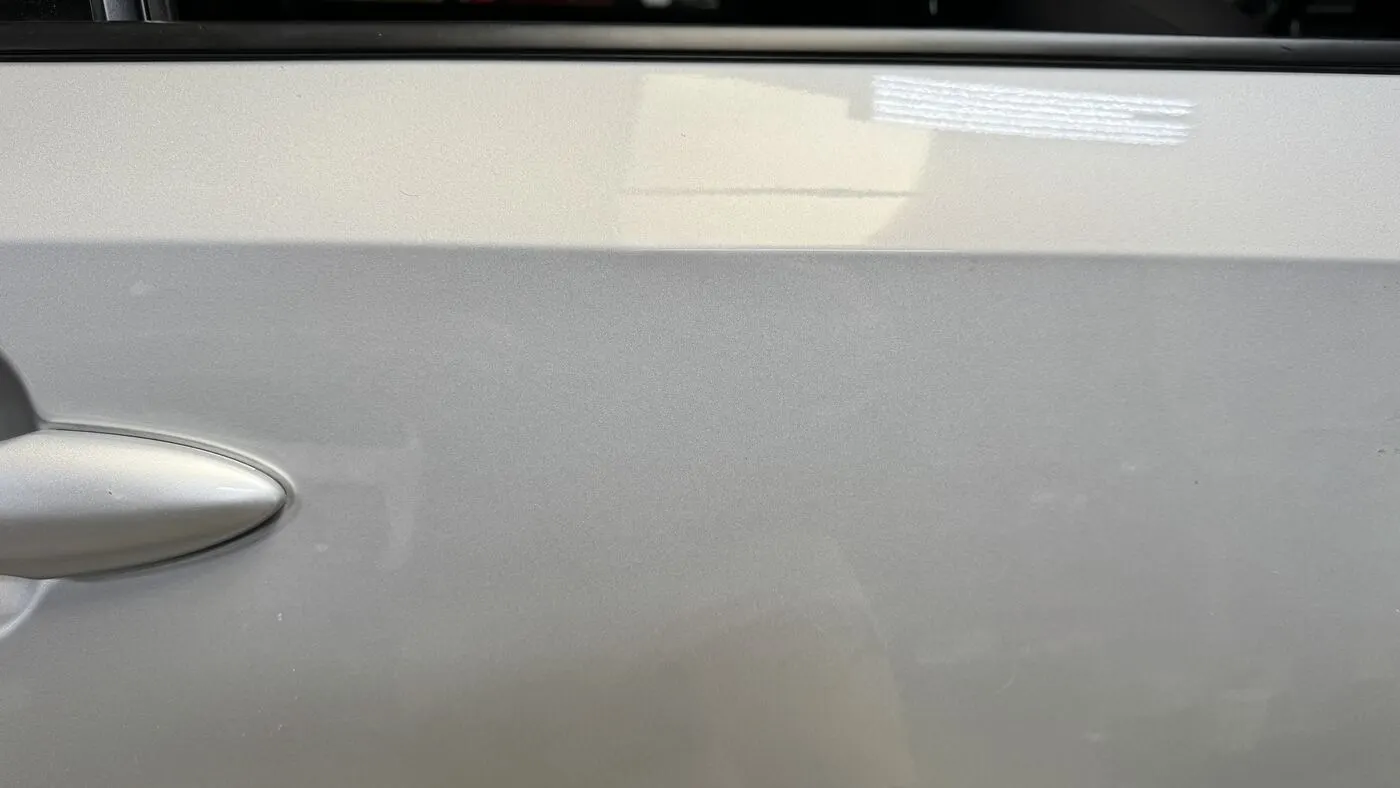 Before Premium
 You do not see it. Not from any angle, not from any distance, not if you go looking. The dent is gone rather than reduced, and there is nothing left for anybody to find later. This is the standard you want on a car you are keeping, selling, or turning in on a lease.
Best for: Newer vehicles, leases, anything where resale is the point.
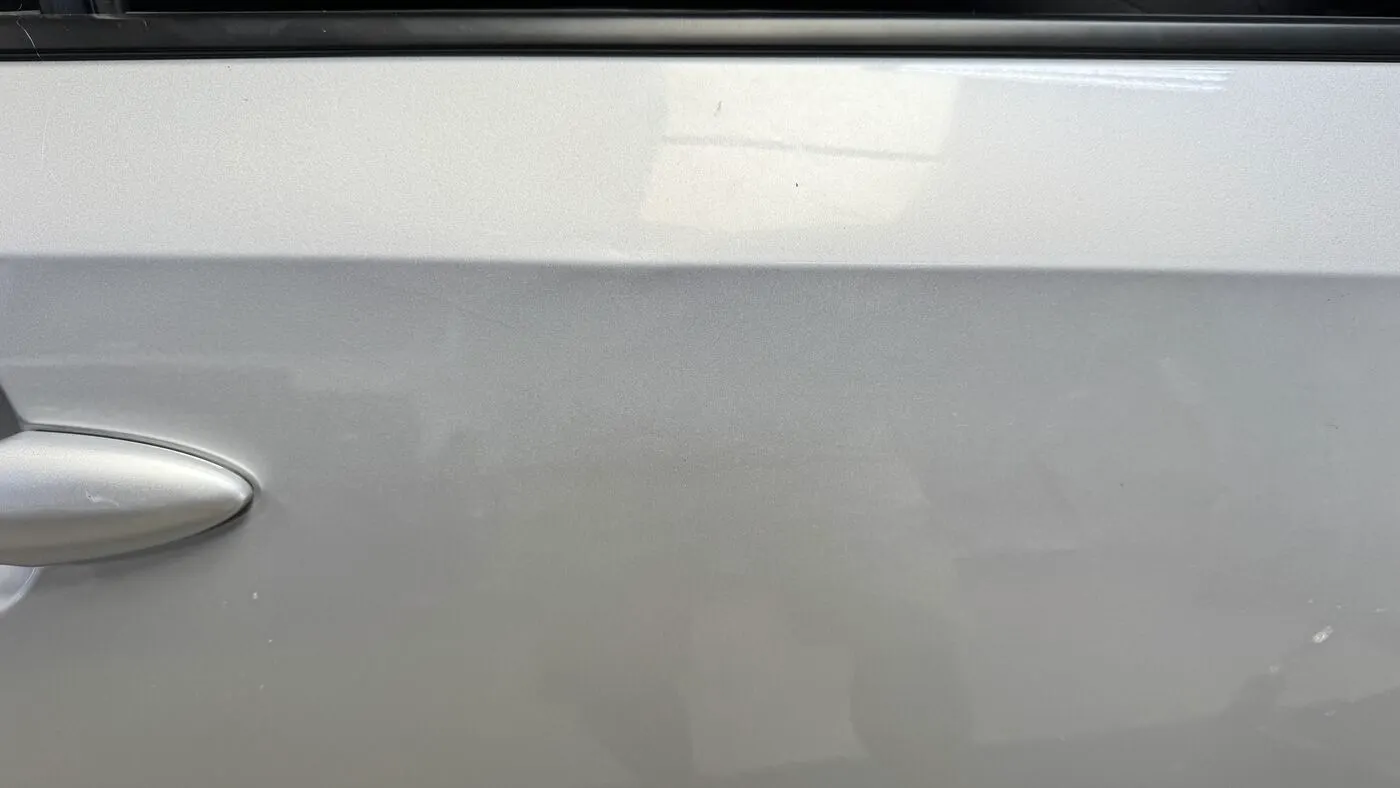 Before Practical
 You will still find slight imperfections at different angles if you go looking for them. Drag the slider and you will see it on this panel: what is left is barely visible near the body line. That is our Practical standard, and it runs higher than most competitors’ premium.
Best for: Daily drivers, work vehicles, and anyone who wants it gone without paying for perfect.
What moves your number is the access behind the panel, how sharp the damage is, and whether the panel is aluminum or steel. Text two photos and the real range comes back in minutes.
Two minutes with Myke on what actually separates the options, what you get for the difference, and when the cheaper answer is genuinely the right one. The same conversation you would get standing next to your car.
Not sure which one your panel needs? Send two photos and we quote both.
Here is what actually decides how your panel turns out. Not which option you picked. Not the price. Whoever is holding the tool.
Paintless dent repair has no licensing body. Anyone can buy a set of rods and call themselves a technician, and the work looks finished to an untrained eye on the day. It shows up later, under garage lighting or against a painted parking line, long after the person who did it stopped answering.
So the question worth asking is not really which repair you are buying. It is who is performing it. A Practical repair from someone who has read metal for thirty-five years beats a Premium price from someone learning on your car, every time.
See what the difference actually looks like in real bad repairs, or send two photos and we will quote both options on your panel.
Straight-on and 45° in natural light. A real technician reviews them and responds with an honest assessment and quote. The ding you have now is the easiest version of this problem.
Leave your name and number and Myke will call you back during business hours, Monday to Friday, 8:30am to 4pm.
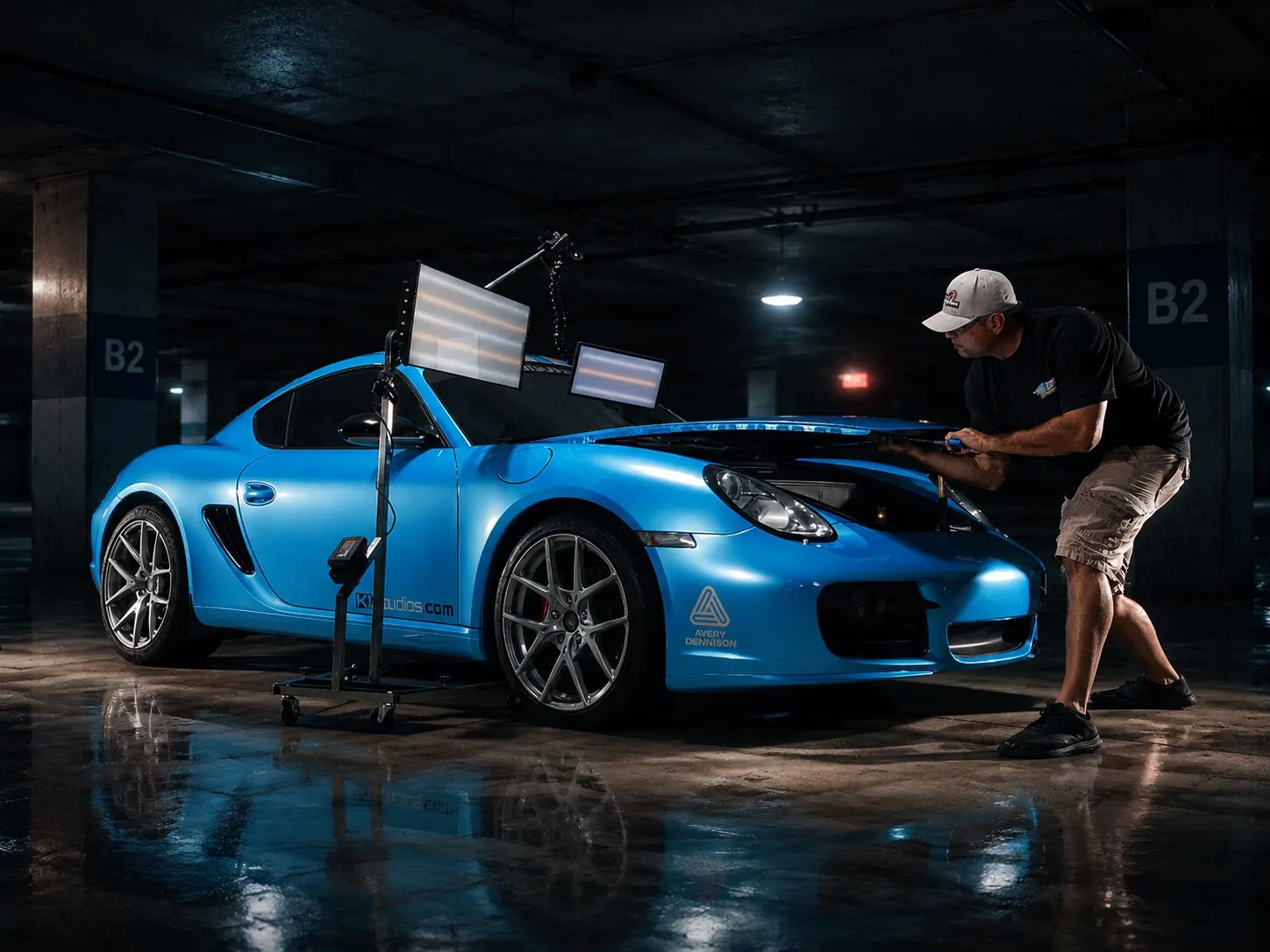
Julie texts you back right away from (858) 408-6200.