Paint that failed before the metal did
Worked cold or worked fast, so the finish cracked or lifted while the panel was still moving. The dent came out and the car still needs paint, which was the one thing paintless repair was supposed to protect.
Got a dent or door ding on your Tesla? We offer mobile Tesla paintless dent repair across San Diego, at your home or office, plus in-shop repairs at our Escondido shop. Door ding removal, body-line creases, and dents worked out from behind the panel, so the factory finish stays put with no repaint and nothing on the Carfax. Aluminum repairs receive a specialist assessment of access and the achievable finish.
No paint, no filler, no trace. Tap WATCH and the page becomes the theater, sound on.
Drag or use the arrows · tap watch for full screen
The most common dents land on these side panels. Tap where yours is and the paint gives way to the real bracing behind that exact spot, so you can see what a technician is actually up against before the first push. Most technicians meet that structure when they arrive. We study it before we get there, on every Tesla paintless dent repair we take across San Diego.
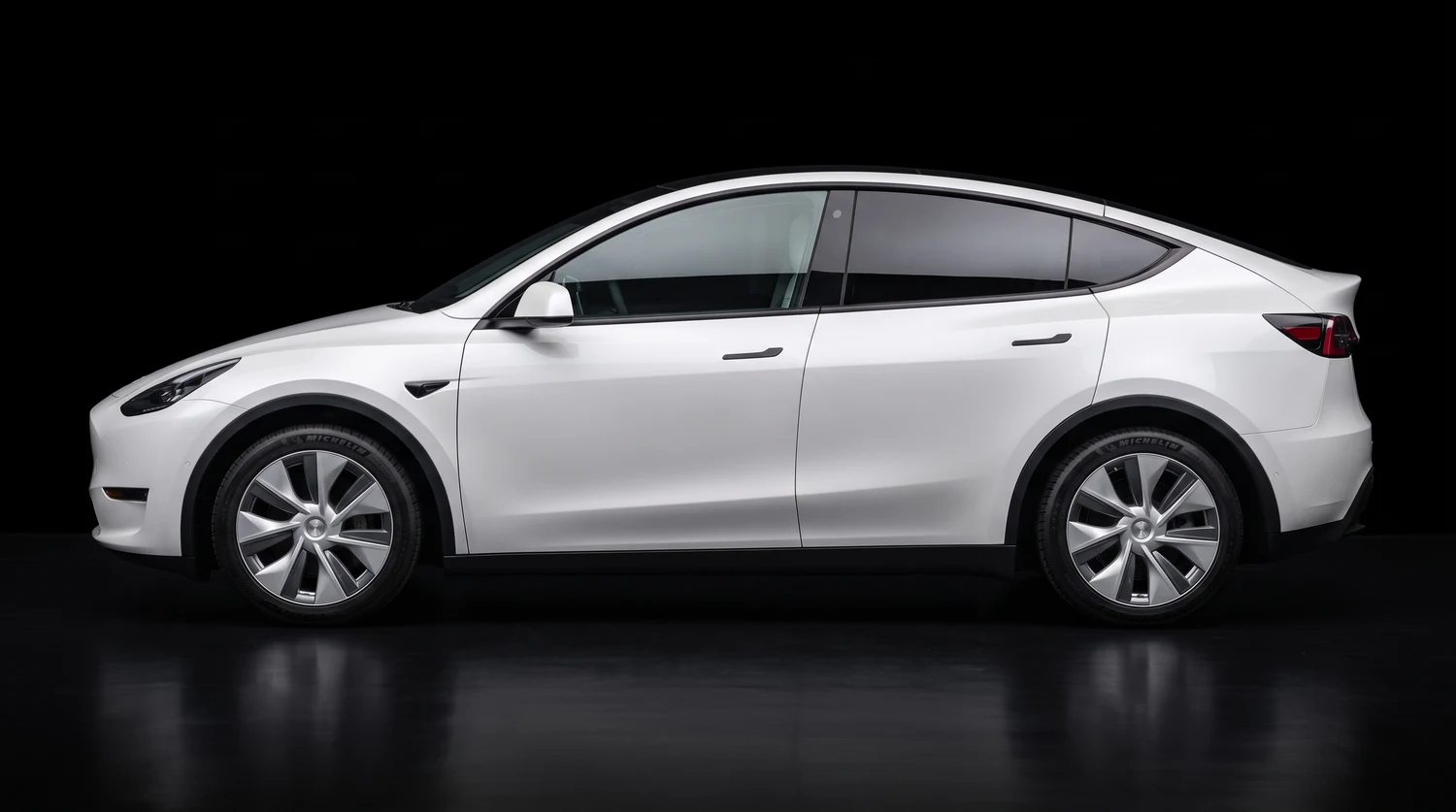
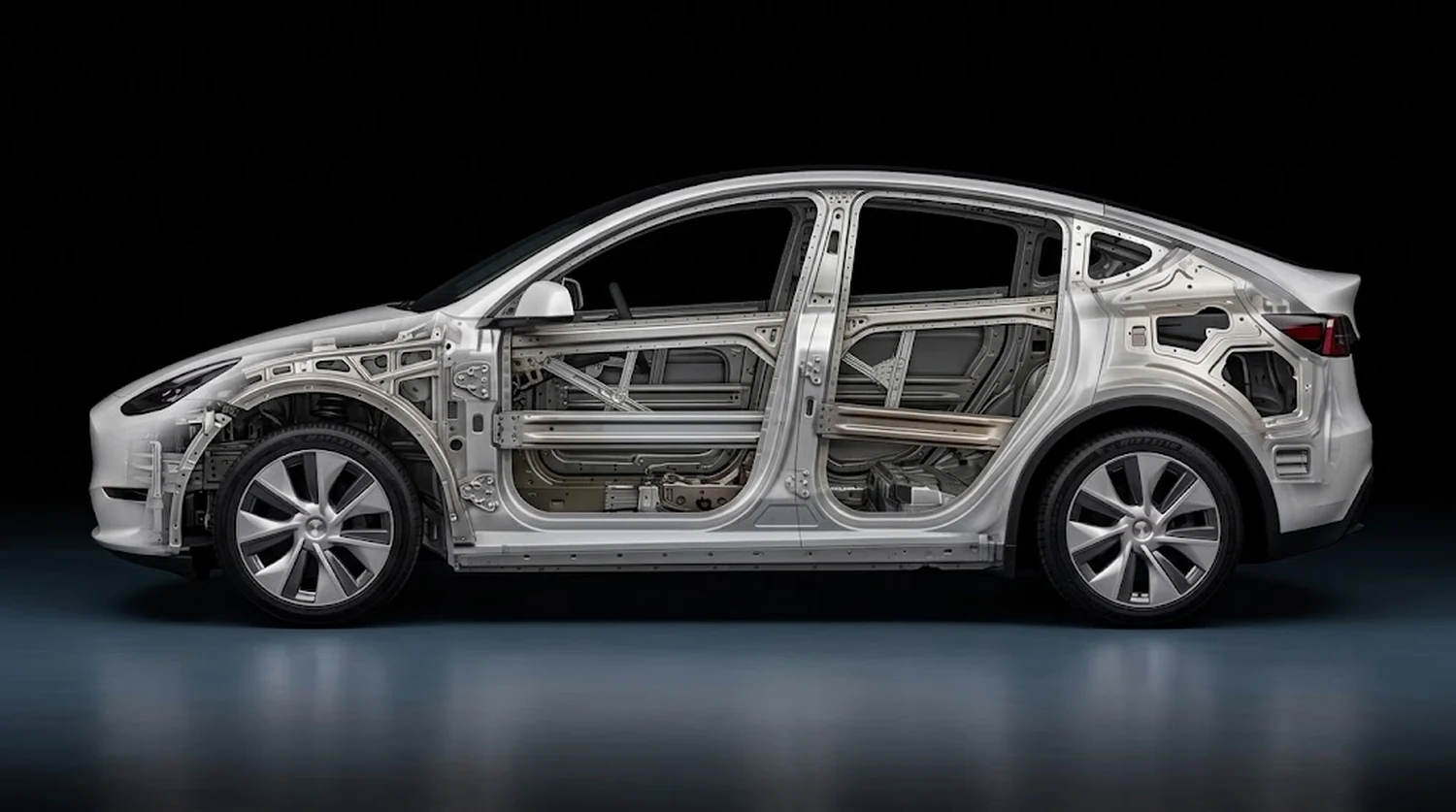
For reference only. This is not an official or 100% accurate diagram. Every vehicle varies by make, model, year, and trim. The point is what it shows: the same size dent can be a different repair altogether.
Your dent may not be on a door, and that changes very little. Hoods, fenders, quarter panels and trunk lids all have structure behind them too: braces, reinforcement bars, brackets, wiring, and on a hood the whole underframe. Some spots on your car are wide open from behind and take minutes. Others sit directly over a brace and have to be reached a harder way, or reached after something comes off first. That is the single biggest reason two dents that look the same are not the same price.
This is why we never name a firm price without seeing what is behind your damaged panel. A dent over open metal is a clean paintless dent repair. The same dent over a brace, a beam, or a steel pillar is a different job. Anyone quoting one flat price for a Tesla dent sight unseen is guessing, and a guess is where surprise upsells come from. So you get an honest preliminary range from your photo up front, then the firm number once the panel is seen in person. Work behind a panel rewards patience, great care, and pride in doing it right, and that is what you are choosing when you choose your technician. See exactly what drives the price.
Four quick questions for a preliminary range. A technician follows up with a written estimate from your photos.
What's behind the panel can change this number. Two dents that look identical from outside can be two different repairs, because braces, beams and wiring sit behind some spots and not others. That is why this is a preliminary range, never a quote sight unseen.
See what's behind the panelThis is a preliminary range based on your answers. Send two photos and a technician replies within minutes with a written estimate. The final price is always confirmed in person, once we can see what is behind the panel. No obligation.
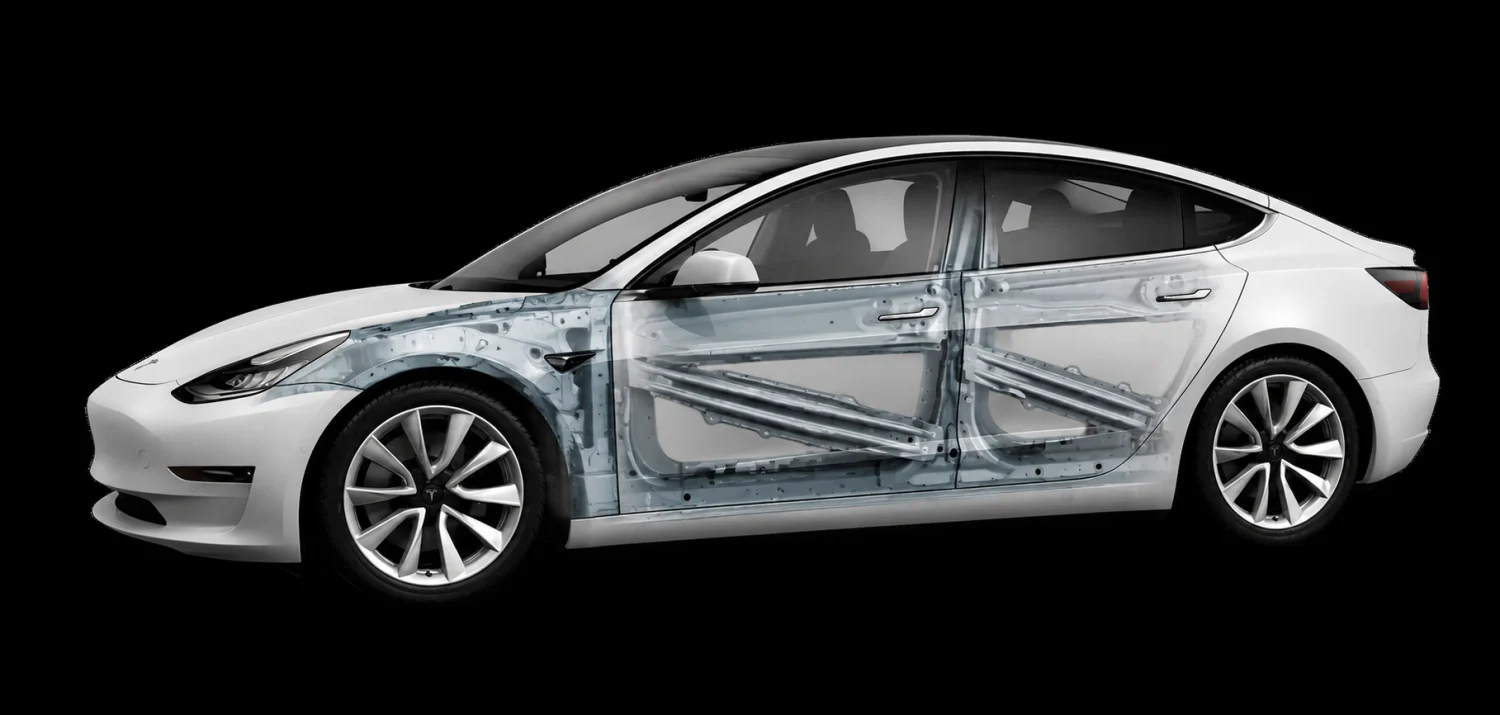
Two dents that look identical from outside can be two different repairs, because braces, beams and wiring sit behind some spots and not others. That is why this is a preliminary range, never a quote sight unseen.
Yes. Tesla dent repair is one of the most common jobs we do, and paintless dent repair resets the panel to factory with no repaint and nothing on the Carfax.
Tesla panels are aluminum, which has no memory and stops most mobile technicians cold. That is exactly where we are strongest. A door ding from a charger stall, a crease down a door, a dent on the frunk or the hatch, we work it back from behind the panel so the factory finish is never touched. More on the metal at aluminum dent repair.
Some people search Tesla paintless dent repair, others Tesla paintless dent removal, door ding removal, or door dent removal. On a Tesla it is the same fix, the dent worked out from behind the panel with the factory finish untouched and nothing on the Carfax.
Drag the slider to see the same panel before and after paintless dent repair, with the factory finish never touched.
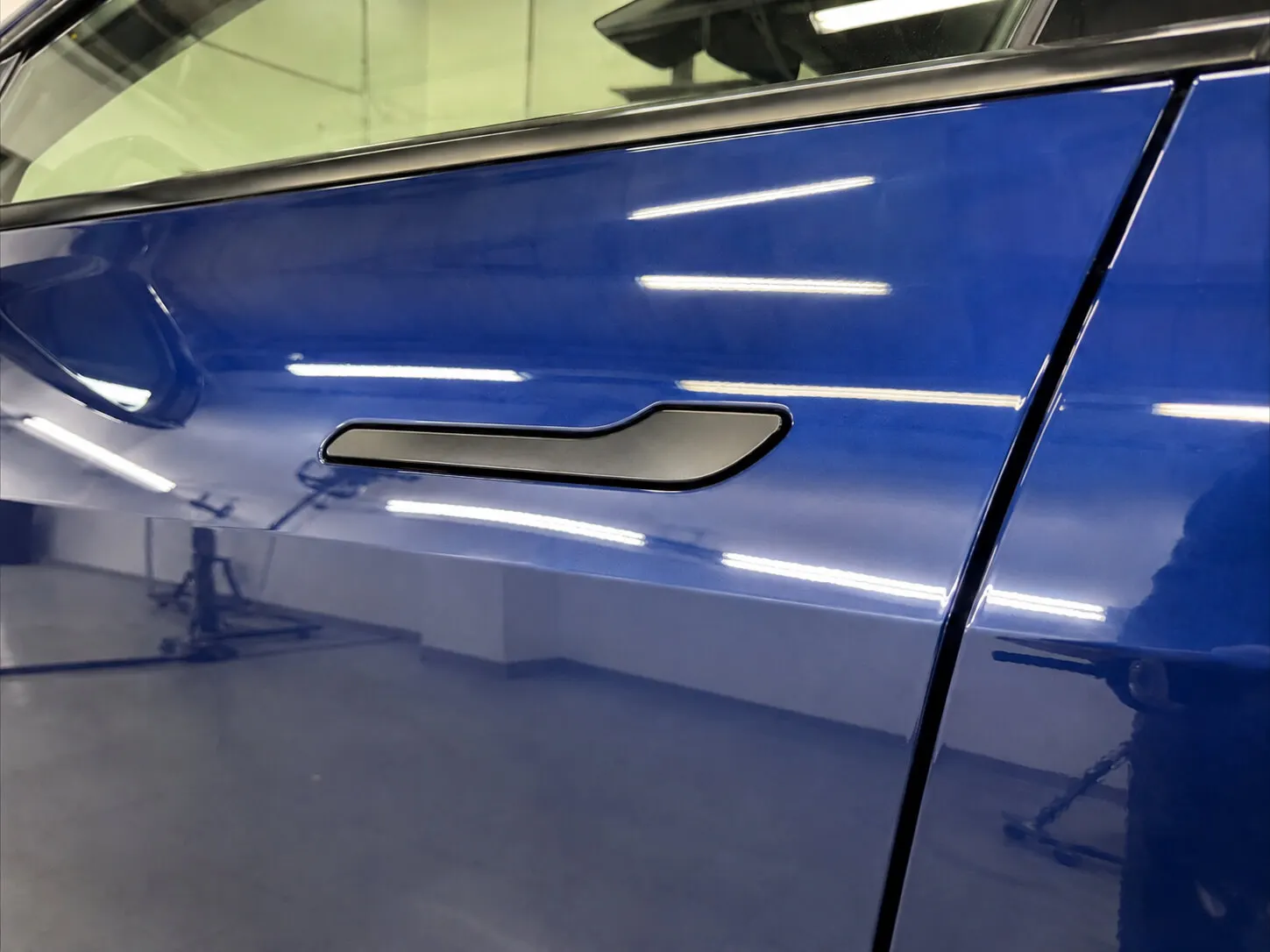
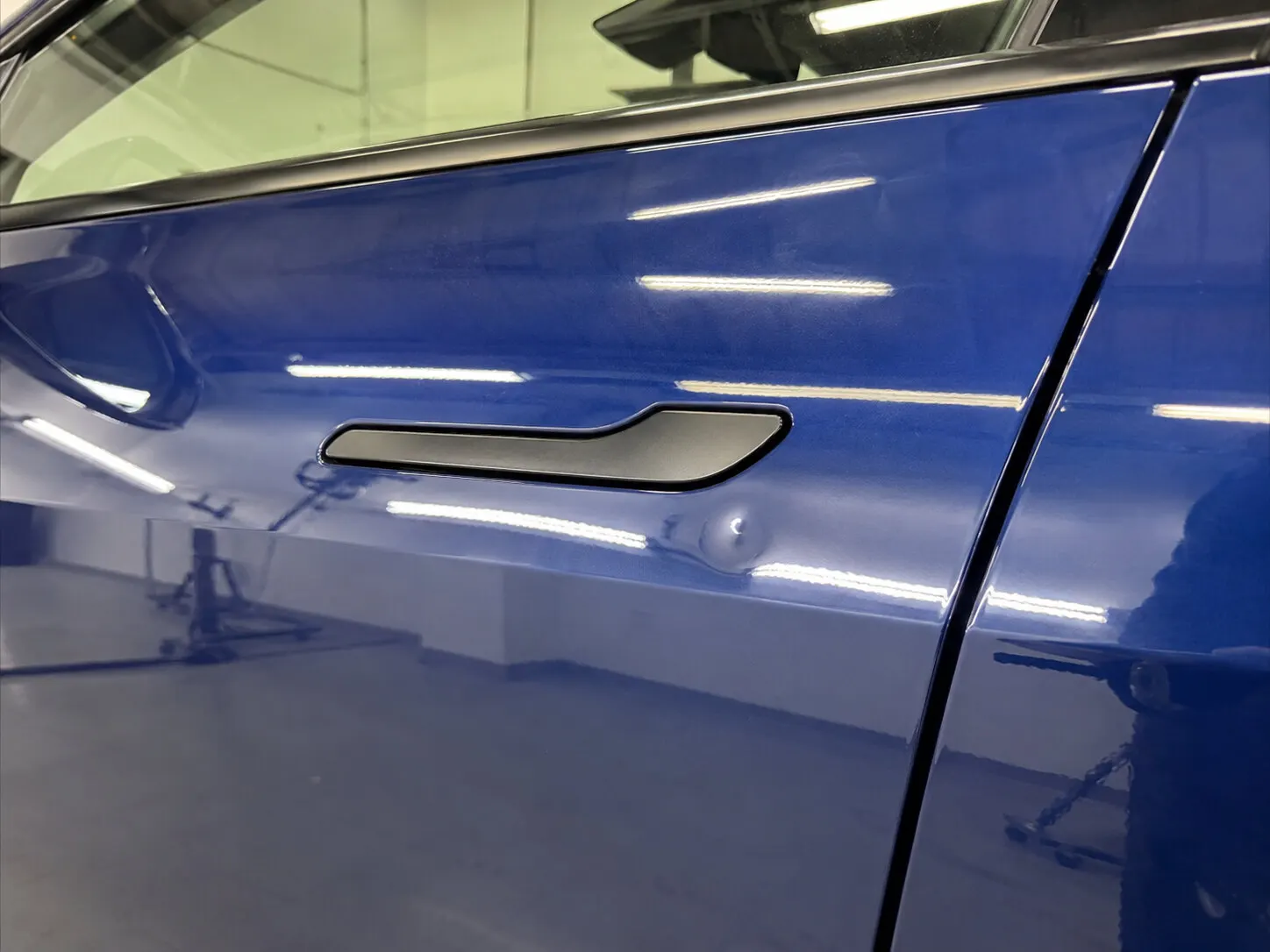
No filler. No repaint. Nothing on the Carfax.
Tesla paintless dent repair and door ding removal covers the full lineup, factory finish kept on every panel.
Door dings and body-line dents, aluminum doors
Get an estimate for this modelThe car we see most, parking-lot dents and hatch dings
Get an estimate for this modelAluminum panels reset to factory
Get an estimate for this modelFalcon-door and quarter-panel dents
Get an estimate for this modelStainless panel dents assessed in person
Get an estimate for this modelFrom door ding removal to creases and hail, we fix the everyday damage a Tesla picks up, all without touching the factory paint.
Aluminum has no memory. Steel wants to spring back and a technician uses that. Aluminum gives nothing back, so it takes more force and more accuracy at the same time, and heat to keep it moving. Work it like steel and it does not fail quietly.
Worked cold or worked fast, so the finish cracked or lifted while the panel was still moving. The dent came out and the car still needs paint, which was the one thing paintless repair was supposed to protect.
Too much force in one place. The low spot comes up and a wave stays behind it. You find that wave the first time the car parks under garage lighting or beside a painted stall line.
Access taken the fast way. A drilled hole behind a plug is permanent, and glue pulling on a panel that was not ready lifts the clear. Neither shows up on the day. Both show up later.
A Tesla is mixed construction. The door skin is aluminum and the fender is steel. A shop that assumes the whole car is one or the other prices the wrong panel, and finds out halfway through.
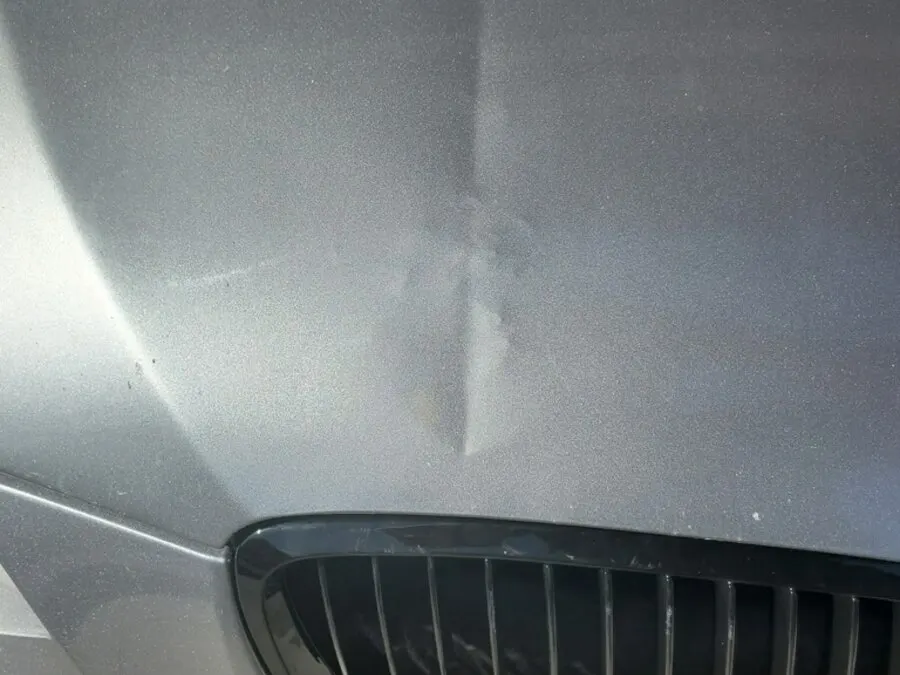
Myke has seen all four, and often several on the same car, because they come from one root cause. Somebody treated aluminum like steel. That is why the real question on a Tesla is never whether the dent can come out. It is who is allowed to touch the panel.
All four happen, and they happen in that order more often than not. Send photos before you start down that road, not after.
A Tesla door is a thin outer skin over an impact beam, a window regulator and wiring. A ding on open metal comes out from behind in minutes. The same ding over the beam has to be reached around it, and on aluminum, which gives nothing back, that access matters even more. That is what moves the number, not the width of the dent. See what actually drives the price.
The same door, inside and out. What you can't see is exactly what sets the price.
Your dent may not be on a door, and that changes very little. Hoods, fenders, quarter panels and tailgates all have structure behind them too: braces, reinforcement bars, brackets, wiring, and on a hood the whole underframe. Some spots on your car are wide open from behind and take minutes. Others sit directly over a brace and have to be reached a harder way, or reached after something comes off first. That is the single biggest reason two dents that look the same are not the same price.
A Tesla door ding starts around $250 because the panel is aluminum. Medium dents and creases run higher with depth and access.
Tesla panels are aluminum, and aluminum has no memory, so it takes more force and more precision to reset than steel. That is the only reason a Tesla dent runs a little higher than the same dent on a steel car, not a markup for the badge. The final number always comes down to four things, the size of the dent, where it sits on the panel, what bracing is behind that spot, and whether the paint is intact. Most repairs are still finished the same day, with the factory finish kept and nothing on the Carfax.
What a price never shows is the second cost you are not paying. A body shop means three to five days without the car, a rental, and a permanent line on the vehicle history that follows it to resale. Most repairs here are an hour or two, often at your own address, and the factory paint is still the factory paint afterward. Most people weigh the invoice and never weigh the week.
Dime to quarter sized, paint intact. The most common Tesla repair.
Golf ball to baseball, more depth to work out of the aluminum.
Priced by length and how sharp it is, since the line has to stay straight.
Six inches or more, or stretched metal that takes controlled heat.
Priced by the storm and the panel count, usually $1,500 to $8,000 or more. This is the one repair where insurance usually makes sense. We work every panel, keep the factory finish, and handle the claim with your insurer directly.
Price follows depth, location, access behind the panel, and material, never a flat menu. Text a photo and a real number comes back in minutes, and you approve it before any work. See exactly what drives the price, or start from the full paintless dent repair guide.
Real Dent Time work, sped up and cut down. A repair like this runs hours, and some run days. The edit is not hiding the work. It is the only way to show you hours of it. Drag to browse.
Looking for Tesla dent repair near you? We bring mobile Tesla dent repair to your home or office across San Diego County, with complex repairs routing to our Escondido shop.
More easily than a lot of owners expect, and there is a straightforward reason. Tesla door skins are thin aluminum, and aluminum has no memory. A cart or a car door that would leave a faint mark on a heavier steel panel can leave a clear dent on a Model 3 or Model Y.
The good news is the other half of that. If the paint held, the panel is a strong candidate for paintless repair, and paintless is by far the better outcome on a Tesla. There is no repaint, no filler, and nothing added to the vehicle history, which matters more on an EV than most cars because the resale market pays close attention to panel work.
What it does mean is that the technician matters more, not less. Aluminum gives nothing back. Every correction takes more force and more accuracy at once than the same dent in steel, and pushing too fast is how the clear coat cracks. That is the whole reason a Tesla door ding starts around $250 rather than $197.
Aluminum is far more challenging than steel and it is not flexible. It does not have the same memory steel does, so it never wants to return to shape on its own. The repair uses heat and sharper tools to manipulate the flow of the aluminum back into place, and that takes more time and far more precision.
None of this is an electric car story. Ford has built the F-150 body in aluminum since 2015, and Toyota, BMW, and Mercedes-Benz use aluminum on hoods, doors, and tailgates across their ranges. If you drive something built in the last decade, there is a good chance at least one panel on it is aluminum.
Almost every question we get about aluminum is some version of "is this repairable?" That is the wrong thing to be nervous about. On an intact-paint panel the answer is nearly always yes.
The real variable is who is doing it. Aluminum punishes inexperience in a way steel never does. Steel forgives a wrong move because it wants to go back. Aluminum records it. The same dent, on the same panel, on the same day, comes out invisible in one set of hands and pock-marked in another.
So the question worth asking a shop is not whether they can fix aluminum. Everyone says yes. Ask how long they have been doing it, and ask to see one they finished.
See what the wrong hands leave behind in real bad repairs, or send two photos and get an honest read on your panel.
Straight-on and 45° in natural light. A real technician replies with an honest assessment and a quote. Photos welcome any time, day or night.
Leave your name and number and Myke will call you back during business hours, Monday to Friday, 8:30am to 4pm.
Julie texts you back right away from (858) 408-6200.