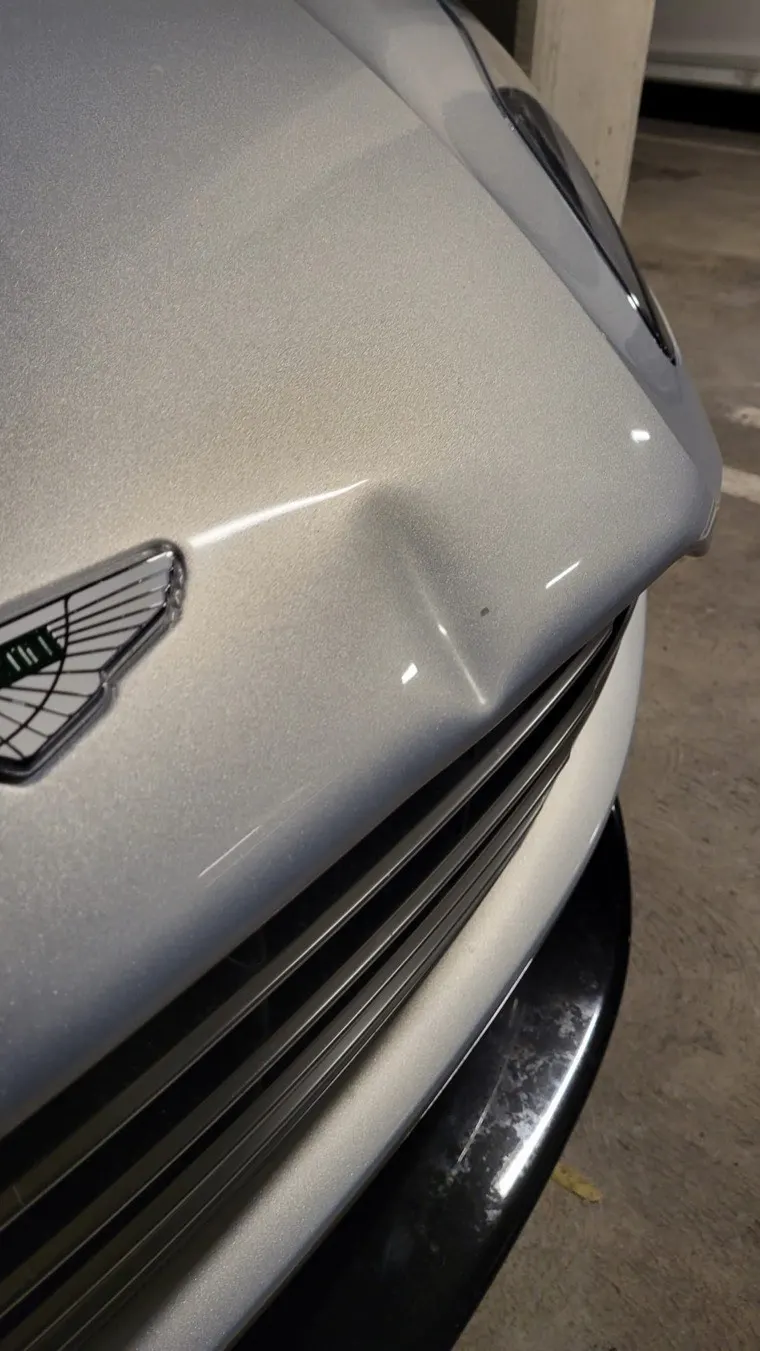
Large Crease
$500 to $1,500+
3 to 5 hours
A long, sharp crease through a body line. Depth and stretch decide the number, not the length alone.
The dents most mobile operators turn away. Big dents, deep smashes, body-line hits, and aluminum panels restored without filler or repaint, so the factory finish stays and nothing lands on the vehicle history. $500 to $4,000, quoted exactly from your photos in minutes.
Drift through the work. Tap WATCH and the whole page becomes the theater, sound on.
Drag or use the arrows · tap watch for full screen
Answer four quick questions for a preliminary range. Send photos and a technician replies in minutes with a written estimate.
What's behind the panel can change this number. Two dents that look identical from outside can be two different repairs, because braces, beams and wiring sit behind some spots and not others. That is why this is a preliminary range, never a quote sight unseen.
See what's behind the panelThis is a preliminary range based on your answers. Send two photos and a technician replies within minutes with a written estimate. The final price is always confirmed in person, once we can see what is behind the panel. No obligation.
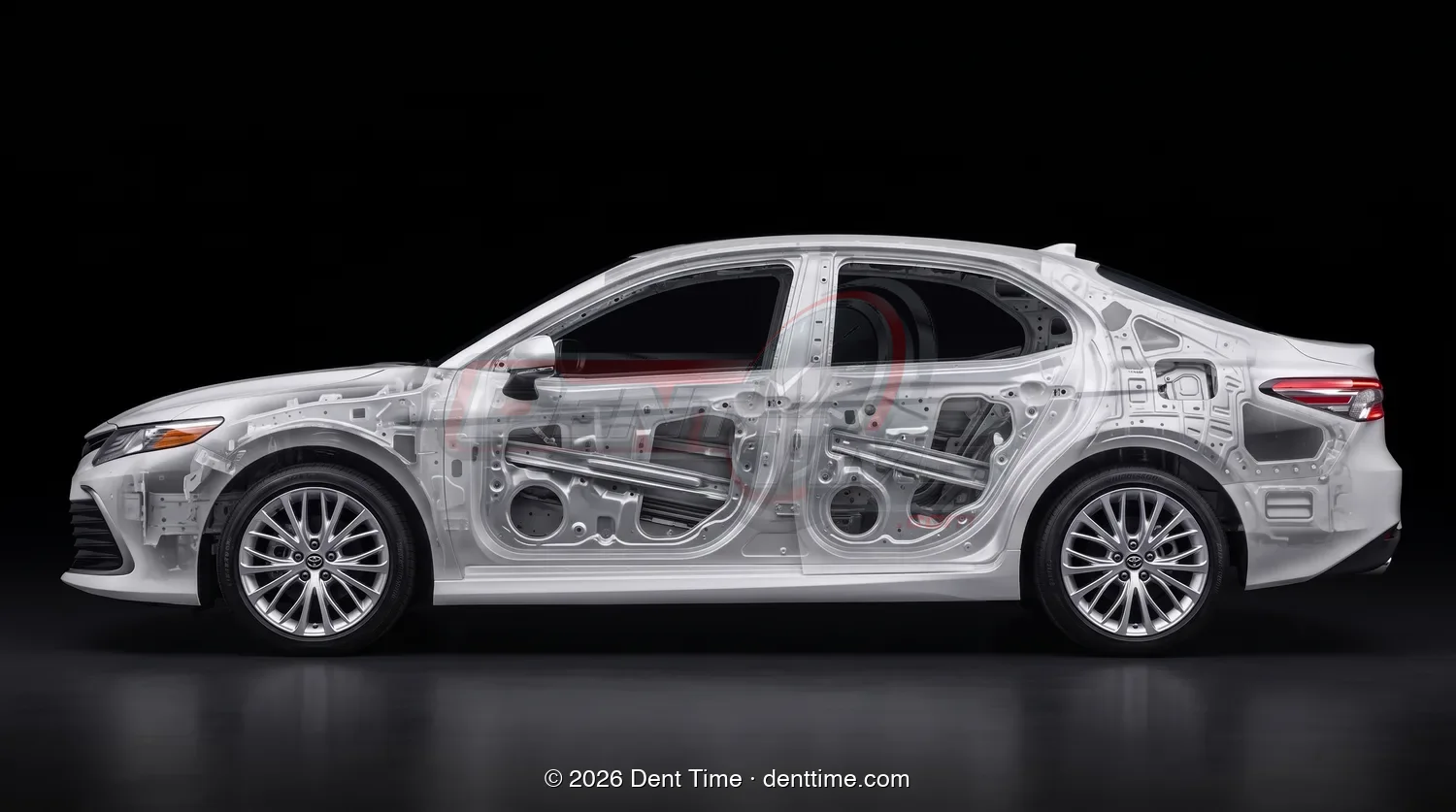
Two dents that look identical from outside can be two different repairs, because braces, beams and wiring sit behind some spots and not others. That is why this is a preliminary range, never a quote sight unseen.
Bigger than most owners believe. If the paint held and there is working access behind the panel, dents the size of a basketball and beyond are repaired without filler or repaint. Size matters less than depth, paint condition, and access, which is exactly why the quote comes from photos of your actual dent.
Owners search for this a dozen ways: big dent repair, huge dent in my door, deep dent, large dent removal. They all land on the same question, whether the metal can come back without paint. It can, more often than the body shop told you.
This is advanced large dent repair, and it is where technician skill separates fastest. The metal moves in stages, the body line has to run straight again, and the last 5 to 10 percent of the repair decides whether it disappeared or just got smaller. It is the work we built our reputation on, and the work most mobile operators quote a replacement panel for because they cannot repair it.
Want the full honest breakdown with examples? Read how big a dent can be for PDR. Then send the photos and get your real answer.
Parking structure pillars, runaway carts, backed-into posts. Deep displacement worked back in stages until the panel reads factory under raking light.
The hardest read in PDR. A factory body line must run arrow-straight through the repair, because a wave in that line is visible from across a parking lot.
Big flat panels show everything, so the finishing has to be complete. The last 5 to 10 percent of the dent is the difference between repaired and obvious.
Aluminum has no memory and punishes guesswork. Tesla, Rivian, and Lucid large-panel work is daily repair here, not an experiment.
Complex does not always mean big. A dime-size dent can be sharp and stretched, sit on a hard edge, or hide behind bracing that takes longer to open than the dent takes to move. Complexity lives in depth, sharpness, location, and access, not inches.
The lines do not bend around a deep dent. They fall into it.
The line board throws straight lines across the panel, and a dent bends them. Drag the slider and watch the lines read straight again.
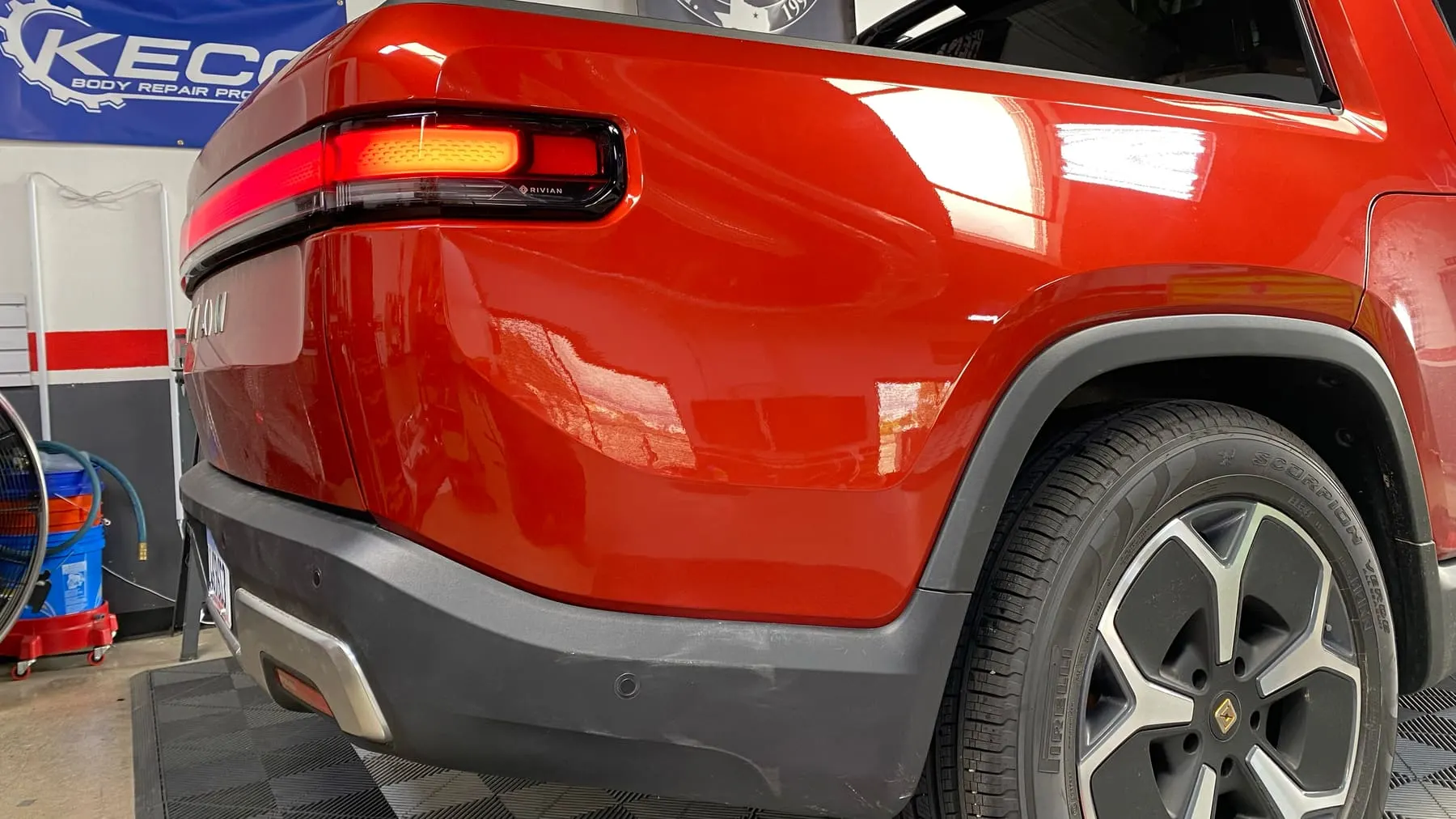
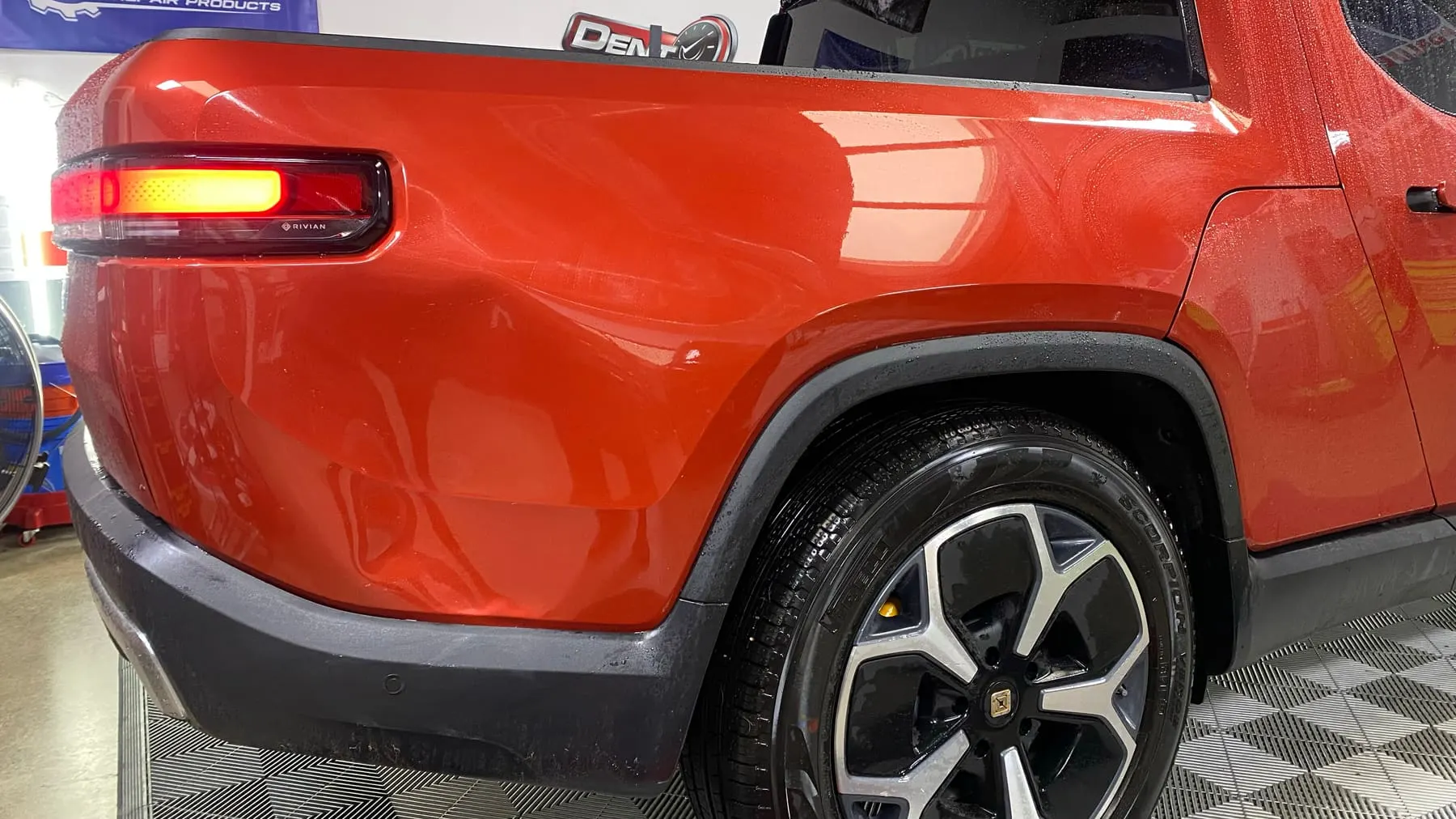
A deep smash across a Rivian quarter panel, an aluminum-bodied EV most mobile operators will not touch. Dragged back to factory, no filler, no repaint. A real Dent Time repair.
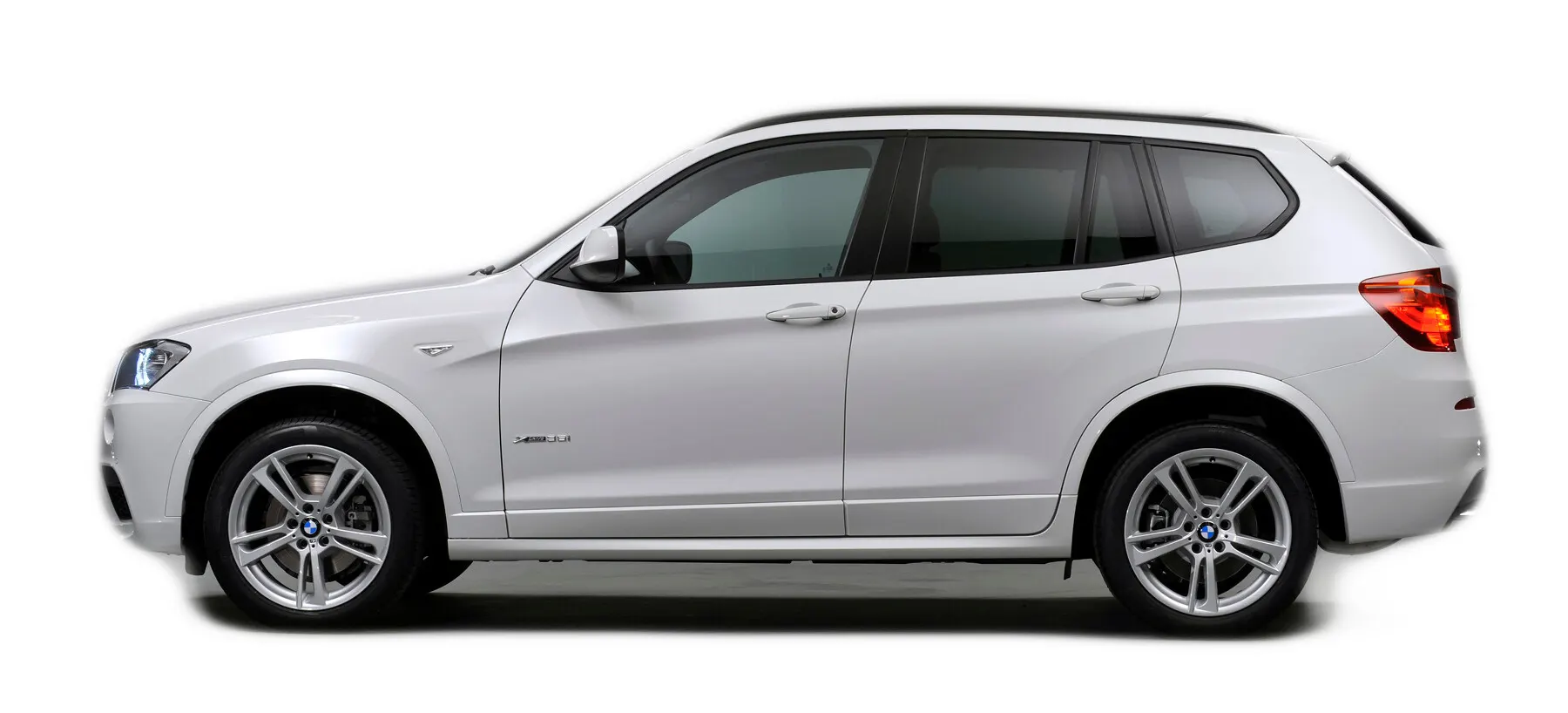
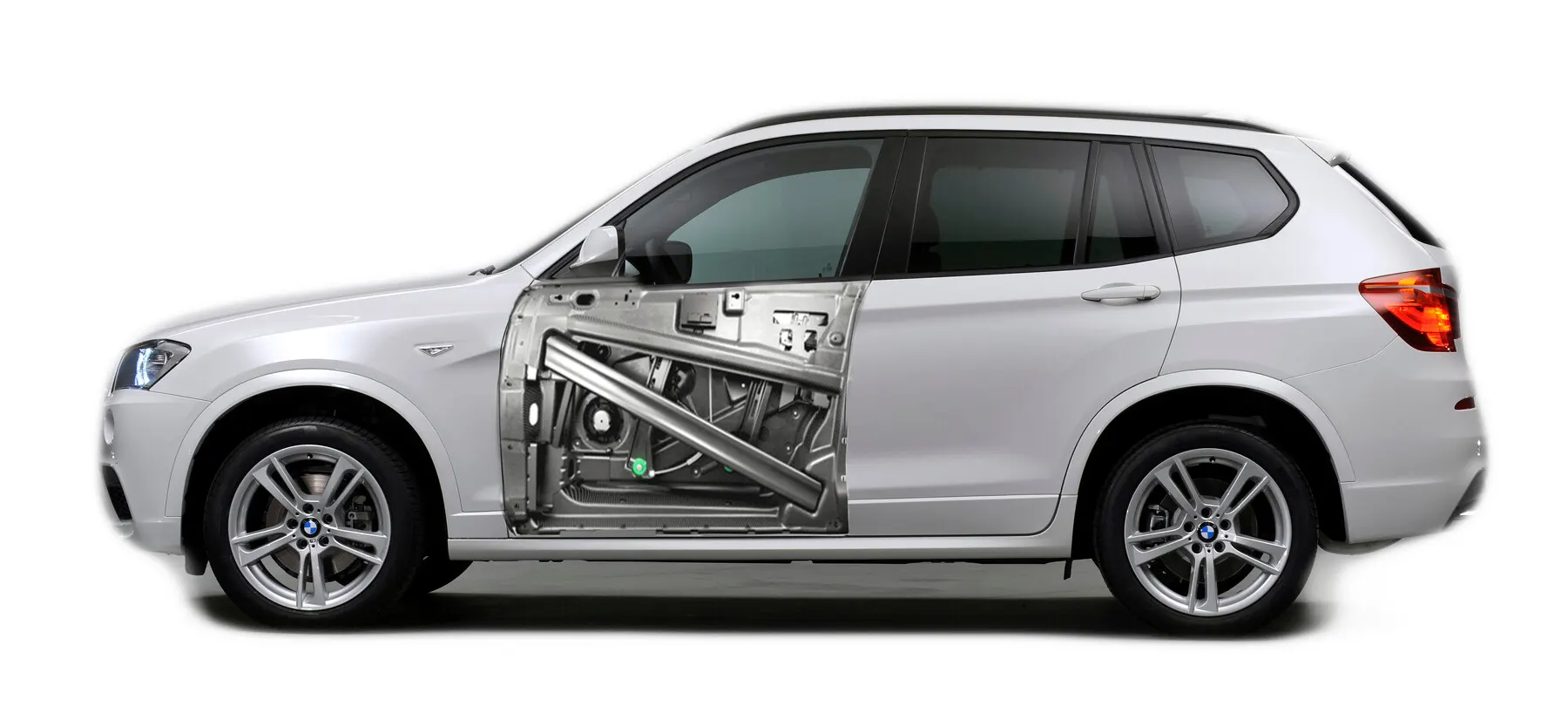
Drag to see what we work around. On big dents, the bracing back there is half the job.
It is sitting on your phone right now. Text it to 858-408-6200 and you get the honest read in minutes. Then we come make the after photo happen, at your location.
Send Your Before PhotoFresh big-dent pairs from recent jobs are being added here.
The most common question San Diego drivers ask after a bad experience is: how was I supposed to know? The answer is always visible, if you know what to look for. Poor PDR leaves metal that was pushed with the wrong tools, clearcoat stressed or cracked from sharp contact, and in some cases holes drilled where none belonged. None of that can be undone by another technician. Every car in this section was dent-repairable before the first shop touched it. This is what to look for before you hand your car to anyone.
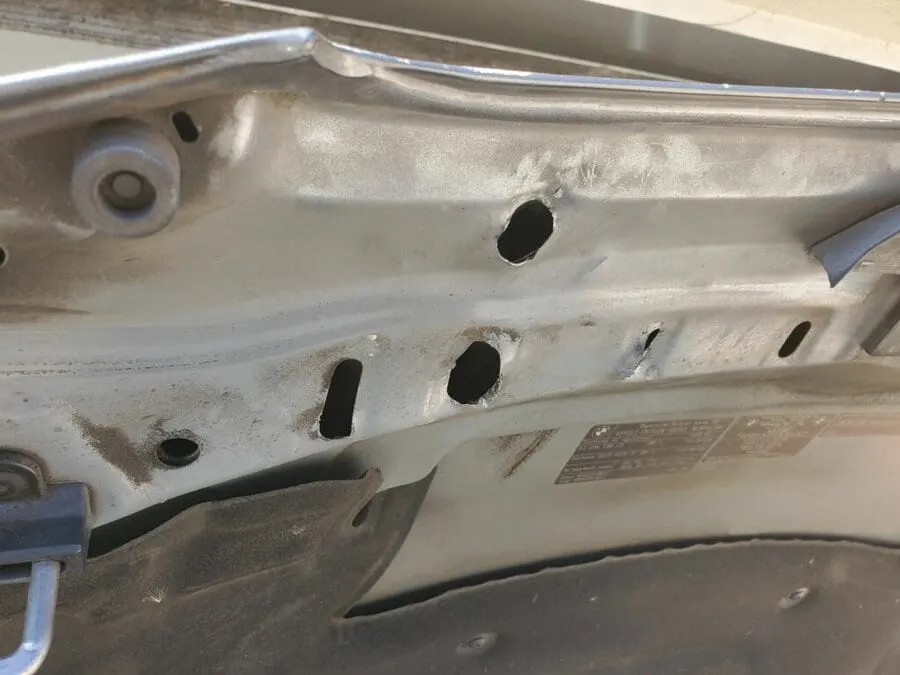
Multiple holes drilled through the panel where none were needed, then left open, unsealed, unprotected. Every one of those openings is now a rust point working inward. The structure is compromised.
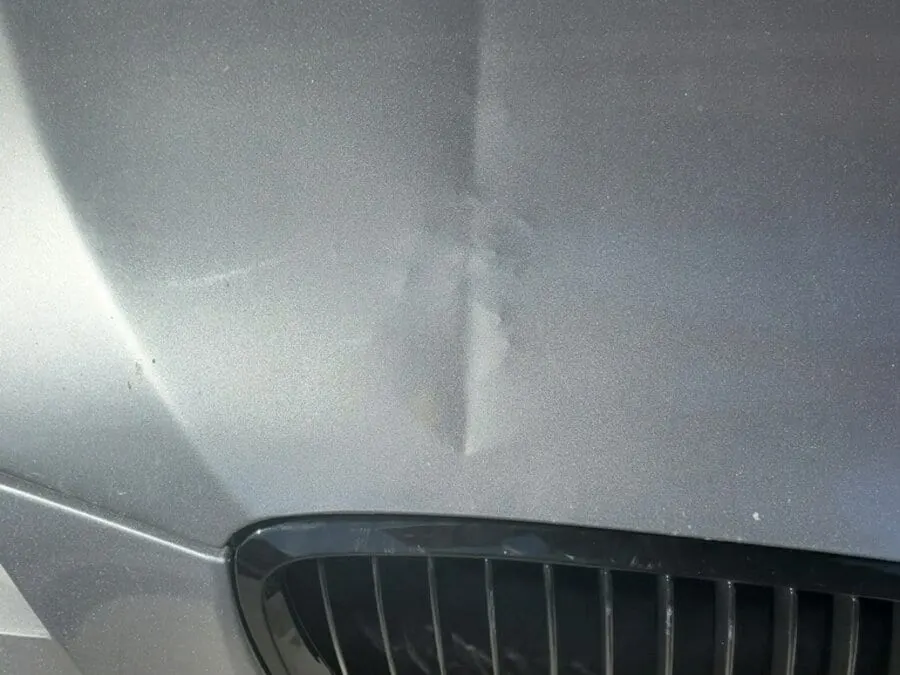
Done by a technician who called himself experienced. A sharp tool pushed with too much force created high spots across the hood and stressed the paint at every contact point. Once the paint is broken from underneath, PDR is no longer an option. The panel needs a full respray.
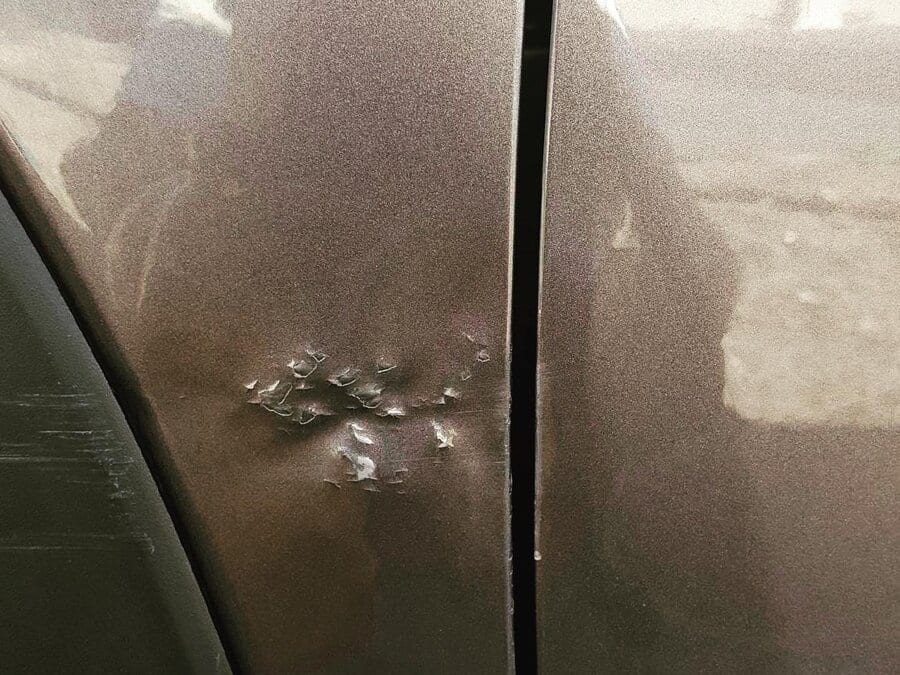
Aggressive pushing with the wrong tools poked the metal up from underneath across the panel. Each raised point broke the paint surface from below. There is no pushing these back down. The factory finish is gone.
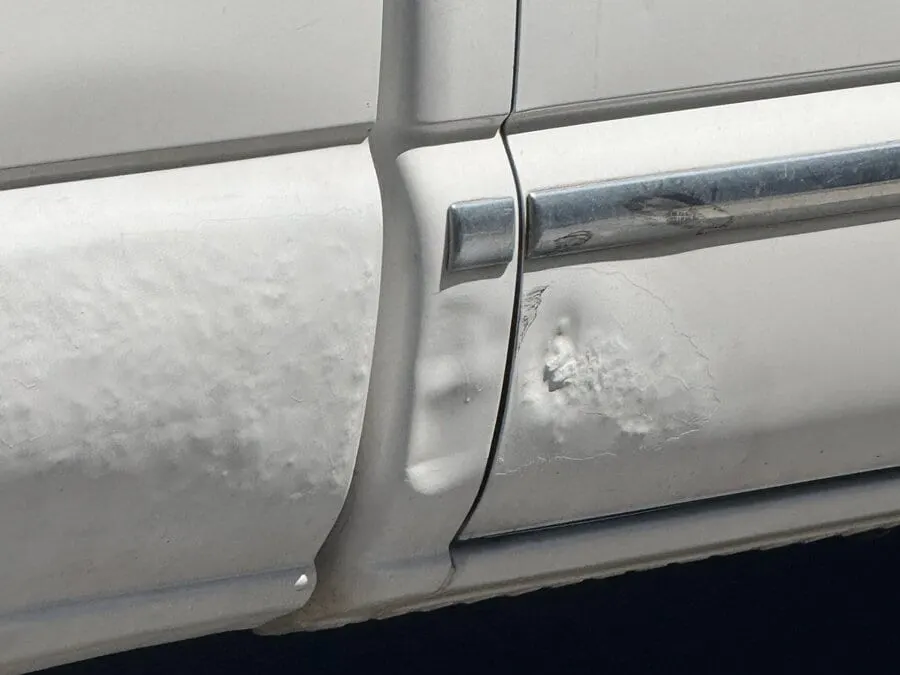
A mobile company in a Walmart parking lot told the owner it would wash away by tomorrow. It didn't. What they applied bonded to the paint and lifted it, leaving the panel in worse shape than the original dent. This car now needs new panels and collision work that could have been avoided entirely.
Every panel above was dent-repairable before the first technician touched it. The damage in these photos was not caused by the original impact, it was caused by the repair. That distinction matters, because it changes what you are actually deciding. The dent is not the risk. The technician is.
Myke Toledo · Dent Time
When you buy a gallon of milk, every gallon at every store is the same product. Choosing the one that costs less makes sense. PDR is not that. Two technicians looking at the same dent will make completely different decisions about access, pressure, and where to stop. One of those decisions preserves your factory finish. The other one does not.
Thirty-five years in this trade is not a marketing number. It is the count of dents, panels, and metal types that live in a technician's hands as muscle memory. You cannot buy that experience at a lower price point. You can only find it or not find it.
The tool does not read the metal. The technician does.
Large dents run $500 to $4,000 and large creases $500 to $1,500 or more. Hail is priced by the storm at $1,500 to $8,000 and up. On large damage the price follows complexity, not width. A basketball-sized soft dent in open metal can cost less than a small sharp crease riding a body line.
A long, sharp crease through a body line. Depth and stretch decide the number, not the length alone.
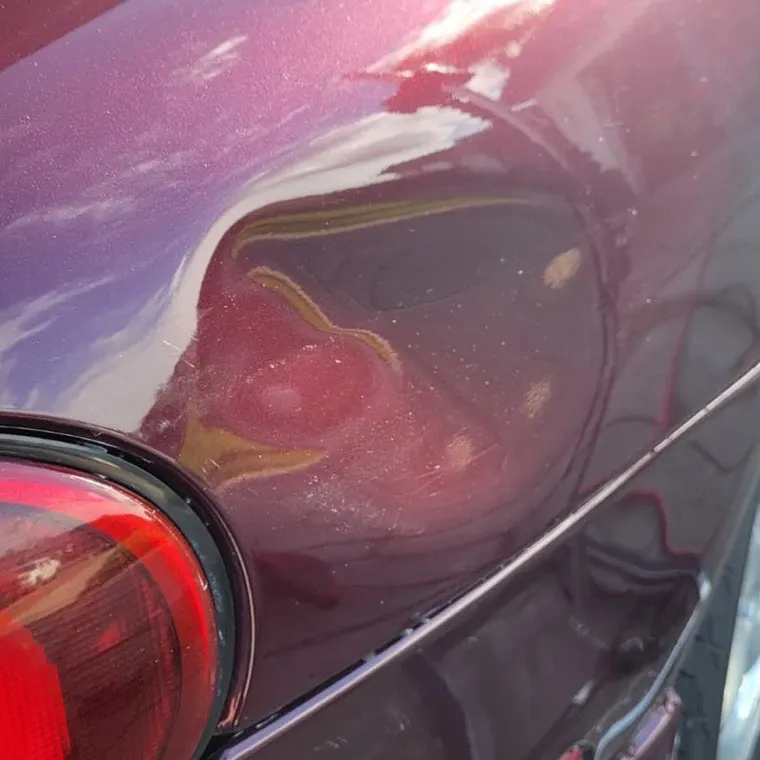
Basketball-sized impacts, hidden crowns, trapped pressure dents. Complexity, not width, sets the price.
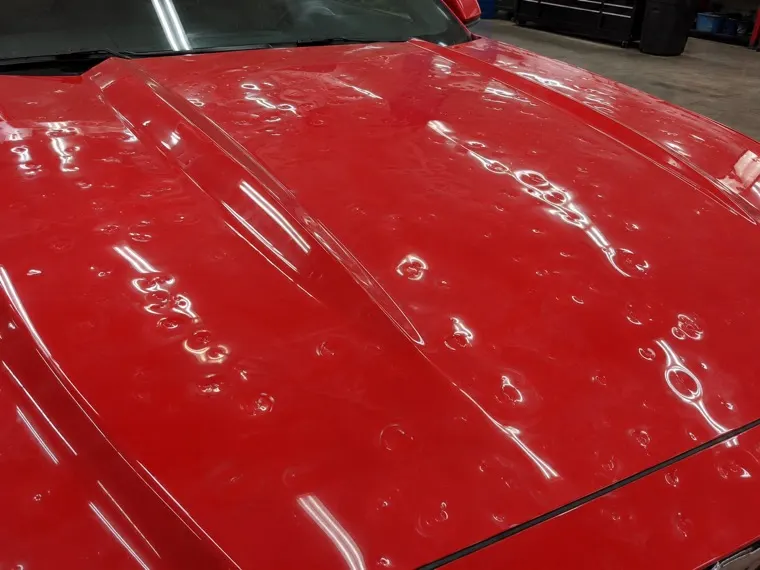
Priced per storm across every affected panel. The one damage type where an insurance claim usually earns its place.
Complexity sets the price, not size. Access behind the panel, hidden crowns, trapped pressure, and panel material all move the number more than the diameter does. Send two photos through the estimate form for your exact range in minutes.
Most people with one big dent should NOT use insurance. The free check below shows you why in 30 seconds, using your own numbers.
Answer 2 quick questions. Get a straight answer. No forms, no phone number, nothing to sign up for.
That amount is called your deductible. It is printed on your insurance card. Most people have $500 or $1,000.
Hail or dents all over the car usually costs $1,500 to $8,000 or more to fix. That is exactly what insurance is for. And we deal with the insurance company WITH you, so they pay for the repair done right instead of their cheapest version.
When does a claim make sense? True multi-panel damage and hail across the vehicle, $1,500 and beyond. We tell you which side of that line your damage sits on from the photos, before you ever call your insurer. The full breakdown lives at PDR insurance claims.
The price follows depth, access behind the panel, and the metal itself. Aluminum and high-strength steel take more skill and more time, and the written estimate comes from your photos before any work starts.
Advanced large dent repair: deep single-panel damage worked back in stages with the factory paint untouched.
Long creases fight back. The body line has to run straight again, and that is precision work.
The one category where an insurance claim usually earns its place. We handle it either way.
Large damage is where options matter most, because the gap between "gone" and "much better" can be several hundred dollars and several hours. You should get to make that call with real information, not have it made for you. We quote Premium and Practical on the same damage, show you what each one actually looks like, and let you pick. The price changes with the option. The person doing the work does not.
Same damage, same technician, two standards. Drag each slider against the same before. Practical runs 30 percent less than Premium. Your number comes from your photos, in minutes.
Options start once a repair is over $500. Below that there is one honest way to do it and a straight cost range, so there is nothing to choose between. Above it the damage is involved enough that how far you take the repair becomes a real decision, and that decision is yours to make with your budget and your standard in mind, not ours to make quietly on your behalf.
This is not a good, better, best ladder with a discount at the bottom. They are two honest answers to one real question: how far do you want to take this? A ten-year-old daily driver and a leased car turning in next month deserve different answers, and pretending otherwise is how people end up paying for something they did not need or accepting something they did not want.
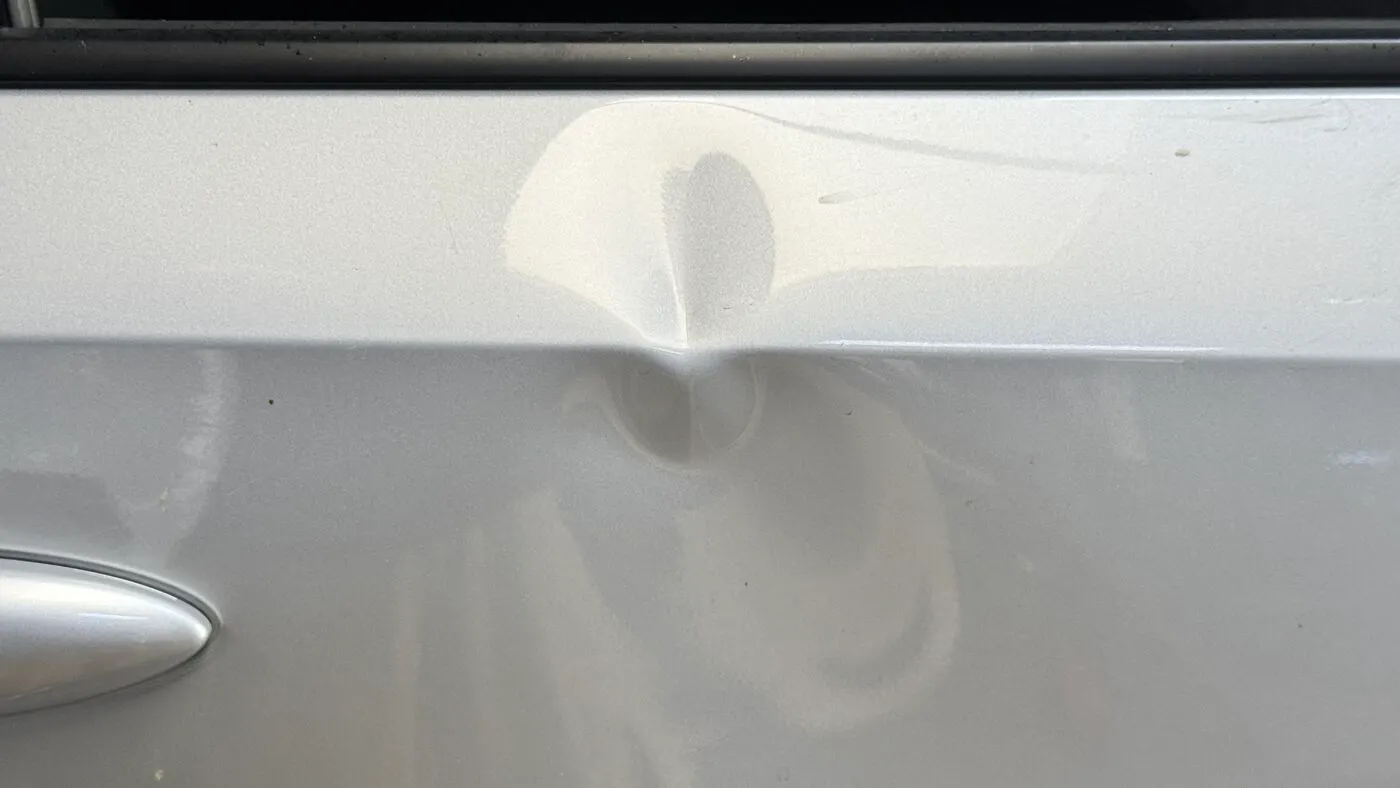
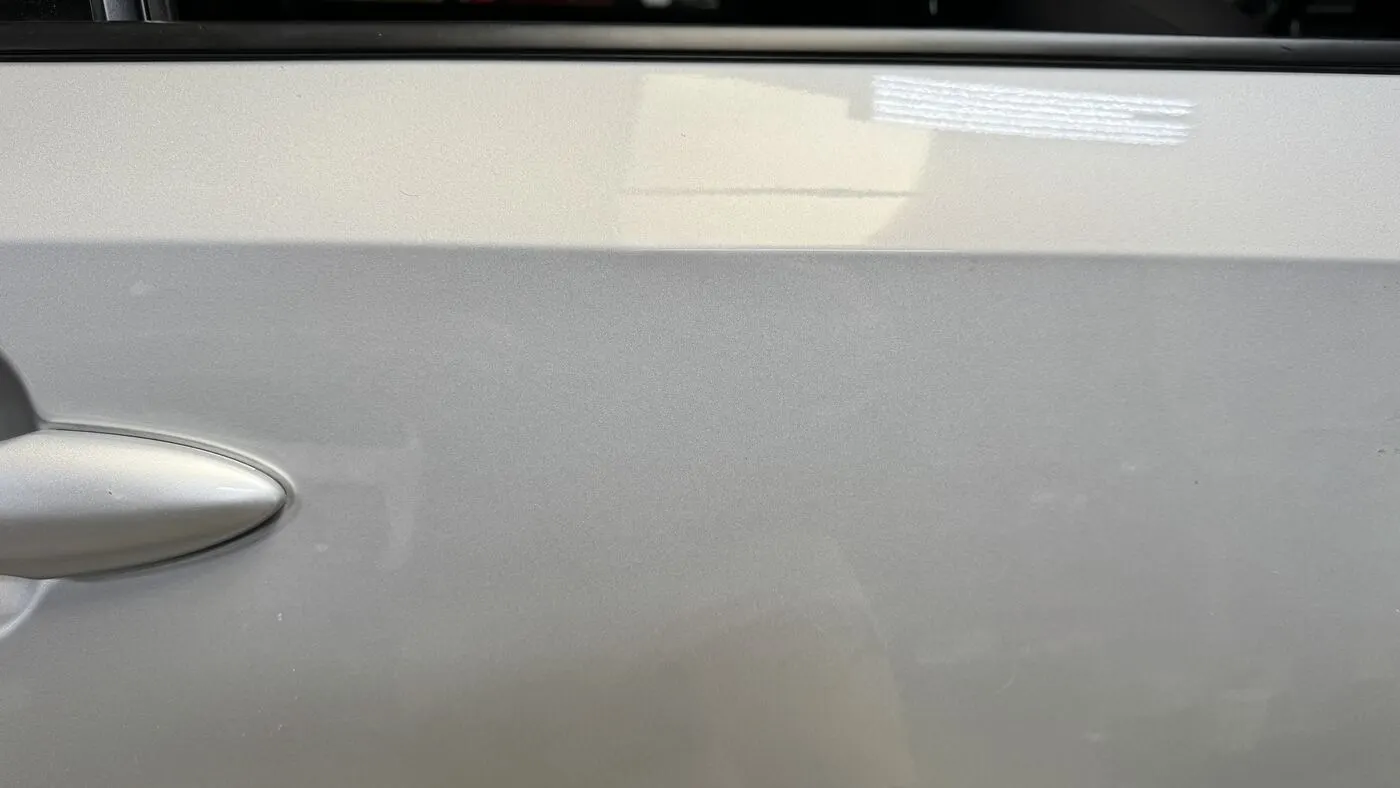 Before Premium
 You do not see it. Not from any angle, not from any distance, not if you go looking. The dent is gone rather than reduced, and there is nothing left for anybody to find later. This is the standard you want on a car you are keeping, selling, or turning in on a lease.
Best for: Newer vehicles, leases, anything where resale is the point.
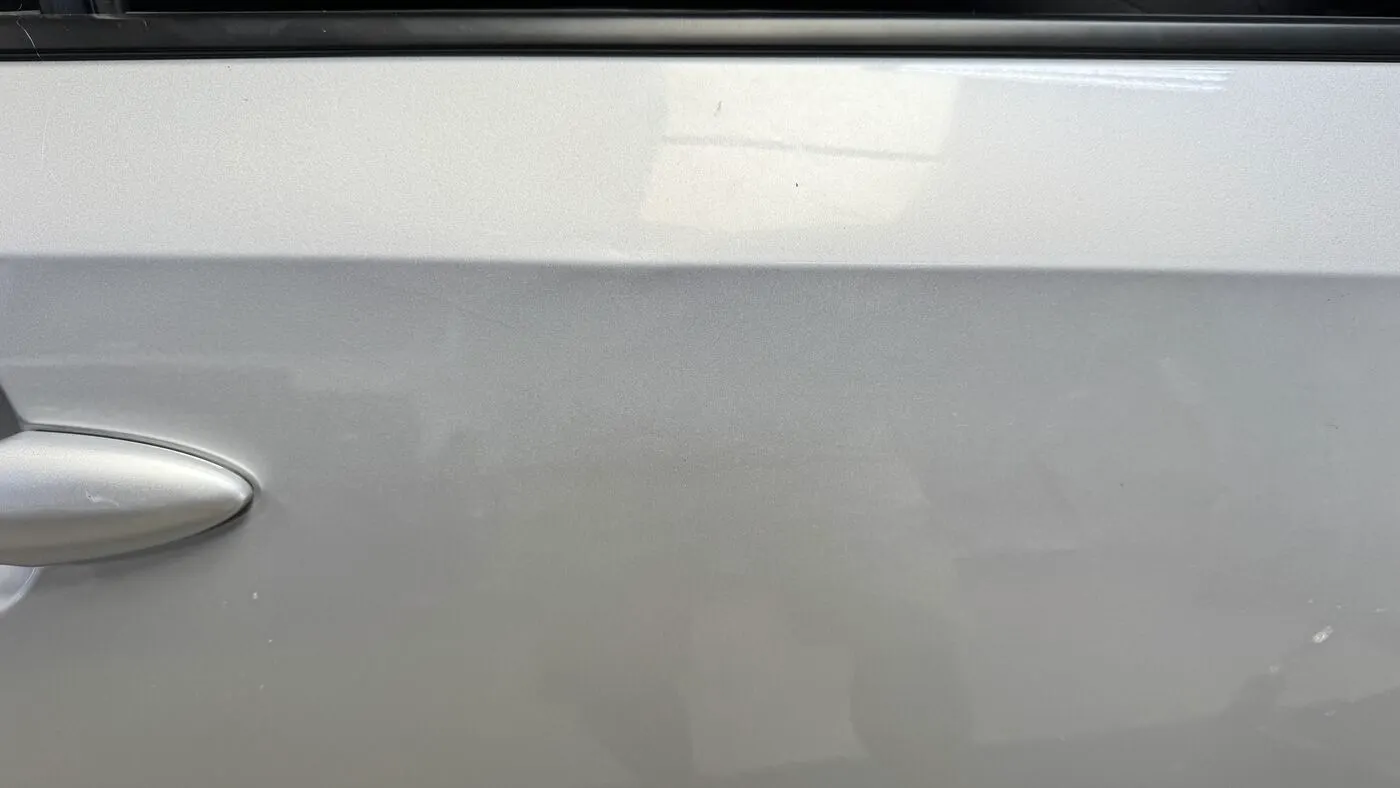 Before Practical
 You will still find slight imperfections at different angles if you go looking for them. Drag the slider and you will see it on this panel: what is left is barely visible near the body line. That is our Practical standard, and it runs higher than most competitors’ premium.
Best for: Daily drivers, work vehicles, and anyone who wants it gone without paying for perfect.
What moves your number is the access behind the panel, how sharp the damage is, and whether the panel is aluminum or steel. Text two photos and the real range comes back in minutes.
Two minutes with Myke on what actually separates the options, what you get for the difference, and when the cheaper answer is genuinely the right one. The same conversation you would get standing next to your car.
Not sure which one your panel needs? Send two photos and we quote both.
Here is what actually decides how your panel turns out. Not which option you picked. Not the price. Whoever is holding the tool.
Paintless dent repair has no licensing body. Anyone can buy a set of rods and call themselves a technician, and the work looks finished to an untrained eye on the day. It shows up later, under garage lighting or against a painted parking line, long after the person who did it stopped answering.
So the question worth asking is not really which repair you are buying. It is who is performing it. A Practical repair from someone who has read metal for thirty-five years beats a Premium price from someone learning on your car, every time.
See what the difference actually looks like in real bad repairs, or send two photos and we will quote both options on your panel.
The panel your car was built with, wearing the paint it left the factory in.
What owners search after the shock wears off. Honest answers, and your photos settle every one of them.
The final 5 percent. Tap-downs finish what the pressure started.
Often, yes. Size matters less than three things: how deep the metal went, whether the paint held, and what access exists behind the panel. A wide shallow dent with intact paint is frequently an easier repair than a small sharp one. Photos answer it in minutes.
The metal will not spread, so there is no panic clock. The honest caution is paint: a sharp crease holds the finish under tension, and over time tension can craze it, which changes the repair path. Photos tell us which kind you have, and the look costs nothing.
Because replacement plus repaint is easy to sell and easy to book, not because it serves your car. Your factory panel and factory finish leave with the old part, the repaint enters the vehicle history, and resale reads all of it. PDR keeps the panel your car was built with.
It happens more than people expect. The insurer’s estimate is built to close the claim for as little as possible, and when it comes in short, the difference lands on you if you want the vehicle repaired right. One more reason the out-of-pocket math usually wins on single-dent damage. The full playbook lives in our PDR insurance claims guide.
Large dent repair takes careful metal work and an honest assessment of what the panel can achieve. Myke will explain suitable options and any finish limitations before you decide. Submit your details and photos through the estimate form for a personal review.
Then it is a hybrid repair, and it is still worth doing properly. The metal gets pushed back to shape with paintless technique first, and only then does any paint work start. That order matters more than most people realize, because the further the metal comes back, the less of your panel ever needs to be refinished.
The alternative, and what a lot of shops default to, is to skip straight to filler and repaint the whole panel. That is faster for the shop. It also means more of your original factory finish is gone, a bigger blend, and a bigger number. Pushing first is the difference between refinishing a patch and refinishing a door.
Run a fingernail across it. If it does not catch, the paint held and this is a straight paintless repair. If it catches, the clear coat is broken and the finish needs its own plan. We tell you which one you have from the photos, before anything is booked.
This is the step that saves you money and almost nobody explains. The dent is worked from behind the panel and returned as close to its original plane as the metal allows, exactly as it would be in a paintless repair.
Because the metal is already back where it belongs, what is left to refinish is a fraction of what it would have been. Less filler, less blending, less of your original factory paint disturbed. A body shop that skips step two paints the whole panel instead.
The area is leveled and refinished to your vehicle factory color code and blended into the surrounding panel so it reads as one continuous surface. Checked in direct light before it is called done.
The honest part: a hybrid repair costs more than paintless and less than a full panel repaint, and it is not always the right answer. On some damage the paintless result alone is good enough and we say so. On others the paint was too far gone and it belongs at a body shop, and we say that too. Send two photos and you get told which of the three you are actually looking at.
Aluminum is far more challenging than steel and it is not flexible. It does not have the same memory steel does, so it never wants to return to shape on its own. The repair uses heat and sharper tools to manipulate the flow of the aluminum back into place, and that takes more time and far more precision.
None of this is an electric car story. Ford has built the F-150 body in aluminum since 2015, and Toyota, BMW, and Mercedes-Benz use aluminum on hoods, doors, and tailgates across their ranges. If you drive something built in the last decade, there is a good chance at least one panel on it is aluminum.
Almost every question we get about aluminum is some version of "is this repairable?" That is the wrong thing to be nervous about. On an intact-paint panel the answer is nearly always yes.
The real variable is who is doing it. Aluminum punishes inexperience in a way steel never does. Steel forgives a wrong move because it wants to go back. Aluminum records it. The same dent, on the same panel, on the same day, comes out invisible in one set of hands and pock-marked in another.
So the question worth asking a shop is not whether they can fix aluminum. Everyone says yes. Ask how long they have been doing it, and ask to see one they finished.
See what the wrong hands leave behind in real bad repairs, or send two photos and get an honest read on your panel.
The size of the dent, the claim question, the timeline, the price. All of it gets answered from two photos in good light, in minutes, free. Most large dents never needed the insurance call at all.
Leave your name and number and Myke will call you back during business hours, Monday to Friday, 8:30am to 4pm.
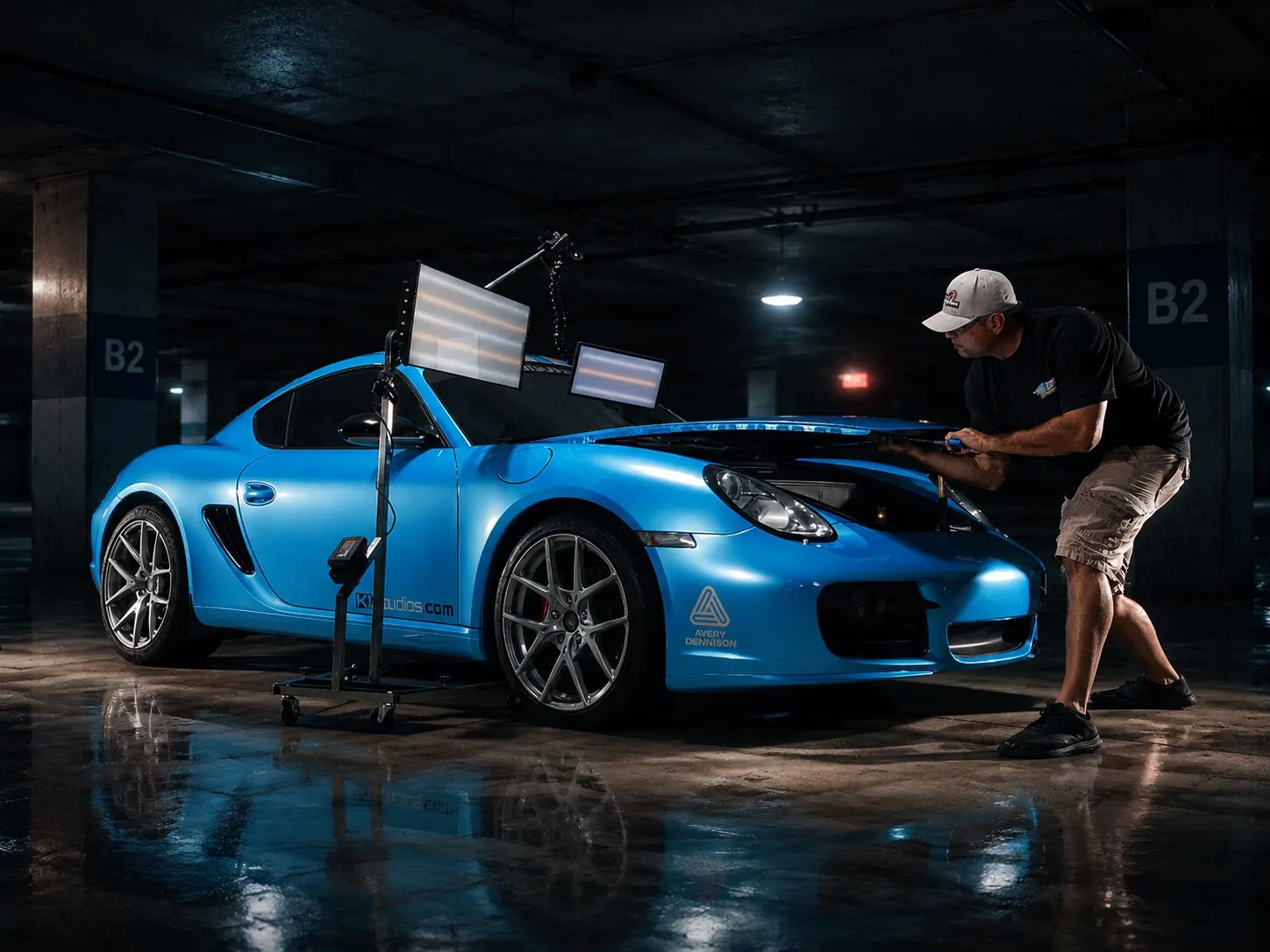
Julie texts you back right away from (858) 408-6200.