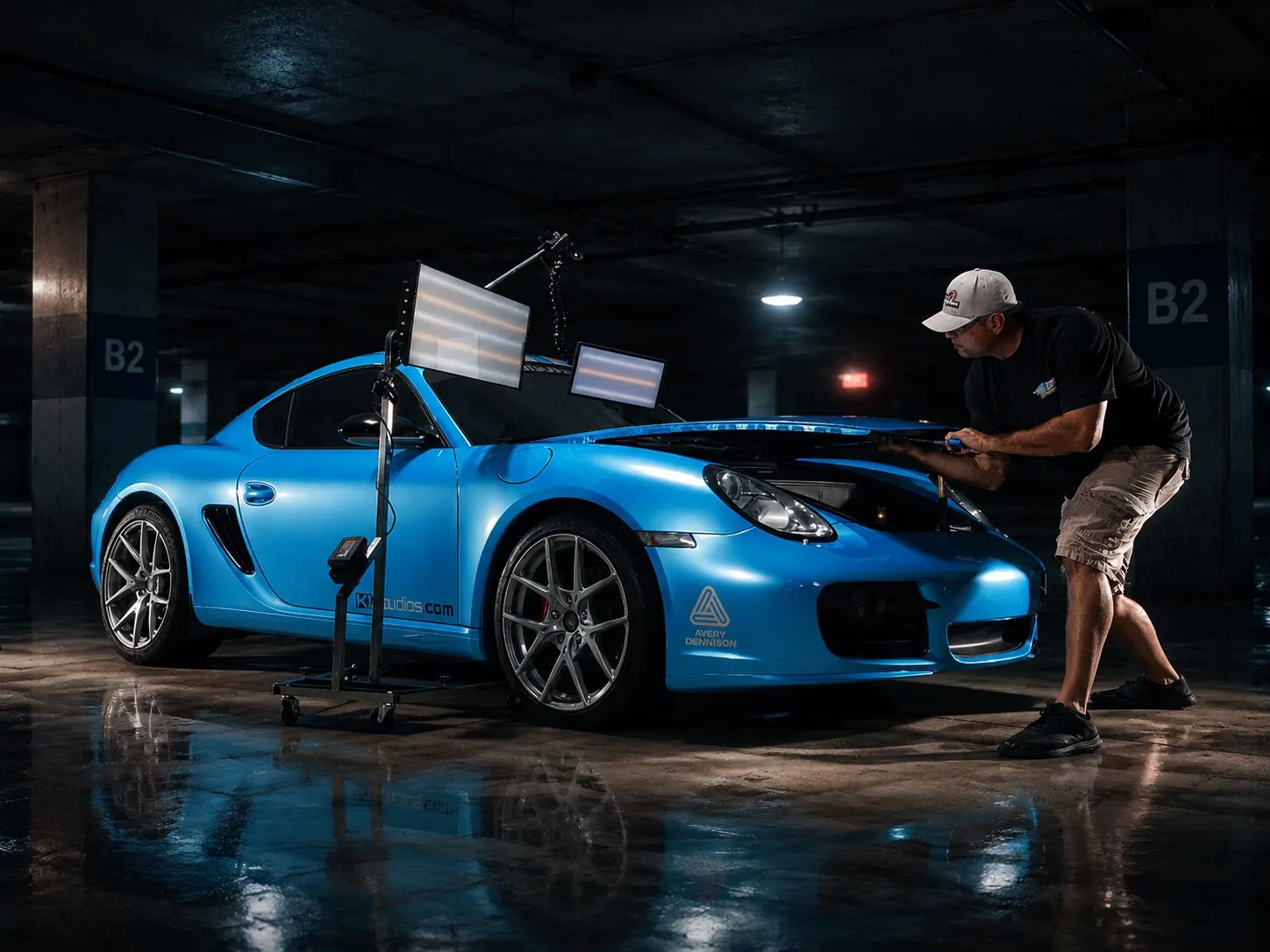
A deep fender hit coming back without filler.
Paintless dent repair has changed the way a dent comes out of a car, but how big can a dent be for PDR to still work? At Dent Time, San Diego's leader in paintless dent repair, we get asked this all the time. There is no single size limit. What decides it is where the dent sits, how deep it is, and the type of metal. Here is how far PDR really reaches, and where it stops.
What is the largest dent PDR can repair?
PDR can handle dents as large as a beach ball when the depth and location allow, and most dents up to six inches and beyond qualify.
Size by itself is rarely the dealbreaker. A shallow, wide dent responds far better than a small, deep, sharp one, because the metal is only stretched, not torn. We read each panel individually with line-board lighting and work the metal back to its original shape with the right tools.
Large dents, six inches and up, start around $400, and a major repair can take up to four hours. The number climbs with depth and with how hard the metal is to reach, not with how wide the dent looks.
Does the location of the dent affect PDR?
Yes, location changes the difficulty more than size does, because dents on body lines or near structural supports fight back.
Where a dent sits drives the complexity. A dent on a flat, open panel is the friendliest case. A dent on a body line or up against a brace or structural support is far harder, because the metal is rigid there and the sharp edge has to be rebuilt without touching the paint. That takes master-level hands, which is the whole point of our body line dent work.
Because of that, location-driven repairs range from about $225 to $600 or more. The same size dent can land anywhere in that range depending on exactly where it lives on the panel.
How does the type of metal affect PDR?
Metal type is a major factor, and aluminum panels like those on a Tesla or Rivian cost about 25 to 50 percent more than steel.
Steel has metal memory, meaning it wants to return to its original shape, and a trained tech uses that. The aluminum on many modern vehicles, including Tesla and Rivian, has no such memory. It gives nothing back, so it takes sharper, more precise tools and more controlled force to move and set.
Our technicians are IMI and EV certified, so aluminum and high-voltage vehicles are safe in our hands. Expect an aluminum repair to run about 25 to 50 percent more than the same repair on steel.
Is there a difference in PDR approach for EVs?
Yes. EVs use lightweight aluminum panels and carry sensitive electrical systems, so they need a certified hand.
Electric vehicles bring two challenges at once. The aluminum panels behave differently than steel, and the high-voltage electrical systems behind them demand care. Our IMI and EV certification means we repair the panel without putting the electrical system or your safety at risk. You get the result a body shop would charge far more for, with the factory finish kept intact. See our EV dent repair page for more.
How does PDR compare to a traditional body shop?
PDR is faster, keeps your factory paint, and protects resale value, where a body shop sands, fills, repaints, and takes days.
A body shop fixes a dent with hours of labor over days or weeks, using filler and fresh paint. PDR brings the original metal back in hours and never touches the paint, so there is no color mismatch, no body shop record, and no hit to resale. It is not always the cheaper line on paper, but it is almost always the better outcome for the car.
A real example, tackling a major dent
A large dent on a rear quarter panel came back to factory shape with PDR, no filler and no repaint.
Here is the kind of repair people assume is a body shop job. A deep dent across a rear quarter panel, the sort of damage that looks hopeless. We set up line-board lighting to read every high and low, accessed the panel from behind, and worked the metal back with gentle, controlled pressure until the surface and the factory paint were whole again.
Big does not mean impossible. It means more time and a steady hand. If you are staring at a major dent, send us a photo before you ever book a body shop.
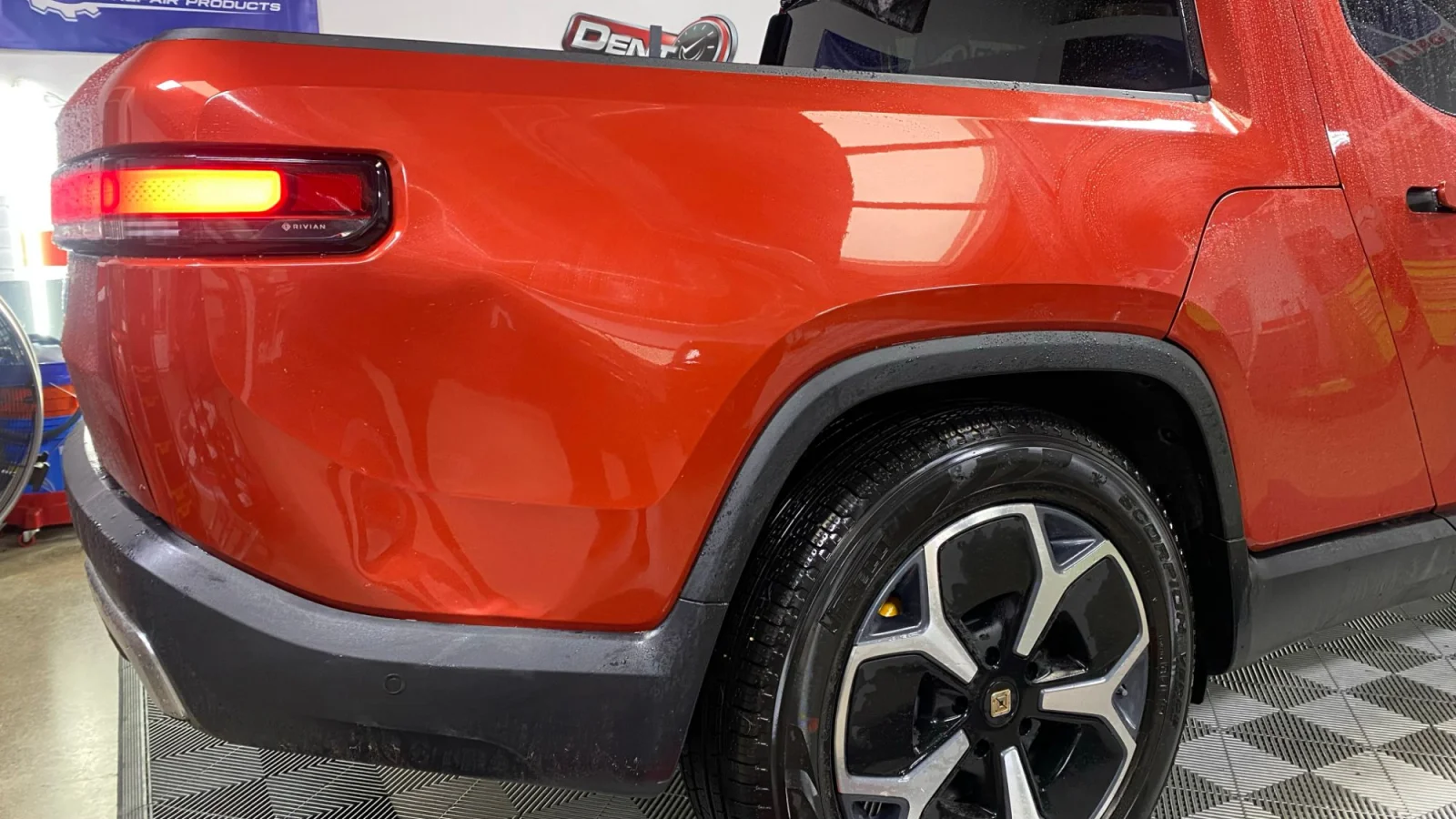
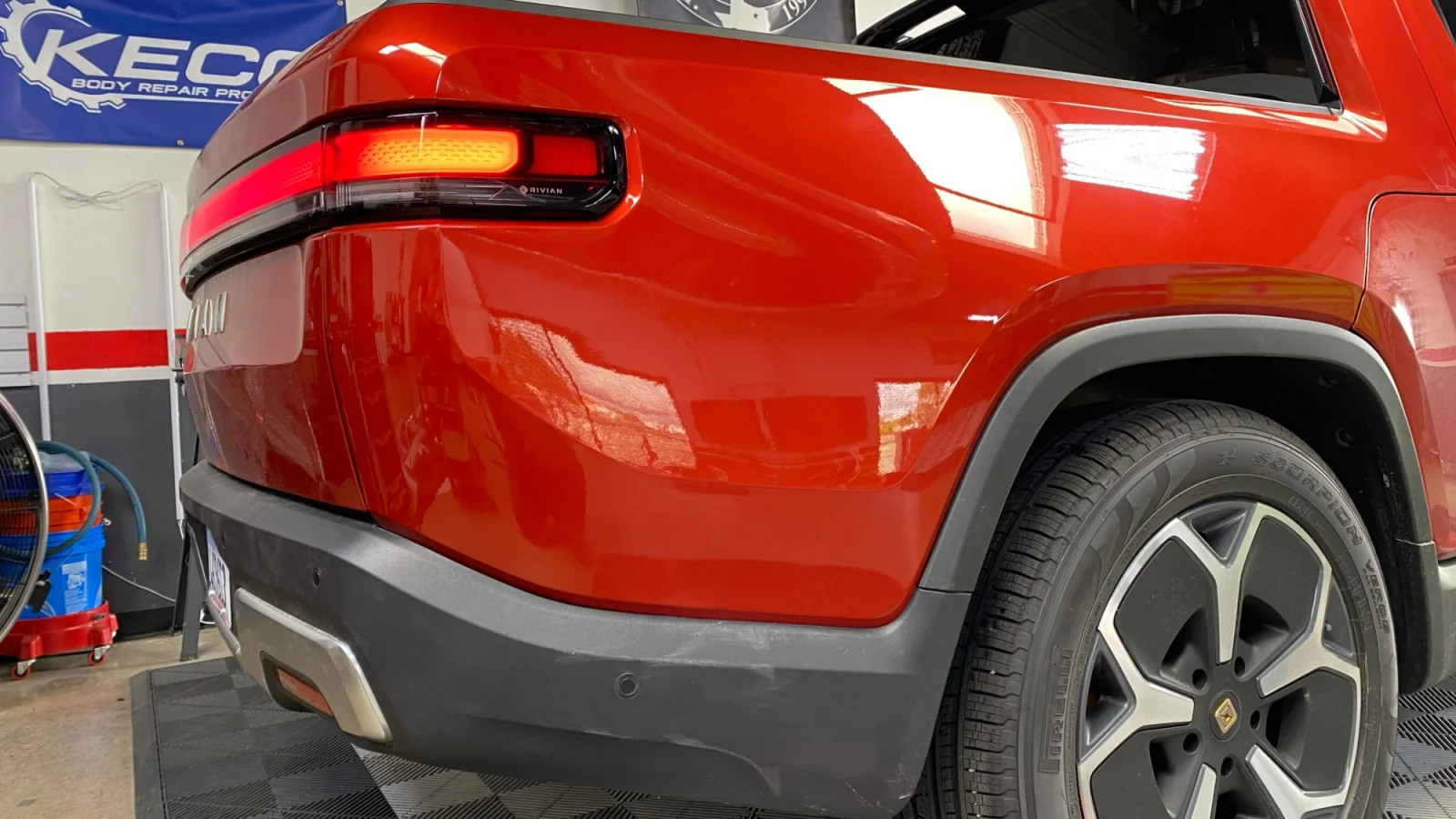
A major rear quarter-panel dent, brought back with PDR. Drag to compare.
Questions, Answered.
Can PDR fix all types of dents?
Not every one. Severe creases, torn metal, or dents right on a panel edge with no access behind them may need traditional repair. Most minor to moderately severe dents respond well to PDR, even large ones, as long as the paint is intact.
How long does a typical PDR job take?
A small dent can take as little as 45 minutes. A larger or more complex dent may take up to four hours or more. We give you a realistic time once we see the damage.
Is PDR covered by insurance?
Often, yes. Most insurers recognize paintless dent repair as a legitimate repair and many prefer it because it is cost-effective and preserves the factory paint. Dent Time welcomes insurance claims and can handle the adjuster.
How big is too big for PDR?
There is no hard size limit. PDR has brought back dents as large as a beach ball when the metal is only stretched and the paint held. Depth, location, and metal type decide it far more than width.
Does an aluminum or EV panel cost more to repair?
Yes, about 25 to 50 percent more than steel. Aluminum has no metal memory, so it takes sharper tools and more controlled force. Our technicians are IMI and EV certified for that work.