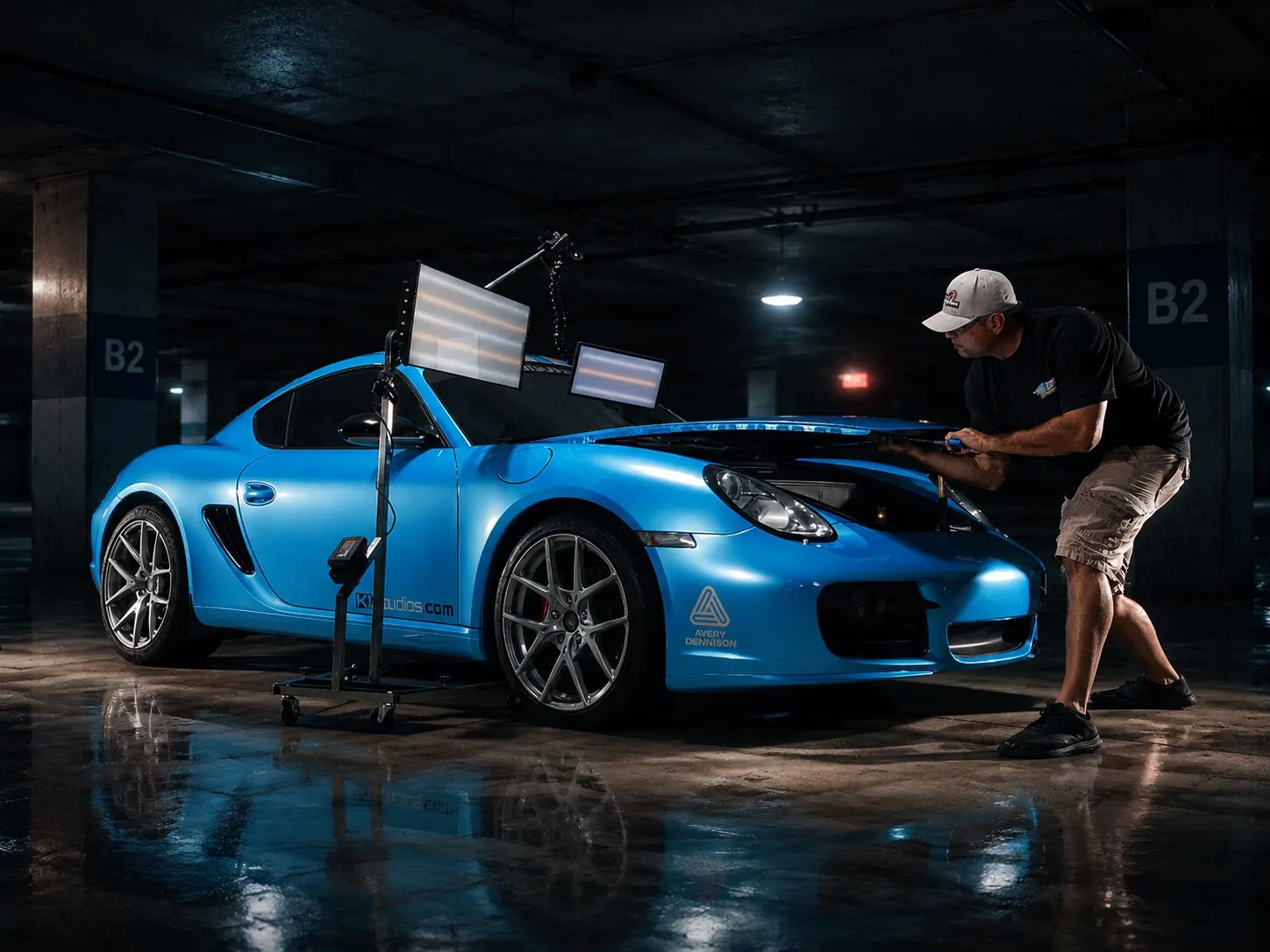
Reading the reflection along a body line.
A body line dent is fixed by releasing the metal slowly and progressively along the crease, rebuilding the sharp character edge to factory-crisp without ever pushing past it. This is the single hardest repair in paintless dent repair, and it is the one that separates a tech who has been doing this for decades from someone learning on your car. I have been doing this since 1991, and a body line is still the repair I slow down for the most. If you want the service and pricing side rather than the technique, see crease and body line dent repair.
If you have a dent sitting right on one of those crisp styling lines that run down the side of your car, you are looking at the most demanding panel work there is. Below I walk through what a body line actually is, why it fights back, how it gets fixed the right way, and what it costs. The goal is for you to understand your own car well enough to spot good work from rushed work before you ever hand over the keys.
What is a body line on a car?
A body line is the crisp character edge pressed into a panel at the factory for styling, the sharp ridge that runs down a door or fender and catches the light.
Look at the side of almost any modern car and you will see a clean, sharp crease running horizontally along the doors and fenders. That is a body line, sometimes called a character line or a feature line. It is stamped into the steel or aluminum under enormous pressure when the panel is formed, and it is one of the main things that gives a car its shape and its stance.
That crispness is the whole point of the line, and it is also why a dent there is so unforgiving. On a flat panel your eye has nothing exact to measure against. On a body line your eye follows that perfectly straight edge, so the smallest waver, ripple, or flat spot stands out from across a parking lot. The repair is not judged against a smooth surface, it is judged against a ruler-straight line the factory built.
Why is a body line dent the hardest PDR repair?
Because the sharp edge has to be rebuilt perfectly while the metal fights its own memory, and there is no margin to hide a mistake.
When a panel gets dented on a body line, two things happen at once. The flat areas around the line push in, and the sharp edge itself gets knocked down or kinked. Steel has memory, meaning it wants to spring back toward the shape it was stamped into, and a tech uses that memory while massaging the metal back. On a body line that memory is concentrated right along the crease, so the metal resists in a very specific, stubborn way that takes real feel to work with.
The hard part is rebuilding that edge to factory-sharp without overdoing it. Push a hair too far and you create a crown, an over-pushed high spot that sits proud of the surface. A crown is the tell-tale sign of rushed or amateur work, and it is harder to fix than the original dent because now you are chasing high metal instead of low metal. This is exactly where an inexperienced low-price mobile tech leaves a crown or a ripple along the line and calls it done. You can read more about how to spot that in our guide to bad paintless dent repair.
How do you fix a body line dent without leaving a crown?
You release the line slowly and progressively, working it back a little at a time like carefully unzipping a zipper, never forcing it in one push.
The right way to bring a body line back is patience. I work the edge in small, controlled moves from the ends toward the center, letting the metal release a little at a time. Think of it like carefully unzipping a zipper rather than yanking it. Each pass takes the line a step closer to straight, and I read the reflection constantly to make sure the edge is coming up even and not building a high spot anywhere along its length.
Rush that process and the paint pays for it. The clearcoat and color sitting on top of that sharp edge can only flex so much, so forcing the metal too fast can crack or stretch the finish, and at that point it is no longer a paintless repair. Doing it slowly protects the factory finish, which is the entire reason to choose PDR in the first place. The line comes back crisp, the paint is untouched, and there is no record of the repair anywhere. That discipline is the difference between a repair that disappears and one you can find every time you walk up to the car.
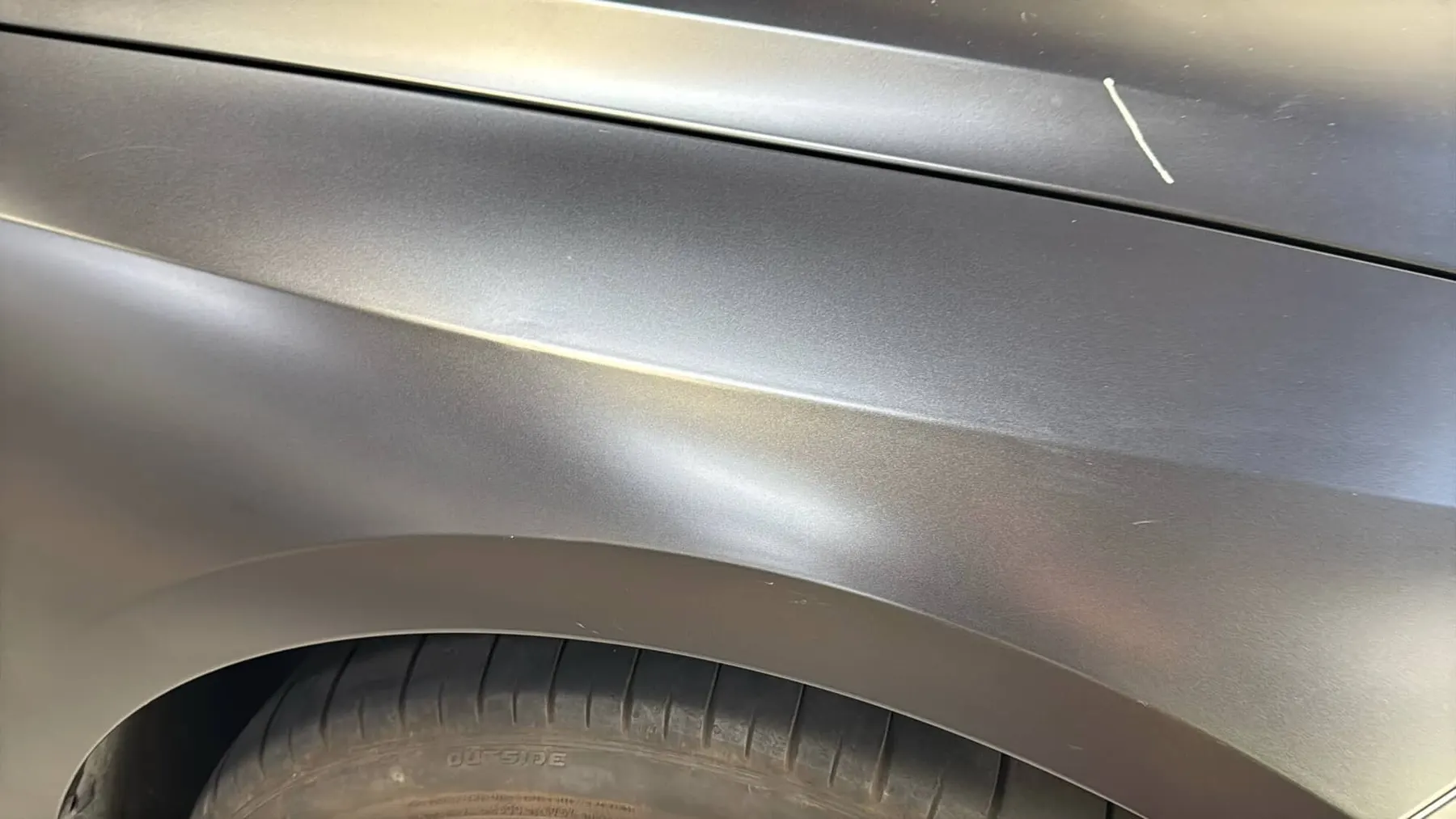
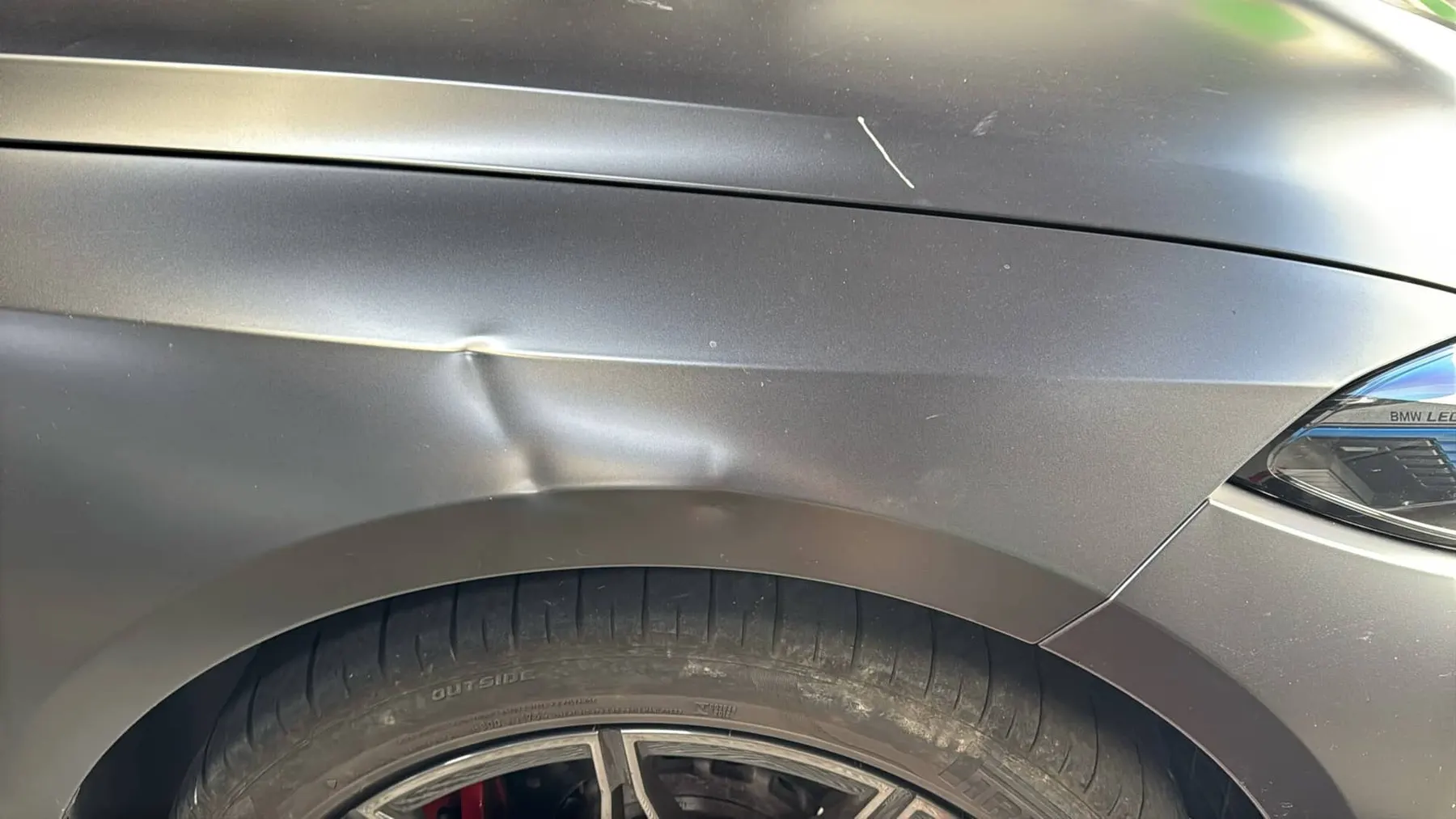
A sharp crease on a body line, matte finish. Drag to compare.
How much does it cost to fix a body line dent?
A body line dent runs roughly 50 percent more than the same-size dent on a flat panel because of the extra time, skill, and risk involved.
A standard door ding on a flat panel runs $197 to $250, and a typical crease runs $225 to $400. Put that same damage on a body line and the price moves up about 50 percent, because the repair takes more time, more skill, and carries more risk of paint damage if it is done wrong. You are not paying for more metal, you are paying for the experience that keeps that sharp edge and your factory finish intact.
As a real example, a sharp crease sitting on a body line with a matte finish came in between $775 and $900. The matte finish added roughly 30 percent on its own because matte cannot be polished and leaves zero room for error, and the body line drove the rest. Material matters too, since aluminum adds about 50 percent and high-strength steel about 25 percent, and if a panel has to come off to reach the back of the dent, R and I runs $50 to $200 or more. For the full breakdown of what moves a quote, see why PDR cost varies.
Can a body line dent always be fixed with PDR?
Most can be repaired with paintless dent repair as long as the paint is not cracked and the tech can reach the back of the panel.
The large majority of body line dents are great candidates for PDR, even sharp creases that look hopeless. As long as the paint is intact and there is a way to access the back of the panel, the line can usually be brought back to factory shape. The two things that change the plan are cracked paint, which means the finish is already compromised, and access, since some panels need a light, brace, or trim piece removed to reach the damage.
That access question is why a real quote comes after we see the dent and what sits behind it, not just a photo. Sometimes the back of a body line is open and easy, and sometimes it is buried behind structure that needs to come apart first. Send a photo to get a soft range, and we confirm it in person. You can start with our paintless dent repair overview to see how we approach each type of damage.
Questions, Answered.
What does a body shop cost beyond the quote?
Three to five days without the car, a rental, and a permanent line on the vehicle history that follows it to resale. Paintless dent repair on the same dent is usually an hour or two with the factory paint untouched. Most people weigh the invoice and never weigh the week.
What is a crown in paintless dent repair?
A crown is an over-pushed high spot left when a tech forces the metal too far past flush. On a body line it shows up as a bright, raised stripe along the edge, and it is the classic sign of rushed or inexperienced work. It is harder to correct than the original dent because the tech now has to bring high metal back down instead of lifting a low dent.
Why does a body line dent cost more than a regular dent?
Because rebuilding a sharp factory edge without leaving a crown takes far more time, skill, and control than working a flat panel. A body line dent runs roughly 50 percent more than the same-size dent on a flat area. You are paying for the experience that keeps the crease crisp and the factory finish fully intact.
Can a dent on a body line be fixed without repainting?
Yes, most body line dents are repaired with paintless dent repair and never touch the paint, as long as the finish is not already cracked and the back of the panel can be reached. PDR preserves the factory finish, leaves no Carfax record, and is usually done same day. We confirm the dent is a PDR candidate once we see it in person.
Does a body line dent take longer to repair?
It does, because the sharp edge has to be released slowly and progressively rather than pushed in one move. Working it like carefully unzipping a zipper is what protects the paint and keeps the line straight. Rushing it risks cracking the finish or leaving a crown, so the extra time is the repair being done right.
What happens if a body line dent is repaired badly?
A rushed repair usually leaves a crown or a ripple running along the line, a high spot or wave you can see in the reflection from across a parking lot. That is harder and more costly to fix than the original dent. If your line looks wavy or raised after a repair, have an experienced tech read it before anyone touches it again.
How do I get a price for my body line dent?
Send a clear photo of the damage for a soft estimate, then we confirm the final price in person once we see the dent and what sits behind the panel. Send photos through the estimate form or ask for a call back, or book a free in-person estimate at calendly.com/denttime/shop-repair. We reply within minutes during business hours, and the in-person look is what locks in the final number.