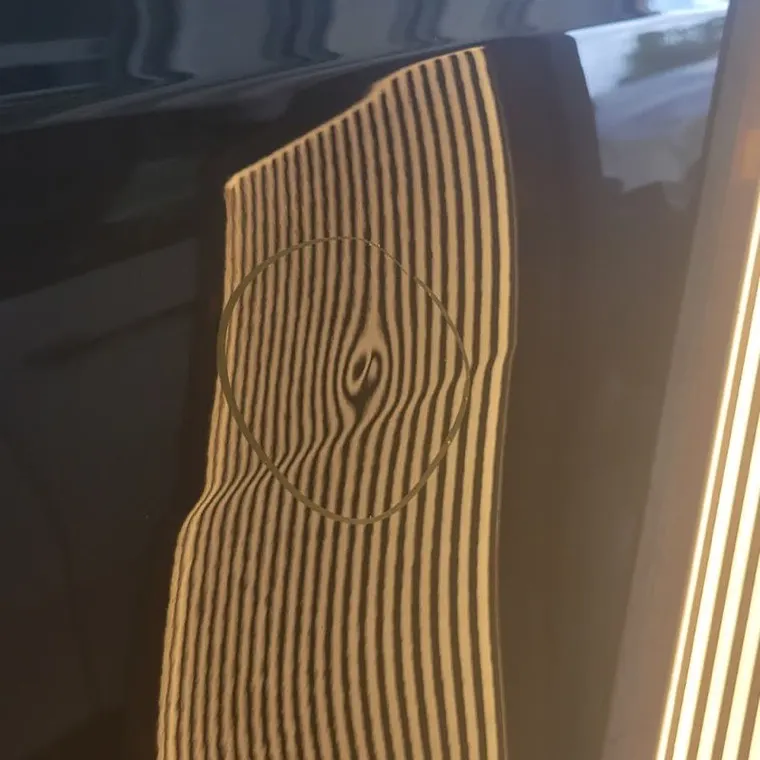
Aluminum Door Ding
$250 to $350
90 minutes to 2 hours
Same ding, harder metal. Aluminum has no memory and gives nothing back, so it takes more force and more accuracy at once.
Got a dent on an aluminum panel in San Diego? Aluminum has no memory, so it gives nothing back and stops most mobile technicians cold. We reset aluminum on any vehicle, F-150 to BMW to your Tesla, back to factory finish with no repaint and nothing on the Carfax.
More force and more accuracy at the same time. Tap WATCH and the page becomes the theater.
Drag or use the arrows · tap watch for full screen
The most common dents land on these side panels. Tap where yours is and the paint gives way to the real bracing behind that exact spot, so you can see what a technician is actually up against before the first push. Most technicians meet that structure when they arrive. We study it before we get there, on every Tesla paintless dent repair we take across San Diego.
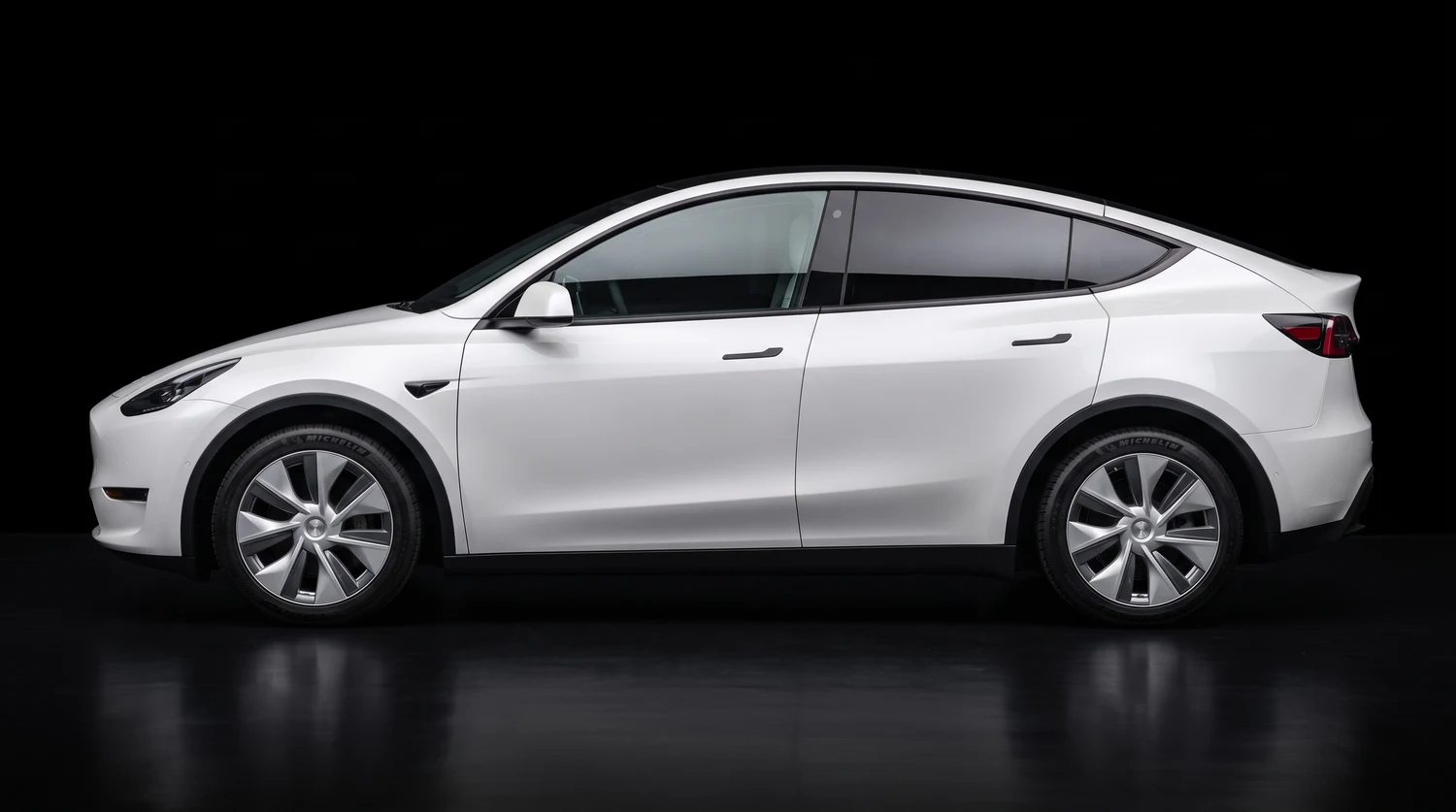
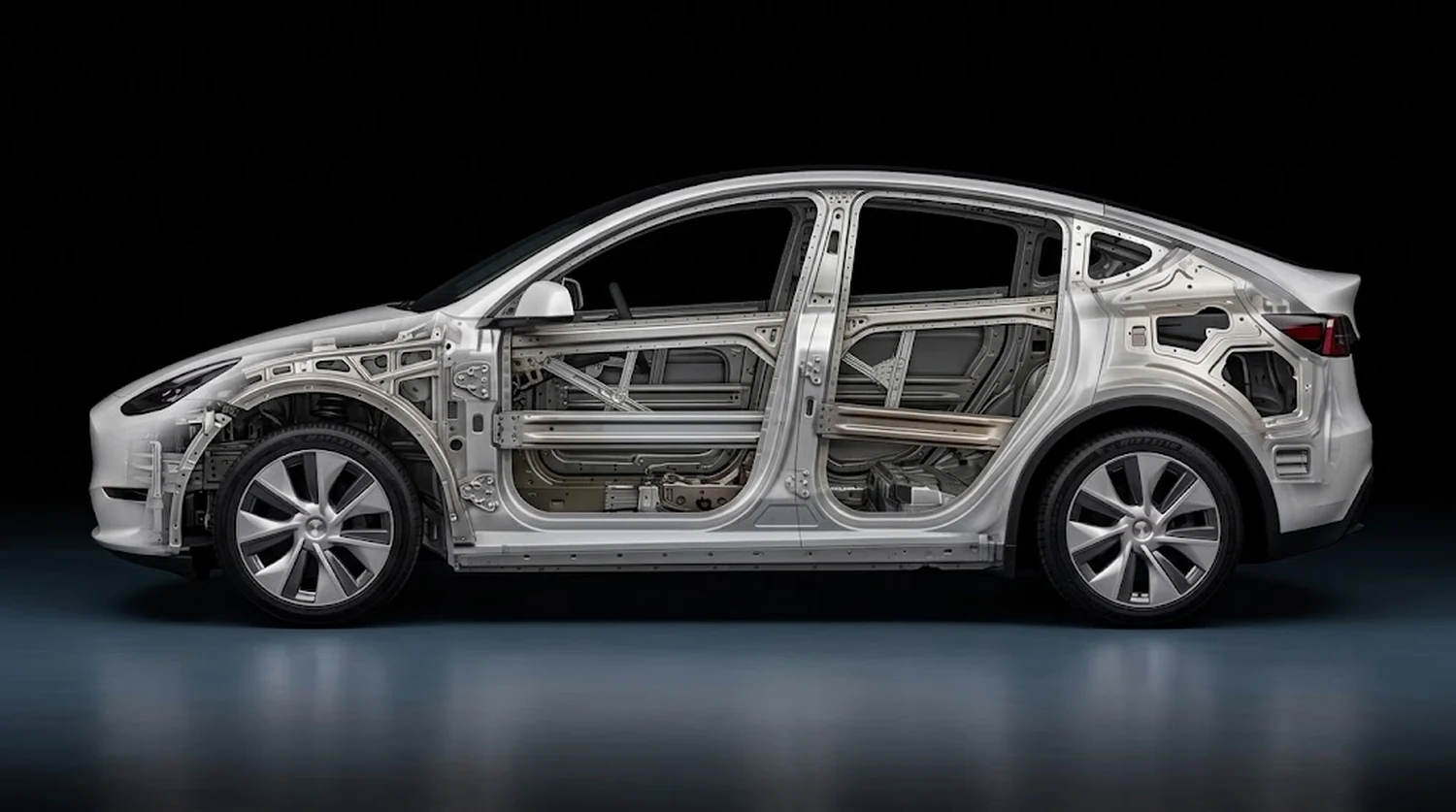
For reference only. This is not an official or 100% accurate diagram. Every vehicle varies by make, model, year, and trim. The point is what it shows: the same size dent can be a different repair altogether.
Your dent may not be on a door, and that changes very little. Hoods, fenders, quarter panels and trunk lids all have structure behind them too: braces, reinforcement bars, brackets, wiring, and on a hood the whole underframe. Some spots on your car are wide open from behind and take minutes. Others sit directly over a brace and have to be reached a harder way, or reached after something comes off first. That is the single biggest reason two dents that look the same are not the same price.
This is why we never name a firm price without seeing what is behind your damaged panel. A dent over open metal is a clean paintless dent repair. The same dent over a brace, a beam, or a steel pillar is a different job. Anyone quoting one flat price for a Tesla dent sight unseen is guessing, and a guess is where surprise upsells come from. So you get an honest preliminary range from your photo up front, then the firm number once the panel is seen in person. Work behind a panel rewards patience, great care, and pride in doing it right, and that is what you are choosing when you choose your technician. See exactly what drives the price.
Answer four quick questions for a preliminary range. Send photos and a technician replies in minutes with a written estimate.
What's behind the panel can change this number. Two dents that look identical from outside can be two different repairs, because braces, beams and wiring sit behind some spots and not others. That is why this is a preliminary range, never a quote sight unseen.
See what's behind the panelThis is a preliminary range based on your answers. Send two photos and a technician replies within minutes with a written estimate. The final price is always confirmed in person, once we can see what is behind the panel. No obligation.
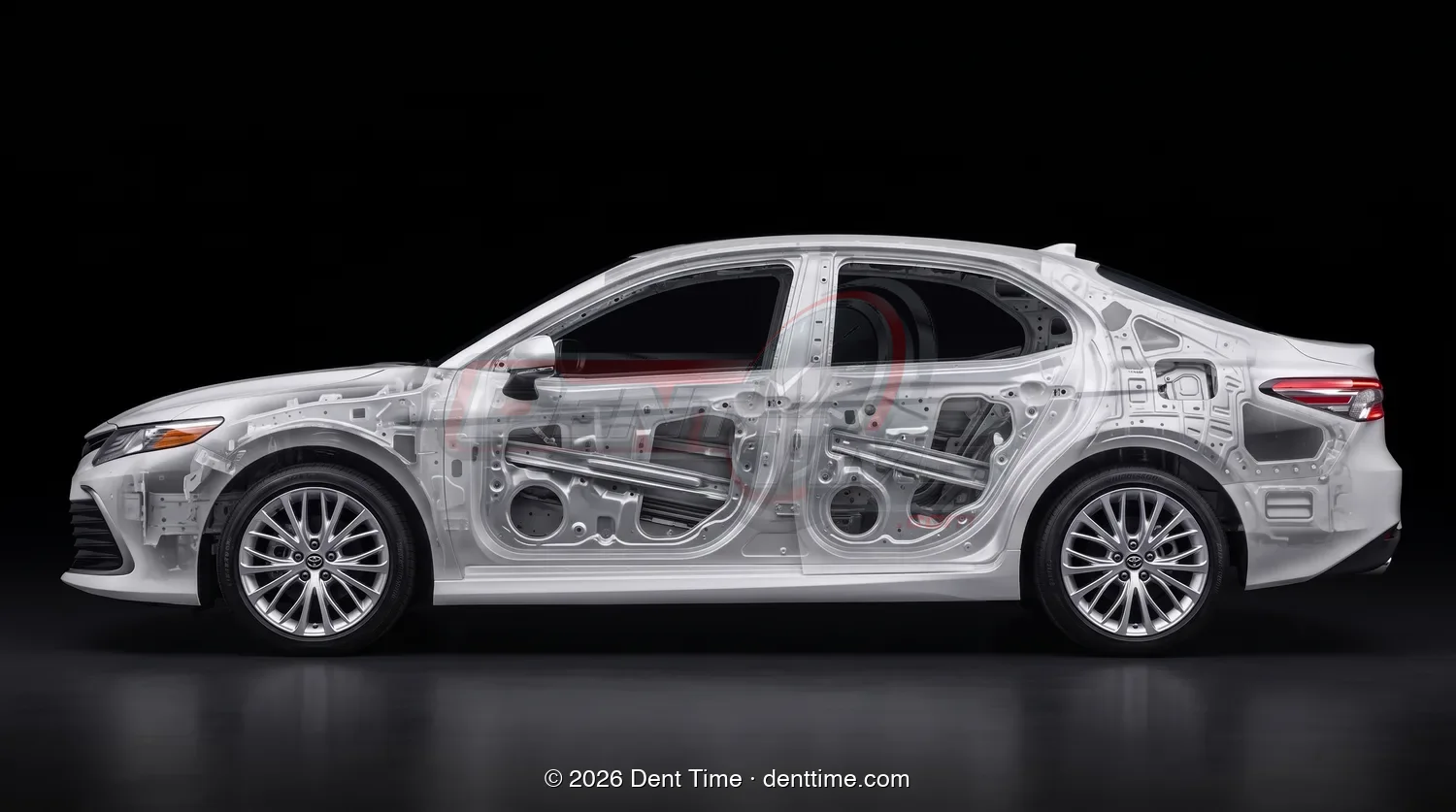
Two dents that look identical from outside can be two different repairs, because braces, beams and wiring sit behind some spots and not others. That is why this is a preliminary range, never a quote sight unseen.
Aluminum panel repair runs $250 to $4,000 depending on damage. Aluminum carries a higher rate than steel for an honest reason: it has no memory, gives nothing back, and takes three to five times more force with sharper tools and tighter accuracy at the same moment. Rushing aluminum cracks paint.
Same ding, harder metal. Aluminum has no memory and gives nothing back, so it takes more force and more accuracy at once.
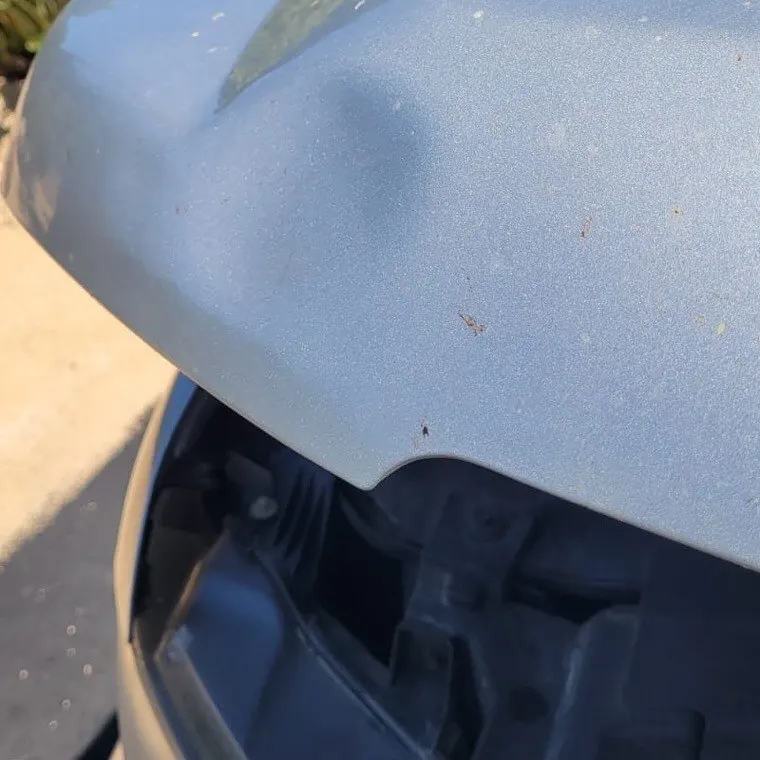
Three to five times the force of steel, with sharper tools and tighter control. Rushing aluminum cracks paint.
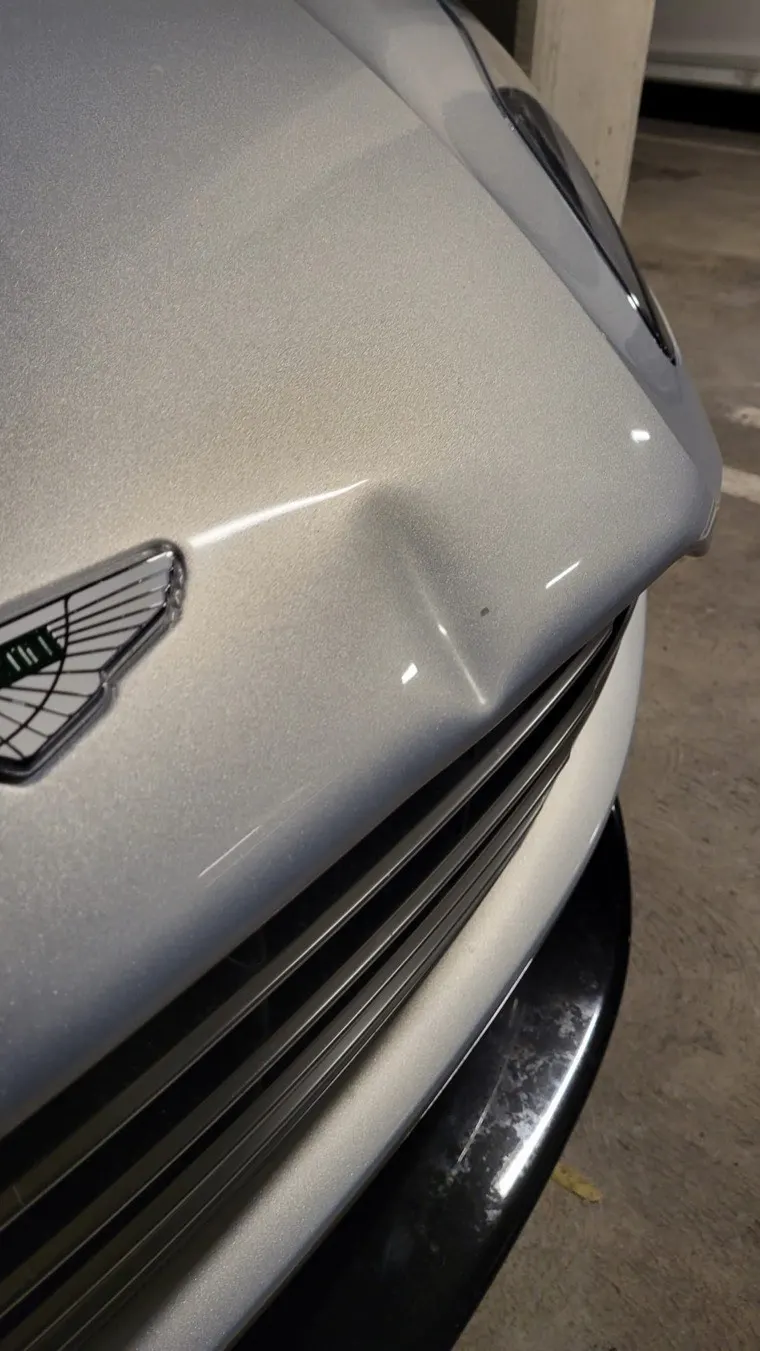
The hardest routine aluminum work. A crease on an aluminum panel punishes every shortcut a technician might take.
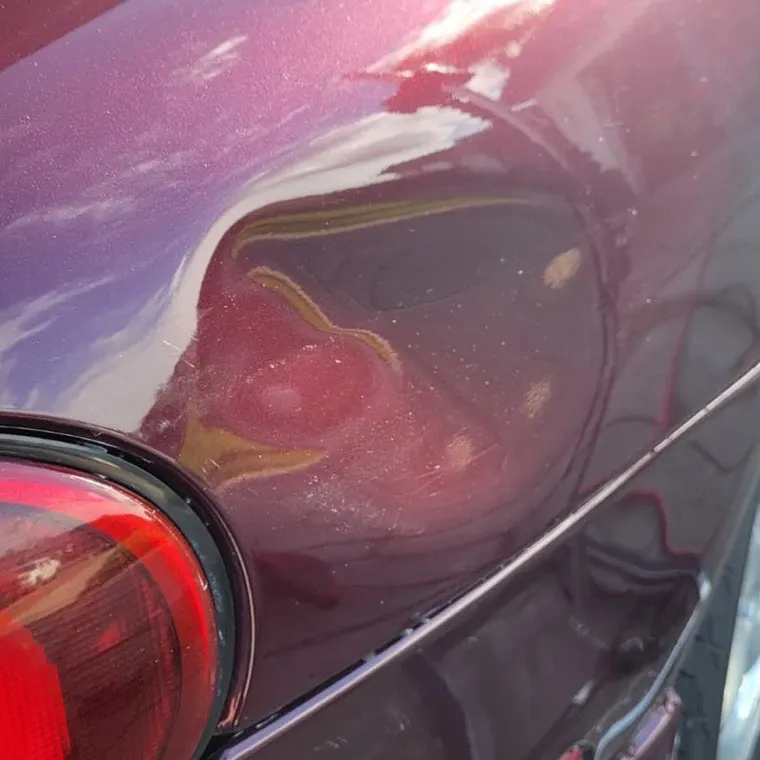
Hidden crowns and trapped pressure on a panel that fights back. Often routes to the shop where lighting and access are controlled.
Aluminum is not a niche anymore. Half the panels on modern Toyotas, BMWs, Mercedes, and Fords are aluminum, alongside every Tesla and Rivian. Send two photos through the estimate form and a technician who has worked aluminum since 1991 replies with your number.
Aluminum dent repair requires careful control and the right access behind the panel. Submit your vehicle details and photos through the estimate form for a specialist assessment of the repair options and expected result.
Real Dent Time work, sped up and cut down. A repair like this runs hours, and some run days. The edit is not hiding the work. It is the only way to show you hours of it. Drag to browse.
Yes. Aluminum paintless dent repair restores the panel from behind with no filler and no repaint, and it is daily work here on the aluminum Ford F-150, BMW, Mercedes, Audi, Porsche, Jaguar, and Land Rover, plus aluminum-bodied EVs like Tesla, Rivian, and Lucid.
Aluminum paintless dent removal is the same idea as steel PDR with one critical difference. Aluminum has no memory. Steel wants to spring back toward its shape and a skilled hand uses that pull. Aluminum gives nothing back. Every bit of movement has to be created and held by the technician, often with controlled heat. Done wrong, the panel stretches or cracks. Done right, it returns to factory and nobody can tell. This is where 30-plus years of reading metal is the difference.
Aluminum dent repair carries about a 50 percent higher rate than the same dent in steel because aluminum is lighter but stronger and has no memory, so the technician has to create every millimeter of movement by hand.
High-strength steel adds about 25 percent for the same reason on a smaller scale. None of this is a surcharge for the badge on the car. It is the time, skill, and patience a stubborn metal demands. A final aluminum price is not set until we see what sits behind the panel, because access changes the work.
The most common question San Diego drivers ask after a bad experience is: how was I supposed to know? The answer is always visible, if you know what to look for. Poor PDR leaves metal that was pushed with the wrong tools, clearcoat stressed or cracked from sharp contact, and in some cases holes drilled where none belonged. None of that can be undone by another technician. Every car in this section was dent-repairable before the first shop touched it. This is what to look for before you hand your car to anyone.
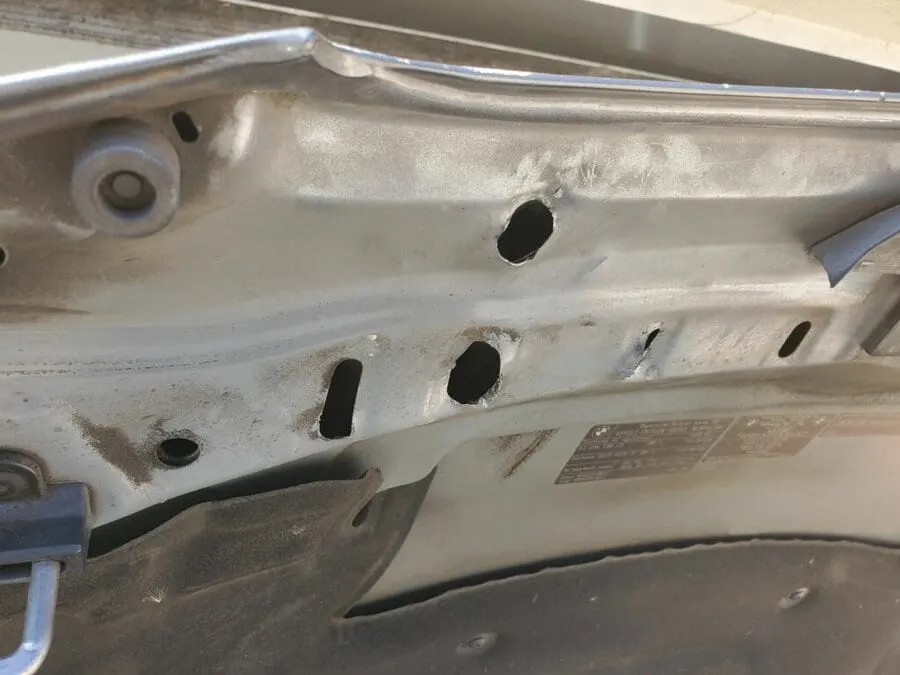
Multiple holes drilled through the panel where none were needed, then left open, unsealed, unprotected. Every one of those openings is now a rust point working inward. The structure is compromised.
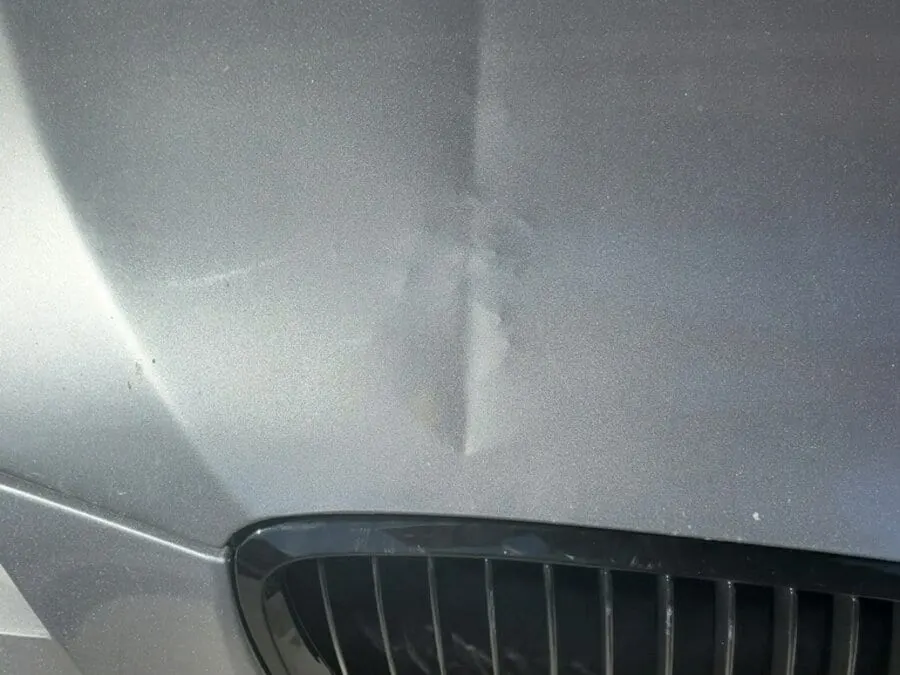
Done by a technician who called himself experienced. A sharp tool pushed with too much force created high spots across the hood and stressed the paint at every contact point. Once the paint is broken from underneath, PDR is no longer an option. The panel needs a full respray.
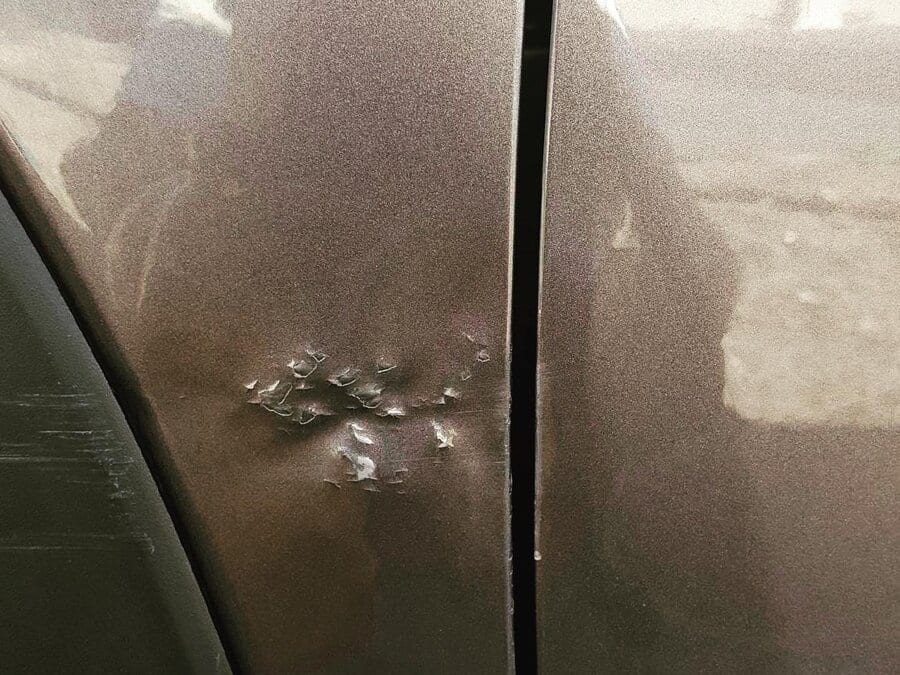
Aggressive pushing with the wrong tools poked the metal up from underneath across the panel. Each raised point broke the paint surface from below. There is no pushing these back down. The factory finish is gone.
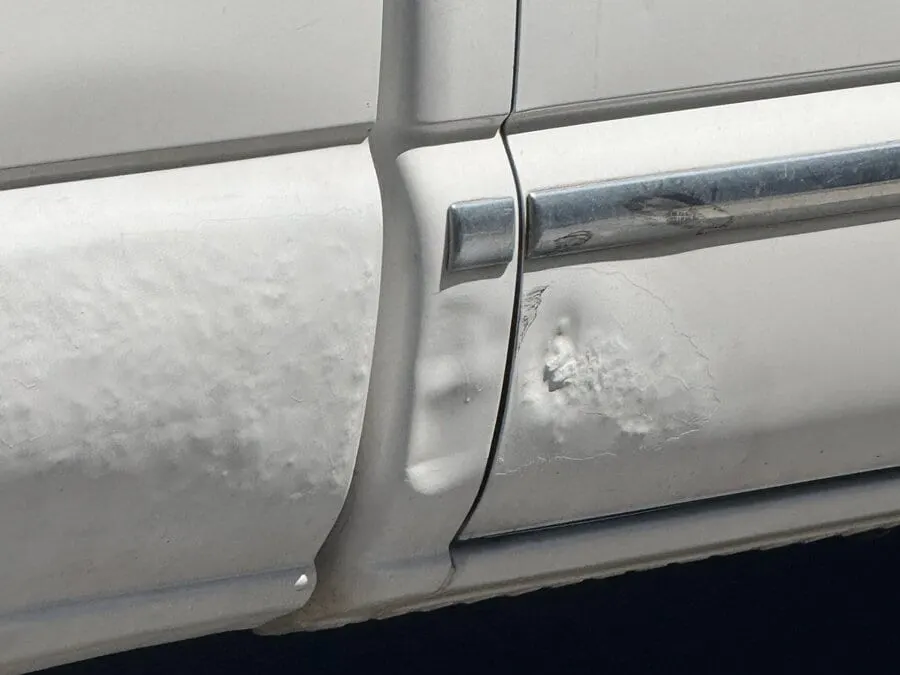
A mobile company in a Walmart parking lot told the owner it would wash away by tomorrow. It didn't. What they applied bonded to the paint and lifted it, leaving the panel in worse shape than the original dent. This car now needs new panels and collision work that could have been avoided entirely.
Every panel above was dent-repairable before the first technician touched it. The damage in these photos was not caused by the original impact, it was caused by the repair. That distinction matters, because it changes what you are actually deciding. The dent is not the risk. The technician is.
Myke Toledo · Dent Time
When you buy a gallon of milk, every gallon at every store is the same product. Choosing the one that costs less makes sense. PDR is not that. Two technicians looking at the same dent will make completely different decisions about access, pressure, and where to stop. One of those decisions preserves your factory finish. The other one does not.
Thirty-five years in this trade is not a marketing number. It is the count of dents, panels, and metal types that live in a technician's hands as muscle memory. You cannot buy that experience at a lower price point. You can only find it or not find it.
The tool does not read the metal. The technician does.
Drag the slider. The same aluminum door panel before and after paintless dent repair, with the factory finish never touched.
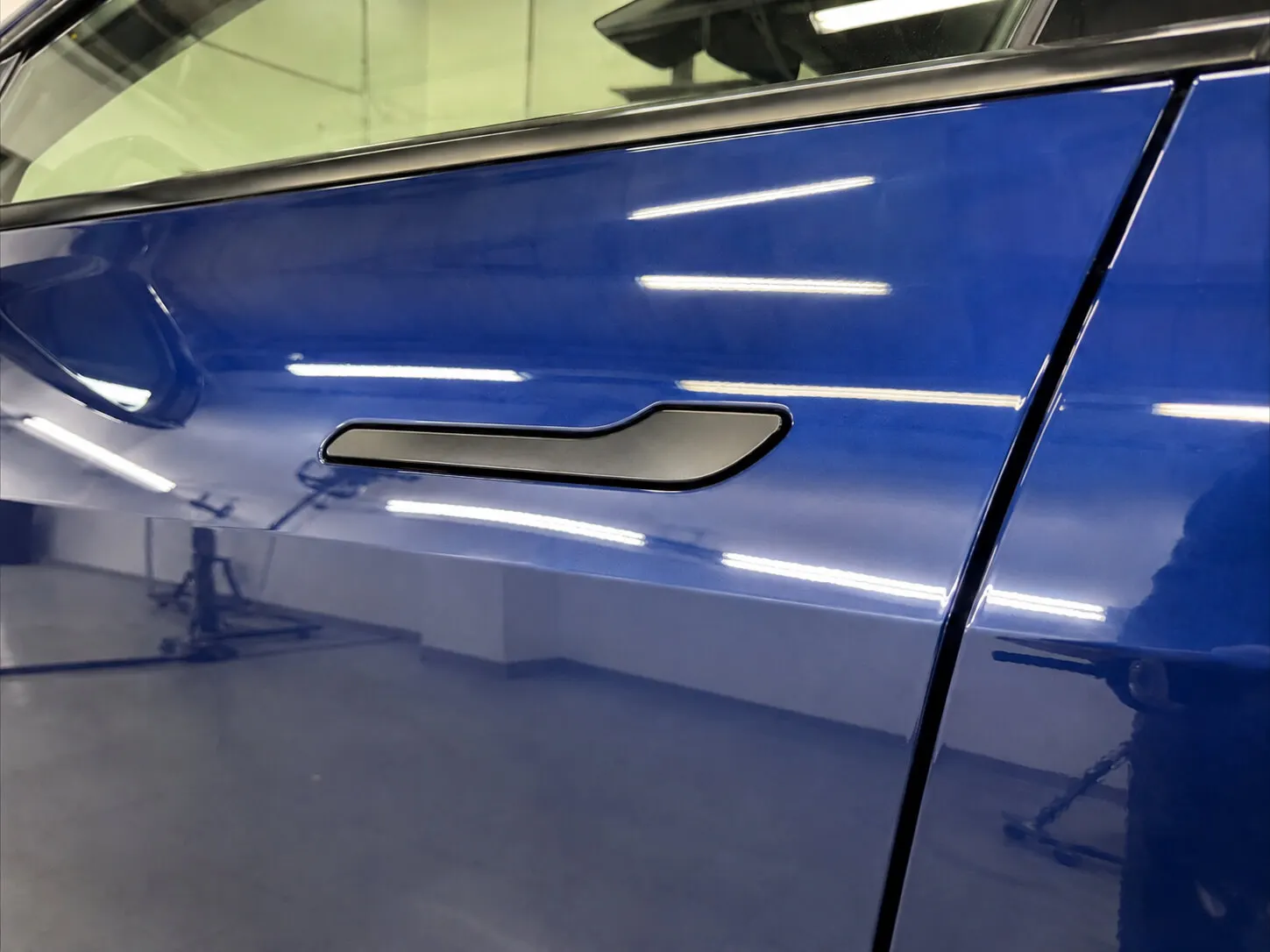
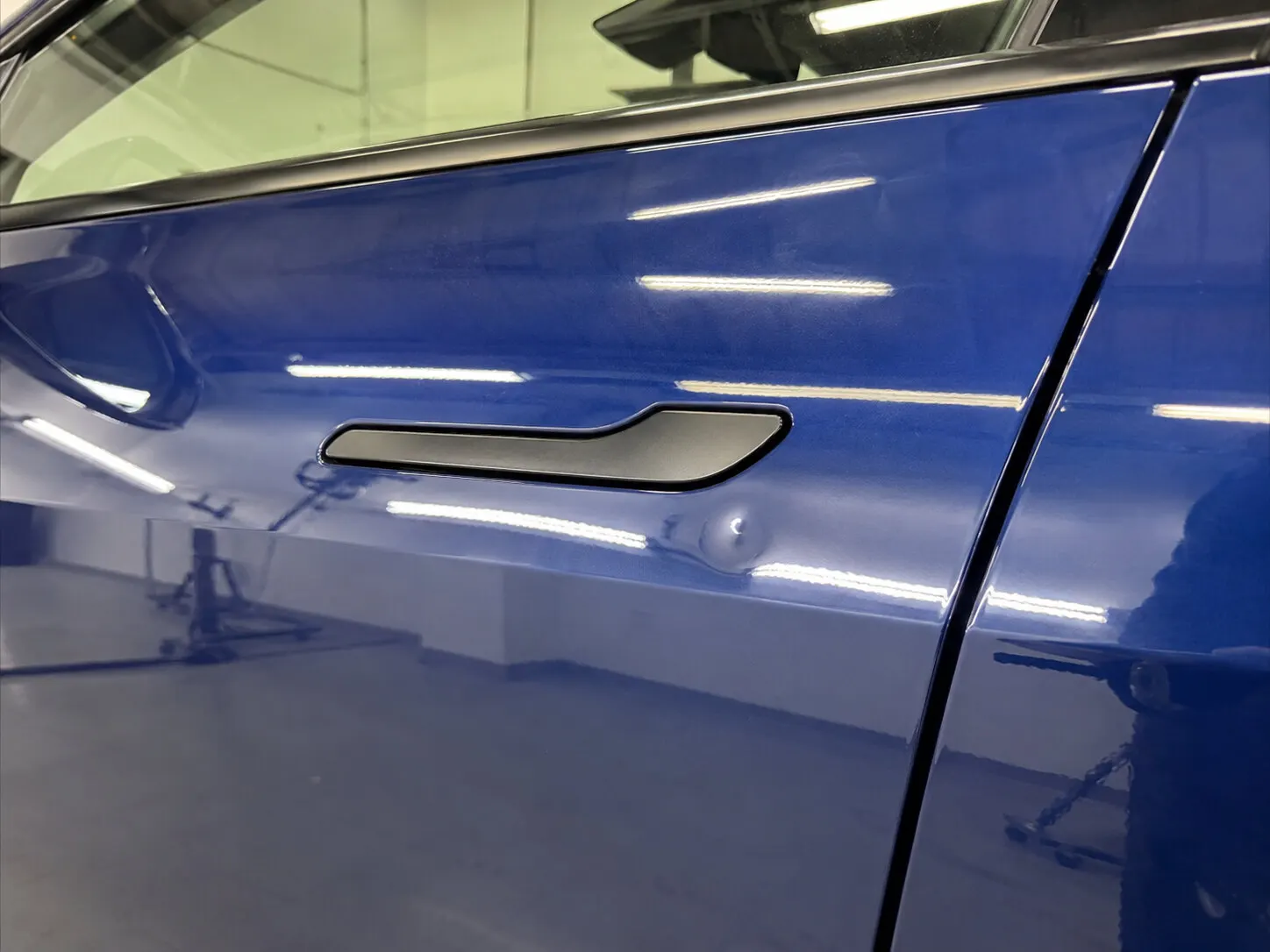
No filler. No repaint. Nothing on the Carfax.
We repair aluminum dents across every kind of vehicle that uses it, from the Ford F-150 and luxury European cars to aluminum-bodied EVs like Tesla and Rivian.
Aluminum and high-strength steel panels
Aluminum hoods, doors, and fenders
Aluminum space-frame panels
Aluminum doors and quarter panels
Full aluminum bodies
Aluminum carries about a 50 percent higher rate, high-strength steel about 25 percent, earned by the work and not added.
Aluminum bed and door panels
Aluminum cab and bed
Aluminum monocoque body
Audi Q-series and more
A deep or stretched aluminum truck panel takes controlled heat and patience to reset without over-stretching.
Model 3, Model Y, Model S, Model X aluminum panels
R1T and R1S aluminum panels
Air aluminum body
Mercedes EQ, Audi e-tron, BMW i-series
Most EVs are aluminum. For the full electric-car guide, see EV dent repair.
Steel has memory and helps the technician, while aluminum has none and fights every move, which is why aluminum work takes more time, more force, and more skill to reach the same factory result.
The metal wants to return toward its original shape.
Lighter, stronger, and it gives nothing back.
Aluminum is not just harder to fix, it is measurably different. It has a higher yield strength and no elastic memory, so returning it to factory takes more Time, Energy, and Effort than the same dent in steel. That T.E.A. is the honest reason the rate is higher, never a markup.
Aluminum moves only in small, controlled steps, often through heat cycles that relax the metal. The same dent takes longer to walk back to flat.
Higher yield strength means more force per push, plus controlled heat to move the panel without stretching or cracking it.
No memory means the technician creates and holds every millimeter by hand, with zero help from the metal springing back.
It is the same conclusion the metallurgy points to. Aluminum's higher yield strength and lack of spring-back mean more measured labor per repair, which is why aluminum carries about a 50 percent higher rate than steel, and high-strength steel about 25 percent more. Earned in T.E.A., not added. See exactly what drives the price.
Yes. Paintless dent repair is the safest dent repair for an electric vehicle because it adds no chemicals, no repaint, and no heat to the battery area, and it keeps the work off the Carfax to protect resale, with none of the diminished value a repaint leaves behind.
We work the panel mechanically from behind, aware of what sits behind it, and we default to removal and installation through factory openings instead of drilling. The repair touches metal only, never the electronics or structure, so your factory and battery warranties stay intact. We can even come to you.
Aluminum dent repair runs higher than steel because aluminum has no memory: expect about a 50 percent higher rate, with most aluminum door dings and small dents landing in the $295 to $600 range and larger or stretched panels priced after we read the metal.
Price depends on depth, location, access behind the panel, and whether controlled heat is needed. Text a photo and a real range comes back in minutes, and you approve it before any work. See exactly what drives the price.
We repair aluminum and EV panels throughout San Diego County, mobile to your home or office, with complex aluminum routing to our Escondido shop where lighting and access give the cleanest result.
Aluminum is far more challenging than steel and it is not flexible. It does not have the same memory steel does, so it never wants to return to shape on its own. The repair uses heat and sharper tools to manipulate the flow of the aluminum back into place, and that takes more time and far more precision.
None of this is an electric car story. Ford has built the F-150 body in aluminum since 2015, and Toyota, BMW, and Mercedes-Benz use aluminum on hoods, doors, and tailgates across their ranges. If you drive something built in the last decade, there is a good chance at least one panel on it is aluminum.
Steel has memory. Bend it and it wants to return to the shape it was built in, and a technician uses that. Aluminum has none of it. Heat is what makes the metal willing to move at all, and knowing how much and where is the difference between a repair and a ruined panel.
Aluminum takes three to five times the force of steel, sometimes more, through a sharper tool tip. That combination is unforgiving. Too much in the wrong place does not leave a smaller dent, it leaves damage you cannot take back.
This is the part that separates people who have worked aluminum from people who have read about it. You are not pushing a dent out. You are moving the flow of the metal back to where it belongs, gradually, reading it the whole way.
Rushed aluminum leaves pock marks and mars in the paint. Small, permanent, and visible under the right light forever. That is what the extra time buys, and it is why an aluminum panel is not a job to hand to someone learning.
Almost every question we get about aluminum is some version of "is this repairable?" That is the wrong thing to be nervous about. On an intact-paint panel the answer is nearly always yes.
The real variable is who is doing it. Aluminum punishes inexperience in a way steel never does. Steel forgives a wrong move because it wants to go back. Aluminum records it. The same dent, on the same panel, on the same day, comes out invisible in one set of hands and pock-marked in another.
So the question worth asking a shop is not whether they can fix aluminum. Everyone says yes. Ask how long they have been doing it, and ask to see one they finished.
See what the wrong hands leave behind in real bad repairs, or send two photos and get an honest read on your panel.
When a claim is worth it, when to skip it, and how we keep your factory paint.
Dents and door dings on any electric car, Tesla to Rivian.
The full guide to PDR, what it fixes, and what it costs.
The same craft brought to your driveway or office.
Straight-on and 45° in natural light. A real technician identifies the metal, tells you the honest path, and quotes a real range. Photos welcome any time, day or night.
Leave your name and number and Myke will call you back during business hours, Monday to Friday, 8:30am to 4pm.
Julie texts you back right away from (858) 408-6200.