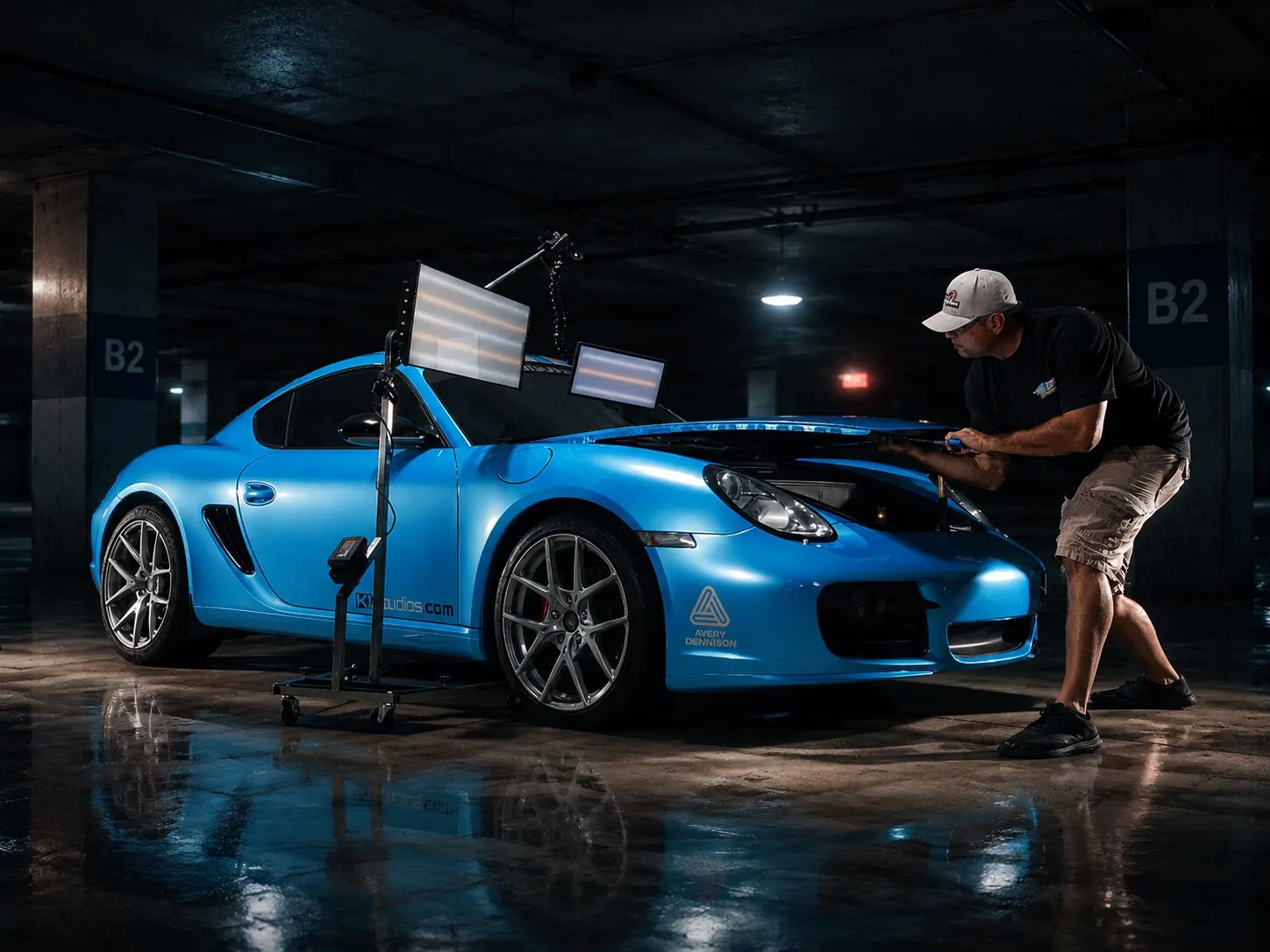
Working a Tesla panel by hand, reached from behind the metal.
If you drive a Tesla and just found a door ding or a parking lot dent, here is the one fact that changes everything: most of your body panels are aluminum, and aluminum behaves nothing like the steel on an ordinary car. I have been repairing dents since 1991, and aluminum dents are some of the most demanding work we do. Done by the right hands, paintless dent repair brings your Tesla back to factory shape with no filler, no repaint, and nothing on the Carfax.
I want you to walk into this knowing exactly what you own, why the price is what it is, and how to pick a tech who can actually move aluminum. That last part matters more than most Tesla owners realize, because not every PDR shop is set up for it.
Why is Tesla dent repair different from other cars?
Because Tesla body panels are largely aluminum, and aluminum has no memory, so it takes far more force, accuracy, and aluminum-specific technique to reshape than steel.
Here is the part most people get backwards. Steel has memory. When a tech works a steel dent, the metal wants to spring back toward its original shape, and a good tech uses that tendency to guide the panel home. Aluminum gives you none of that. It has no memory, it gives nothing back, and it work-hardens fast, which means the more you move it the stiffer and less forgiving it gets.
So the same dent that reads as routine on a steel door becomes a careful, deliberate job on a Tesla door. It takes more force, more precision, aluminum-specific tools, and often a glue-pull from the outside of the panel rather than pushing from behind. None of that shows up in the finished result when it is done right, and that is the whole point. Read more on the metallurgy at our aluminum dent repair page.
How much does PDR cost on a Tesla?
A standard door ding on a Tesla aluminum panel typically runs more than the same dent on a steel car, often landing around $350 versus roughly $210, because aluminum carries a 50 percent material factor.
Let me give you the honest comparison. A standard dent on a steel Honda Accord door runs about $210. That exact same dent on an aluminum Tesla door, with a brace behind it, runs about $350. The difference is not a markup. It is the real cost of the force, the time, the specialized tools, and the skill aluminum demands.
On our pricing, aluminum adds a 50 percent factor and high-strength steel adds 25 percent. A matte finish, which some Tesla owners choose, adds 30 percent because of how carefully it has to be handled. If a panel has to come off to reach the damage, that R and I work adds $50 to $200 or more. Standard door dings start at $197 to $250 and medium dents run $275 to $500. If you want the full breakdown of what moves a price up or down, see why PDR cost varies.
Does PDR protect my Tesla's resale value?
Yes, because paintless dent repair keeps the factory finish, adds no body shop record to your Carfax, and preserves the original panel that buyers and Tesla pay attention to.
Tesla owners tend to be sharp about resale, and you should be. A body shop repair means filler, repaint, and a paperwork trail. Repainted panels can be spotted, they can fade differently over time, and any record of body work can soften your number when you sell or trade.
Paintless dent repair sidesteps all of that. We reshape your original factory panel, so the paint that left the factory is the paint that stays on the car. Nothing gets logged as collision or body work. You keep the clean history, the original finish, and the value that comes with both. That is the value play, and it is the reason PDR is the better call on a Tesla, not just the faster one.
Can any PDR shop work on a Tesla, or do I need a specialist?
You need a proven aluminum and EV specialist, because aluminum is unforgiving and a tech who only knows steel can stretch, crack, or mark the panel.
This is where I want you to be careful. Plenty of techs are good on steel and have never built real hours on aluminum. Aluminum punishes guesswork. Push too hard or in the wrong spot and you can stretch the metal or leave it looking worse than the dent did. With no memory to help, there is far less room for error.
Ask directly whether the shop does aluminum and EV work regularly, and look at examples. At Dent Time we work Teslas, Rivians, Lucids, and other EVs as routine, and we carry the aluminum-specific tools and glue-pull setups the job calls for. If you want to see what good and bad outcomes look like, our page on bad paintless dent repair is worth a read before you hand your car to anyone. You can also learn more about our EV dent repair work.
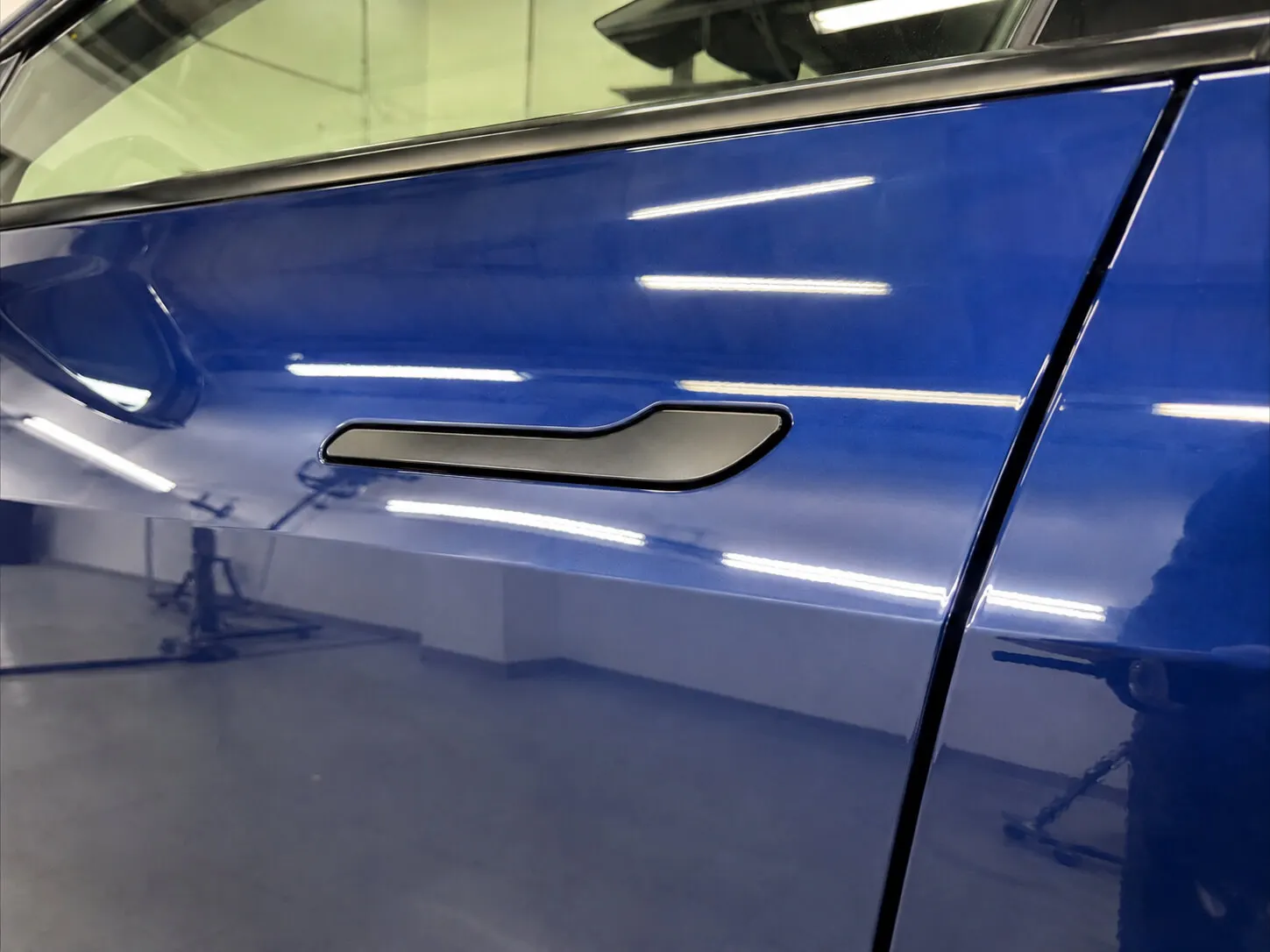
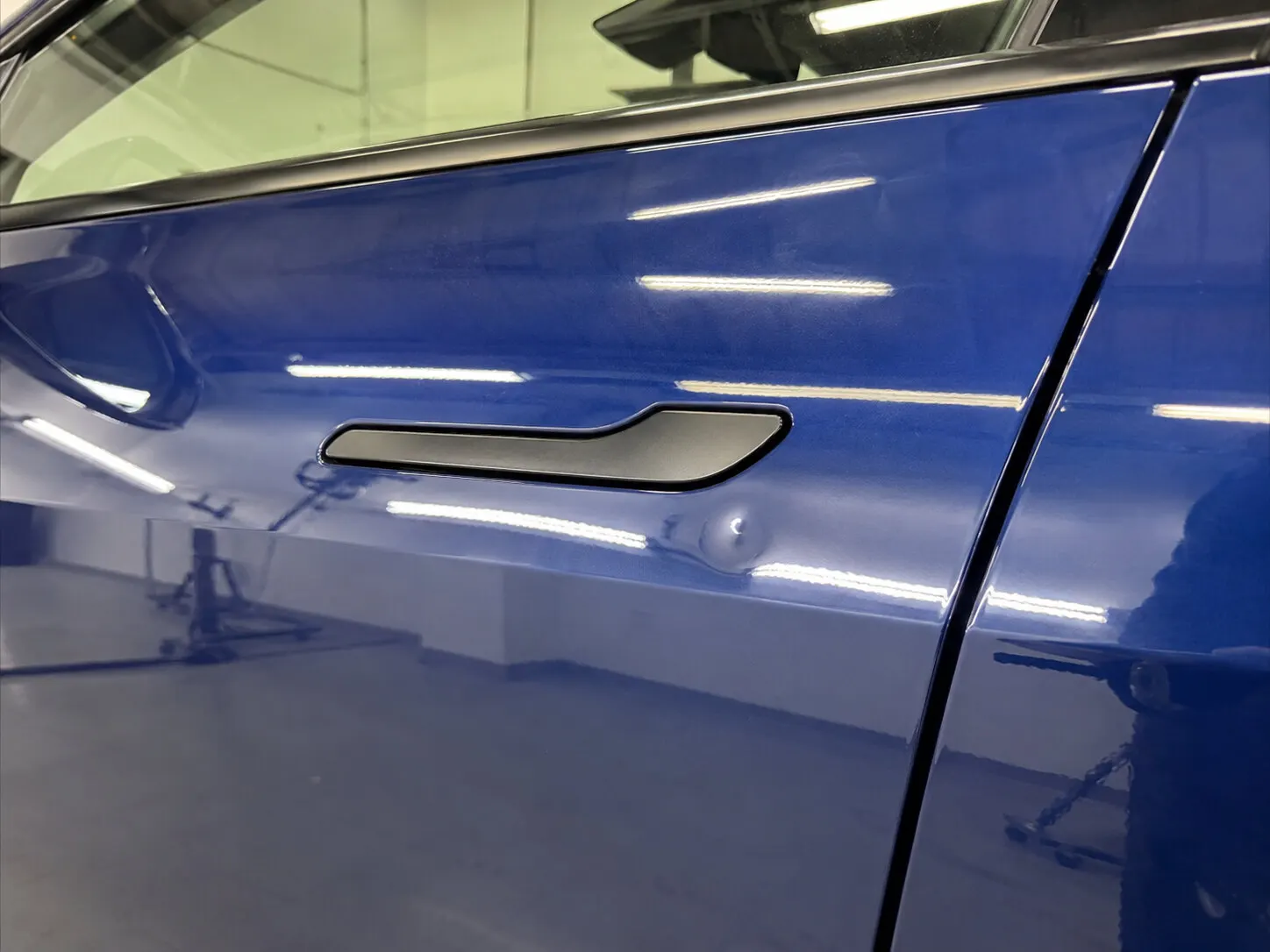
A dent on a Tesla aluminum door, before and after. Drag to compare.
How long does a Tesla dent repair take?
Most standard Tesla dents are finished the same day, and we reply with an estimate within minutes once you send photos.
For a typical door ding or parking dent, you are usually looking at same day turnaround. Aluminum takes more time per dent than steel because every move is deliberate, but a standard repair still comes back to you quickly rather than sitting at a body shop for days.
The fastest way to start is to text us photos of the damage. A technician looks and replies with a real estimate within minutes, not at the end of the day. A final price is confirmed once we see what is behind the panel, since access drives part of the cost, but the photo estimate gets you a clear number to work from.
Questions, Answered.
Are Tesla body panels really aluminum?
Largely, yes. Tesla uses aluminum across many body panels to keep the car light and strong. Aluminum has no memory and work-hardens fast, so it takes more force, more accuracy, and aluminum-specific technique to reshape than the steel on most cars.
Why does a Tesla dent cost more than the same dent on another car?
Because aluminum is harder to move. A standard dent on a steel Honda Accord door runs about $210, while the same dent on an aluminum Tesla door runs about $350. Aluminum adds a 50 percent factor on our pricing to cover the extra force, time, and specialized tools the work requires.
Will paintless dent repair leave a record on my Tesla's Carfax?
No. PDR reshapes your original factory panel with no filler and no repaint, so there is nothing to report as body or collision work. Your vehicle history stays clean, which protects resale value.
Does PDR work on a matte or wrapped Tesla?
Yes, and matte finishes call for extra care, which is why matte adds a 30 percent factor on our pricing. The technique protects the finish while the panel is reshaped. Send photos so we can confirm the right approach for your specific finish.
What if the dent is behind a panel that has to come off?
Some repairs need a panel removed to reach the damage, called R and I. That adds $50 to $200 or more depending on the panel. A price is not final until we see what is behind the panel, so the photo estimate gives you a strong starting number and we confirm once we have access.
How do I get a price for my Tesla dent?
Text photos of the damage to 858-408-6200 and a technician replies with an estimate within minutes. You can also book a free in-person estimate at calendly.com/denttime/shop-repair or visit the shop at 2120 W. Mission Rd #240, Escondido, CA 92029. Complete satisfaction or no charge applied.